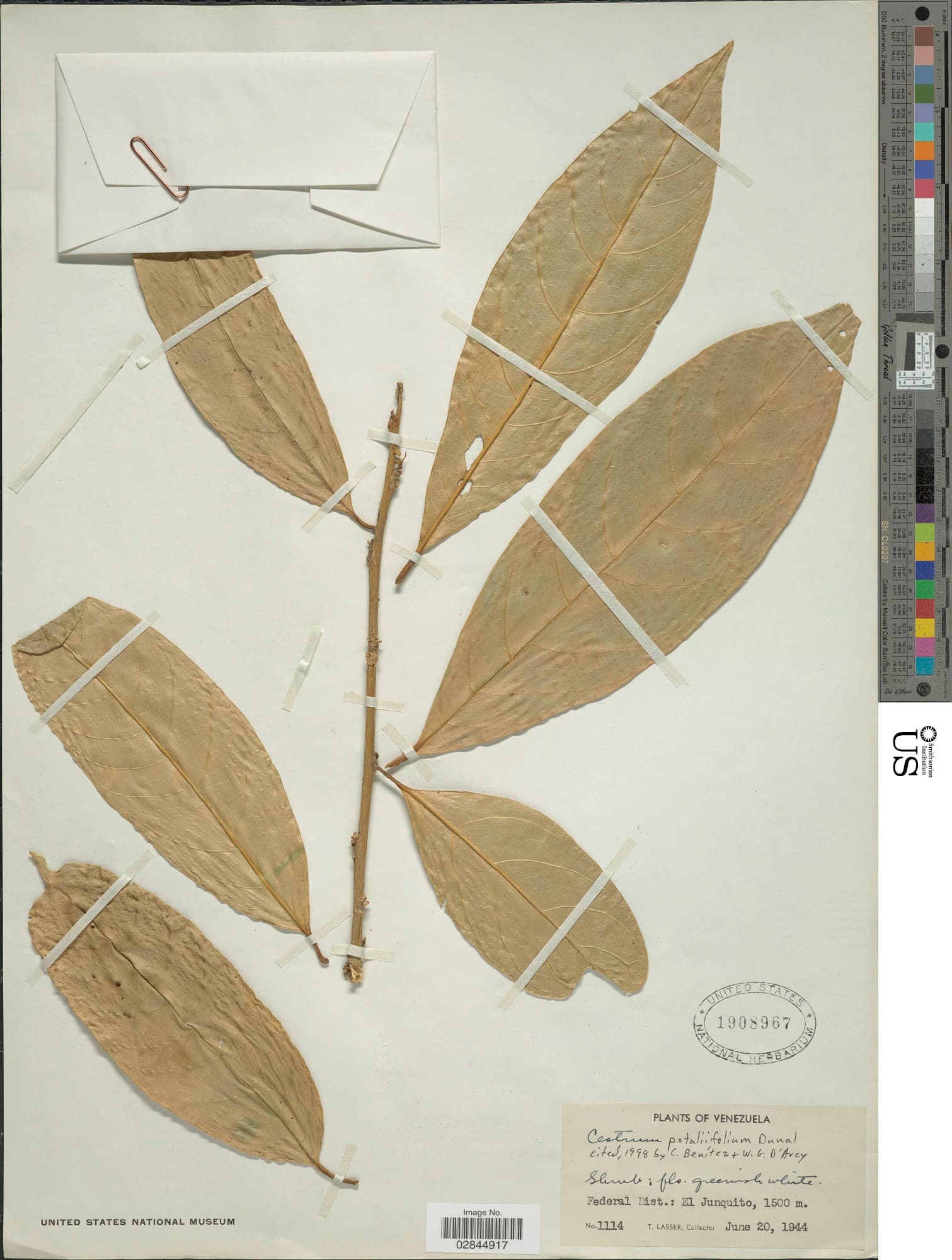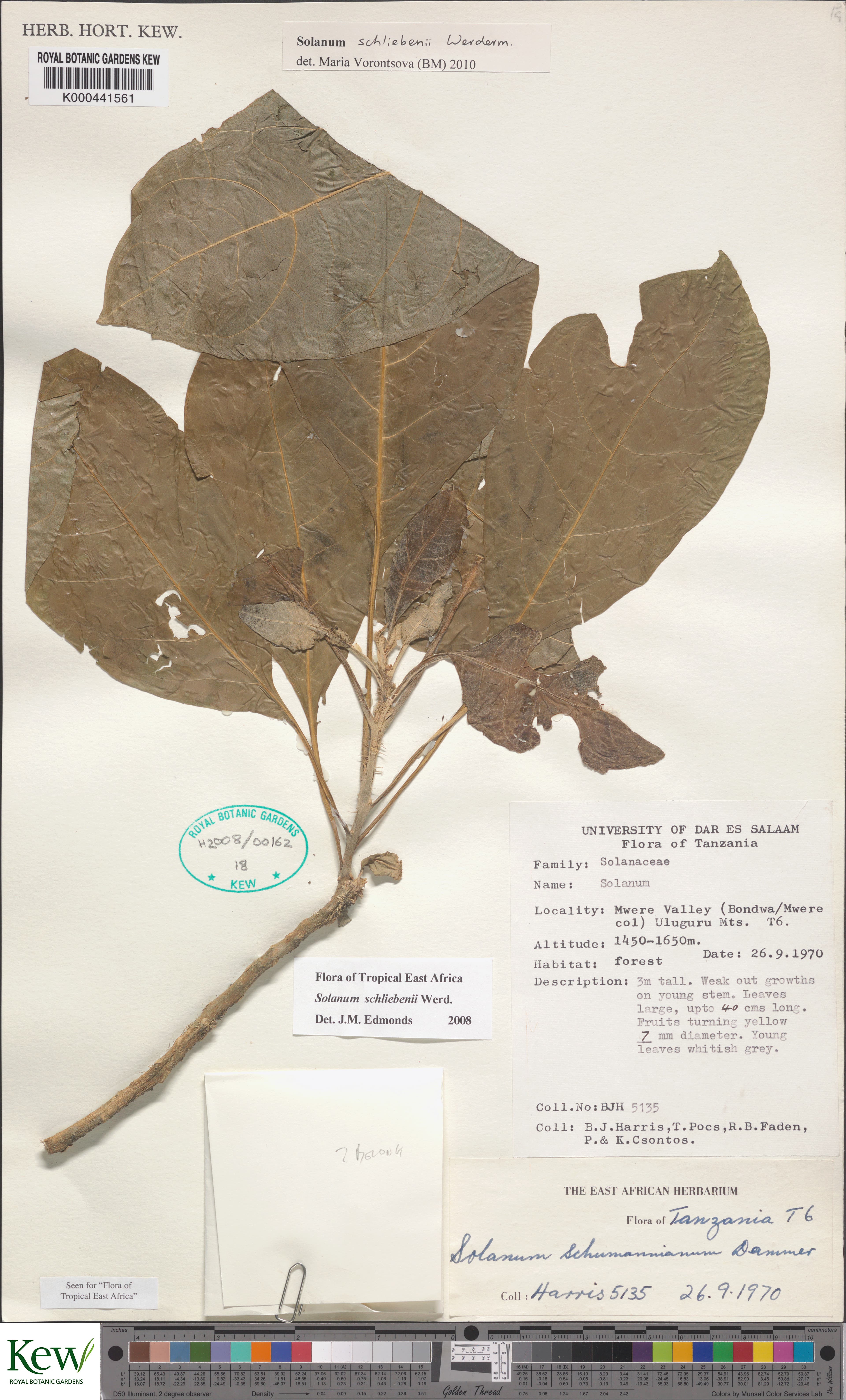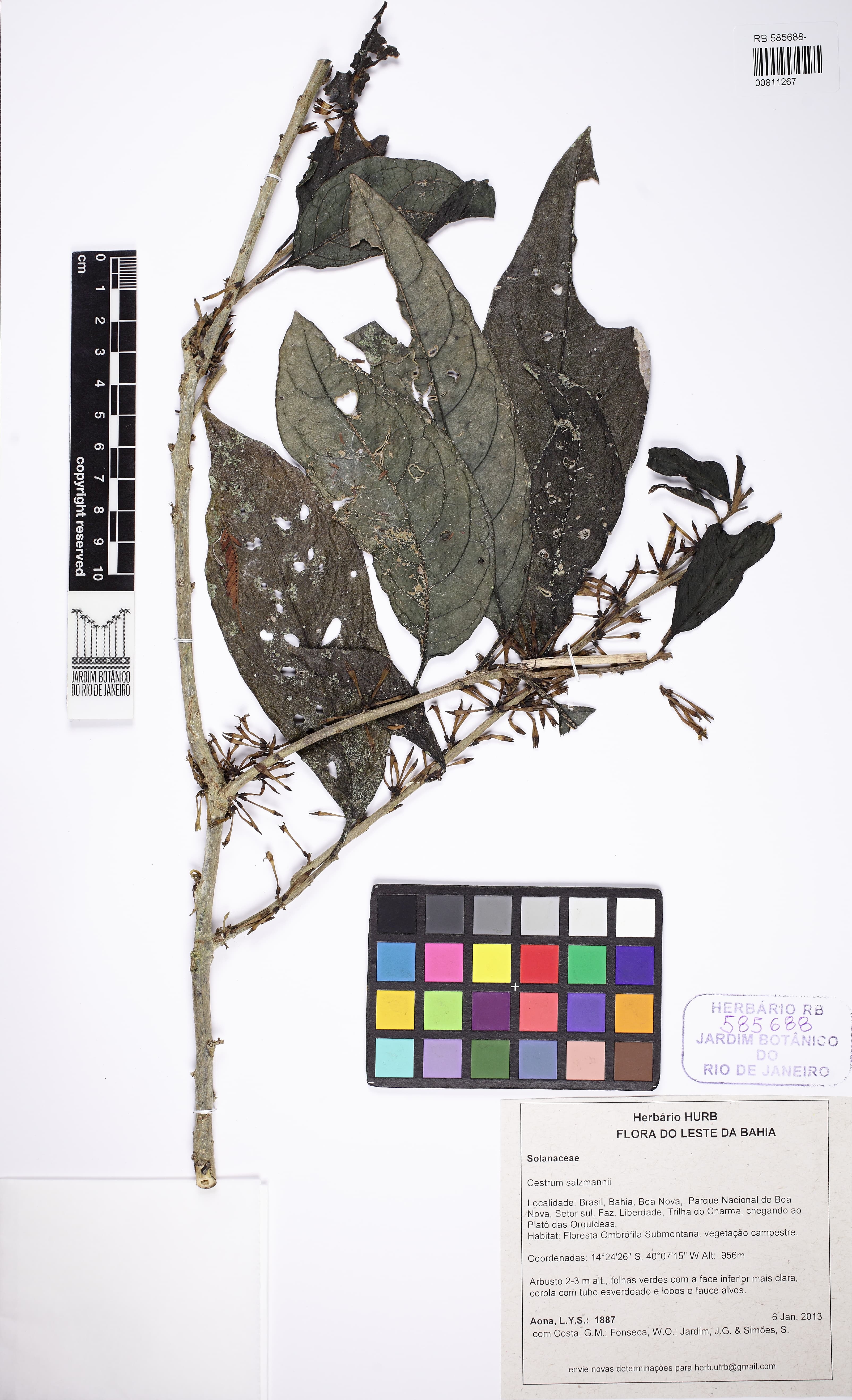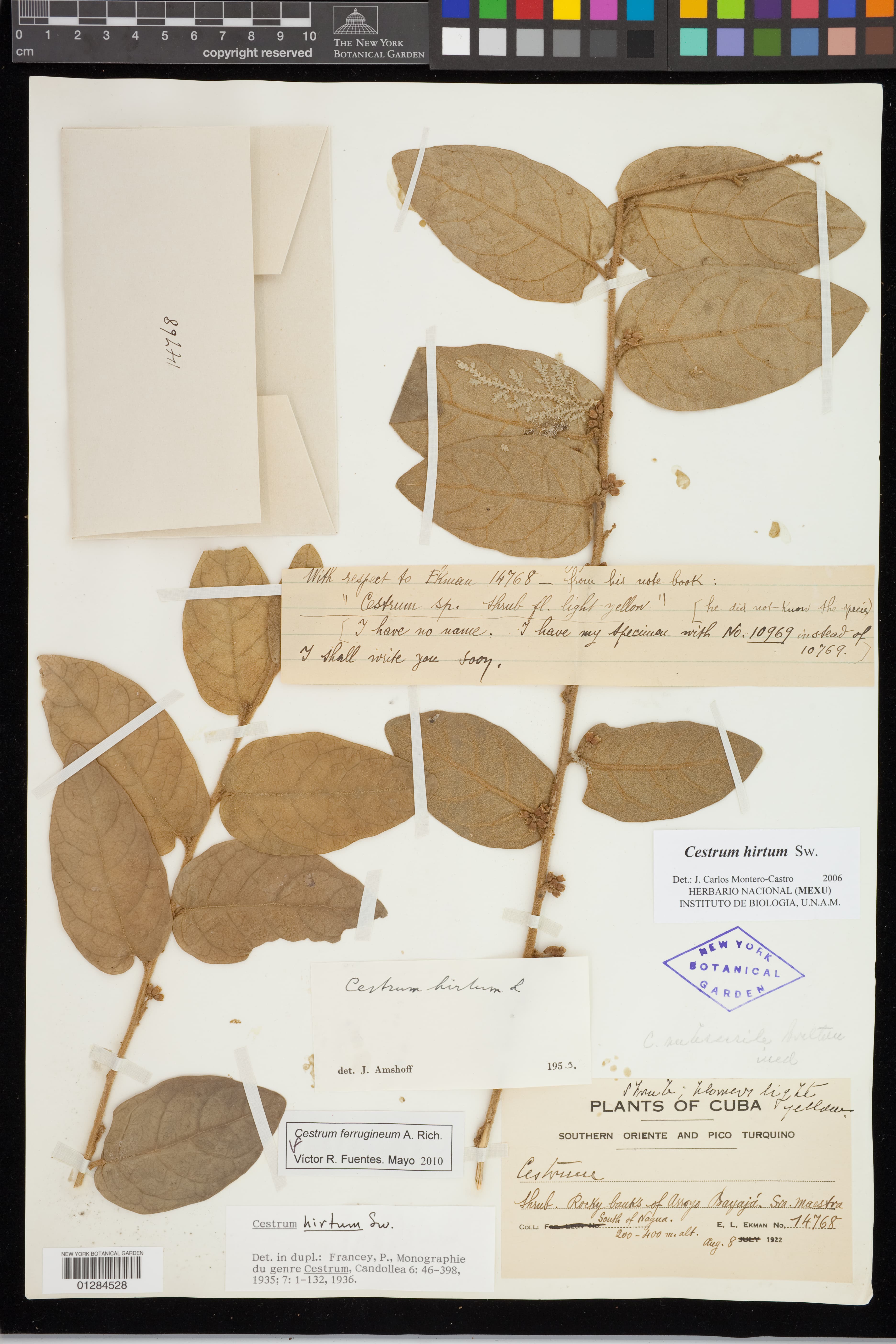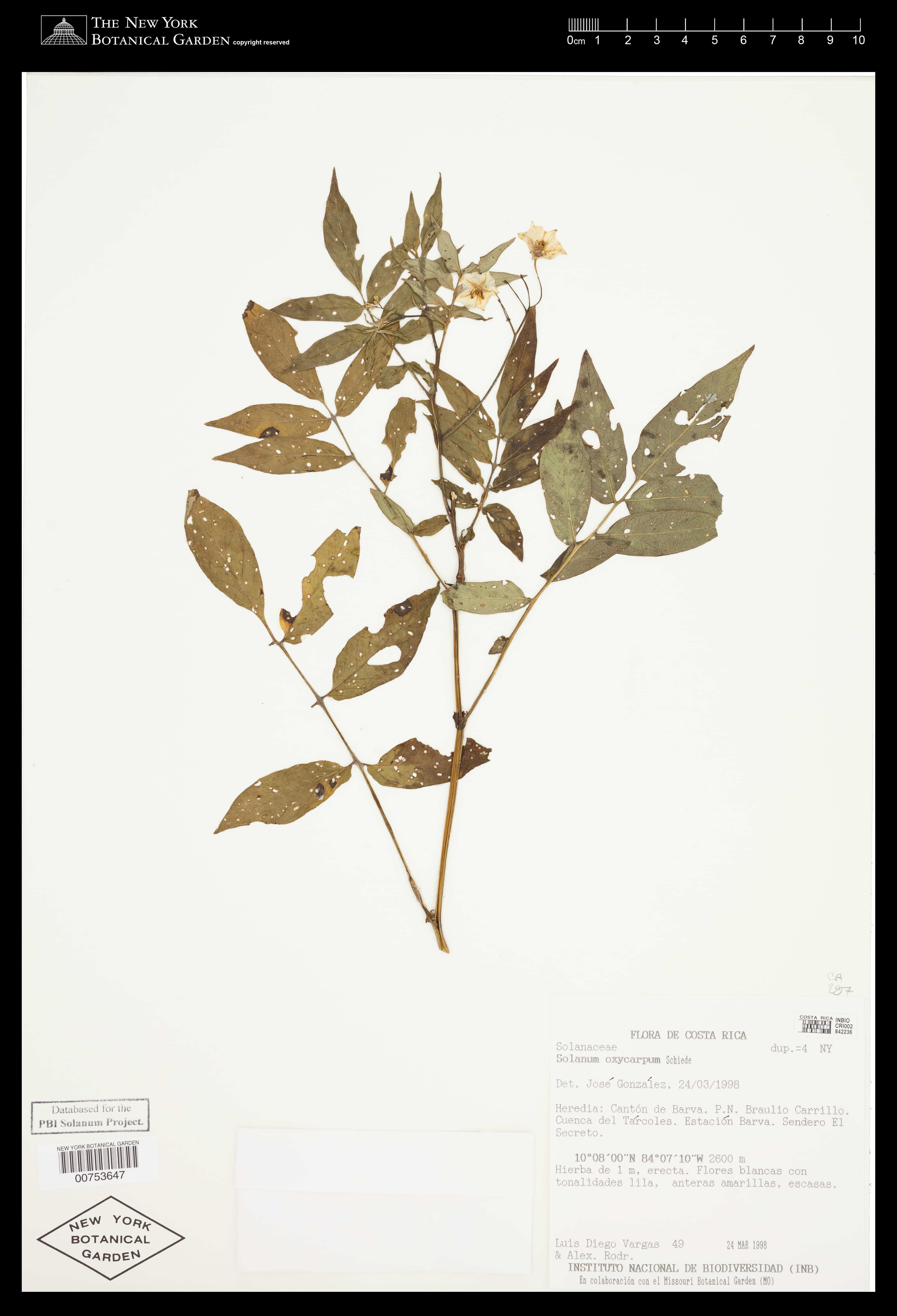
Solanum oxycarpum
Image: The New York Botanical Garden (cc-by)
NameSolanum oxycarpum
Scientific NameSolanum oxycarpum Schiede
Plant FamilySolanaceae
Natural HabitatNative to high-altitude tropical forest environments, specifically documented in the Braulio Carrillo National Park in Heredia, Costa Rica, at elevations around 2600 meters.
Parts Usedleaf,fruit
Medicinal Actionsanti-inflammatory
Traditional UsesNo widely documented traditional medicinal uses are known for *Solanum oxycarpum*. While some *Solanum* species have traditional uses, often for anti-inflammatory purposes or external applications, the genus is generally known for containing toxic compounds. Any potential use of this specific species would require extreme caution and is not well-established.
Active ConstituentsSteroidal glycoalkaloids (e.g., solanine, solamargine)
Contraindications & WarningsAll parts of *Solanum oxycarpum*, particularly unripe fruits and leaves, are likely toxic due to the presence of steroidal glycoalkaloids. Ingestion can cause severe gastrointestinal upset, neurological symptoms, and other signs of poisoning. This plant is not recommended for internal use and should be handled with caution.
Cultivation NotesRequires conditions mimicking its natural high-altitude tropical forest habitat, including specific temperature ranges, high humidity, and well-drained soil. Cultivation outside its native range is challenging due to its specialized environmental needs.
Rarityuncommon
Description
A species of nightshade, typically growing as an erect plant up to 1 meter tall. It features simple, alternate leaves and small, pale flowers, often described as white with lilac tones and yellow anthers, which are sparse.