Salzmann cestrum
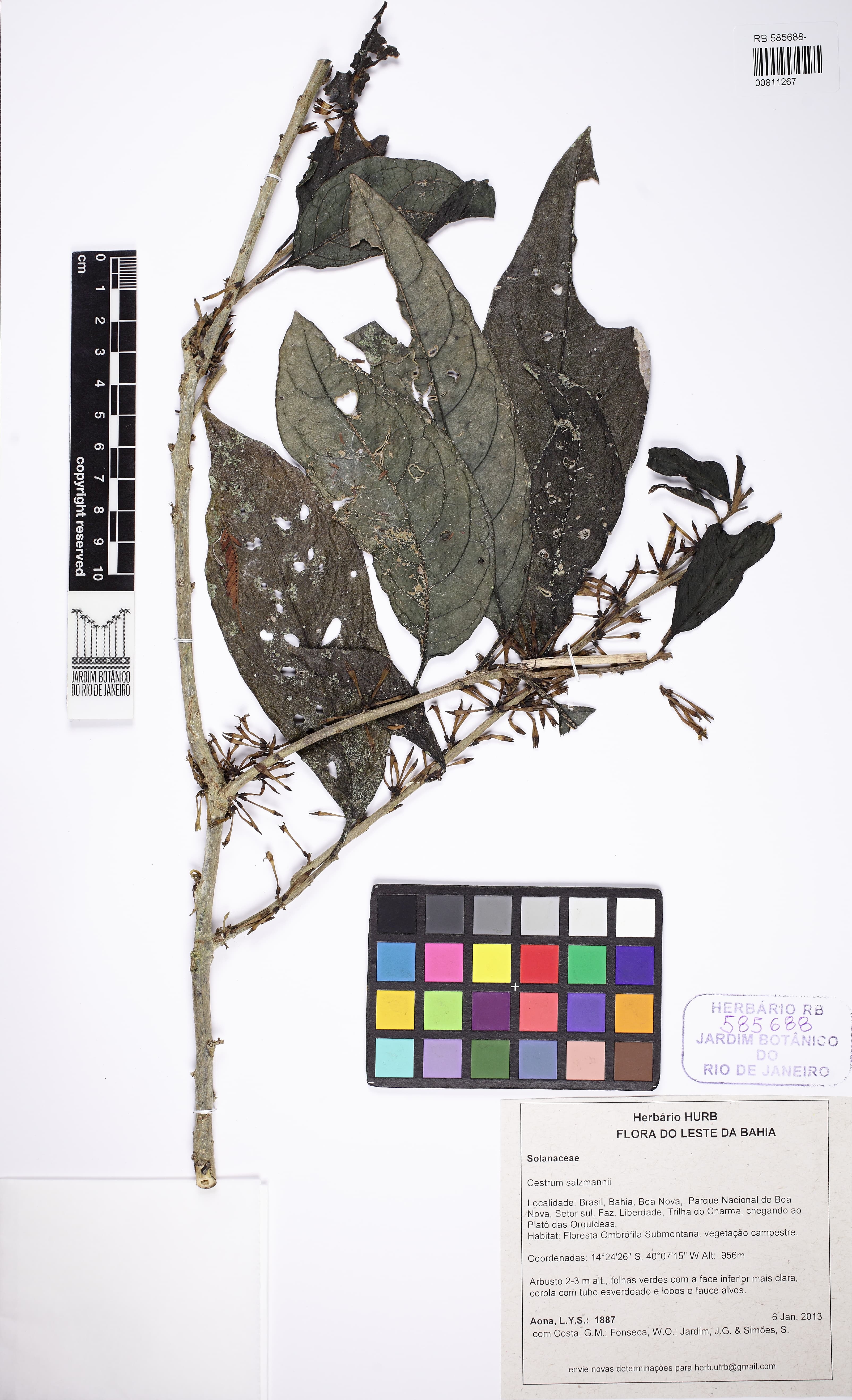
Image: L.Y.S. Aona et. al. (cc-by)
NameSalzmann cestrum
Scientific NameCestrum salzmannii Dunal
Common NamesSalzmann cestrum
Plant FamilySolanaceae
Natural HabitatNative to Brazil, specifically found in the Boa Nova National Park in Bahia. It thrives in submontane ombrophilous forests and grassland vegetation, often at altitudes around 956 meters.
Parts Usedleaf,flower
Medicinal Actionsanalgesic, anti-inflammatory, antimicrobial
Traditional UsesSpecific traditional medicinal uses for *Cestrum salzmannii* are not widely documented. However, other species within the *Cestrum* genus are sometimes used in traditional medicine for conditions like pain and inflammation, often with significant caution due to their known toxicity.
Active Constituentssteroidal glycoalkaloids
Preparation Methodsinfusion, decoction, poultice
Contraindications & WarningsDue to the general toxicity observed in many *Cestrum* species, *Cestrum salzmannii* should be considered potentially toxic. Internal use is strongly contraindicated. External use should be approached with extreme caution and under expert supervision, if at all. Pregnant or nursing women, children, and individuals with liver or kidney conditions should avoid use.
Cultivation NotesNot specified in the provided metadata. Generally, *Cestrum* species prefer warm climates and well-drained soil.
Rarityuncommon
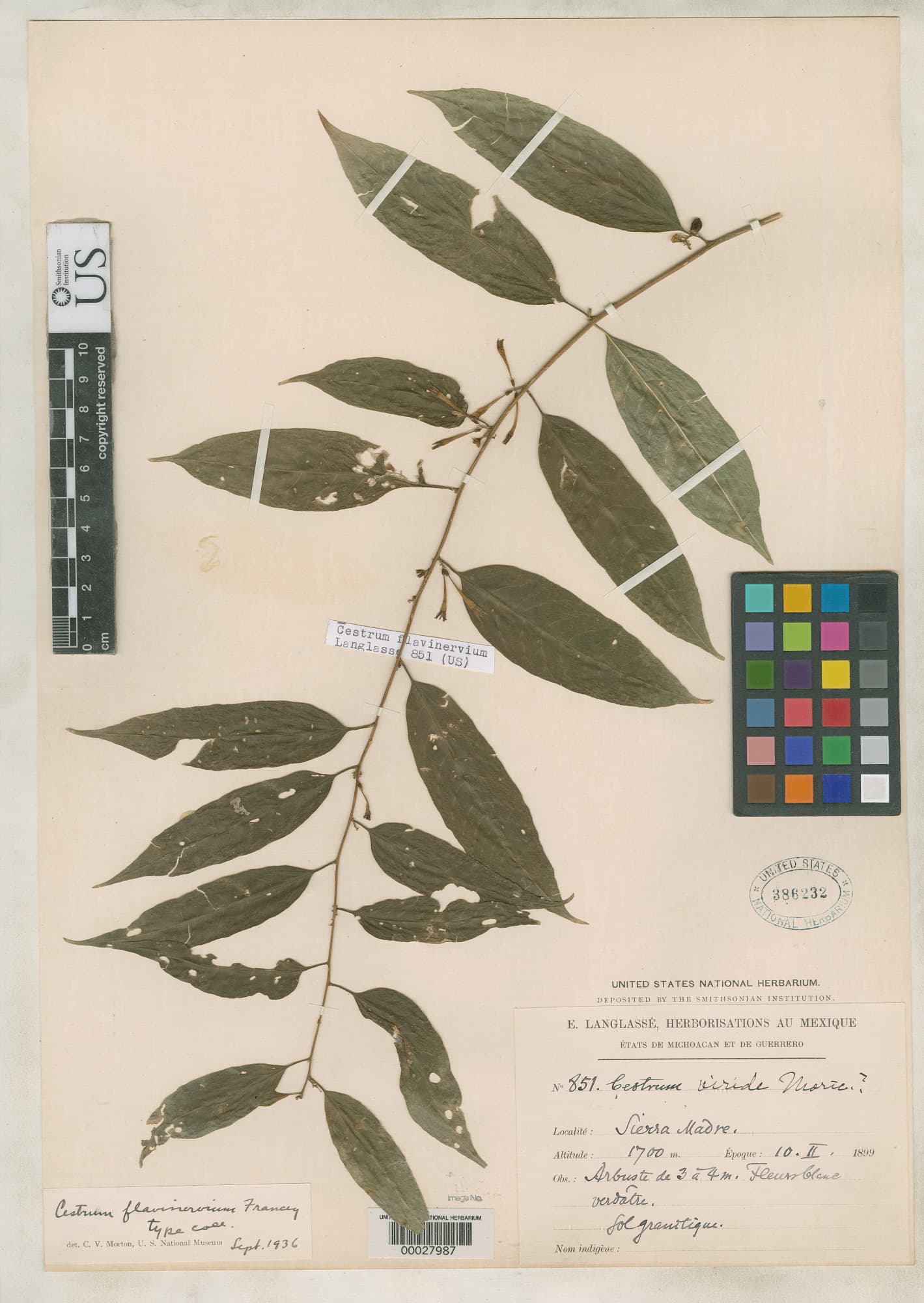
Description
A shrub typically growing 2-3 meters tall, characterized by green leaves with a lighter underside. Its corolla features a greenish tube and white lobes and throat.