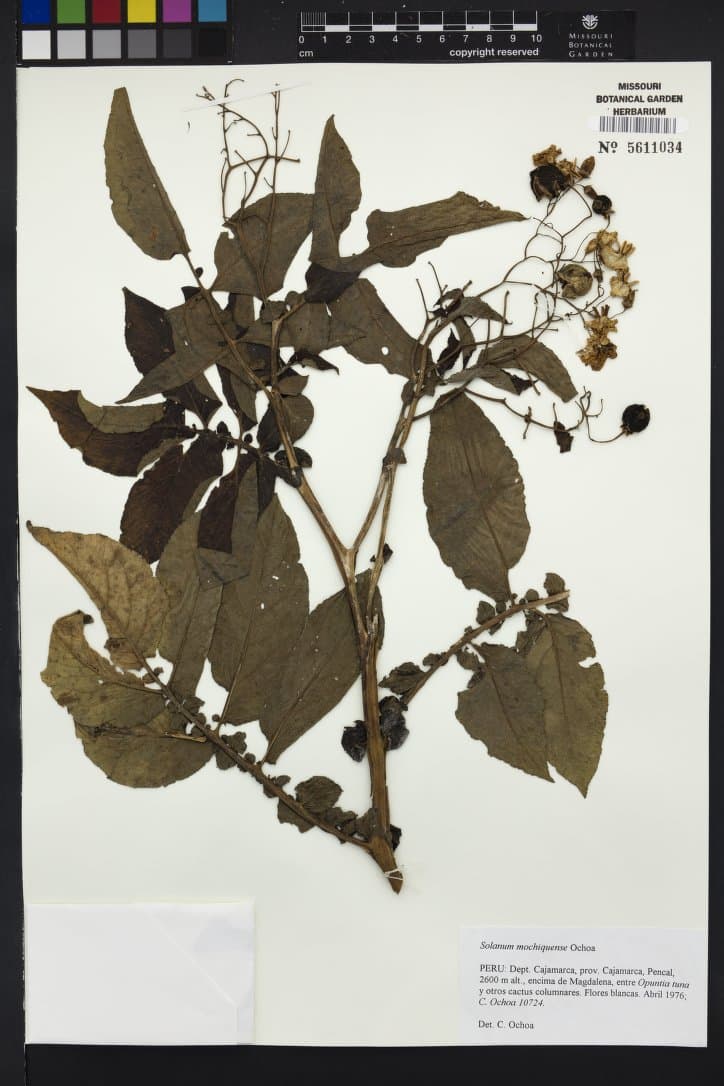
Solanum mochiquense
Image: MBG (cc-by-nc)
NameSolanum mochiquense
Scientific NameSolanum mochiquense Ochoa
Plant FamilySolanaceae
Natural HabitatNative to the high-altitude regions of Peru, specifically found at elevations around 2600 meters in the Cajamarca department. It grows in mountainous areas, often among columnar cacti like Opuntia tuna.
Parts Used
Traditional UsesThere are no widely documented traditional medicinal uses for Solanum mochiquense. Many wild Solanum species, particularly wild potato relatives, are known to contain toxic steroidal glycoalkaloids and are generally not consumed or used medicinally.
Active Constituentssteroidal glycoalkaloids
Contraindications & WarningsDue to its classification as a wild potato species within the Solanum genus, it is presumed to contain toxic steroidal glycoalkaloids. Ingestion of any part of the plant could be harmful or poisonous.
Cultivation NotesThis species is adapted to high-altitude, semi-arid environments, preferring well-drained soils and full sun. It is typically found in mountainous regions of Peru and is not commonly cultivated.
Rarityuncommon
Description
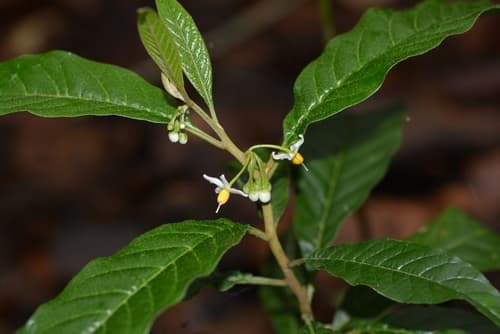
Solanum mochiquense is a herbaceous plant characterized by its simple, ovate to lanceolate leaves and clusters of white flowers, which develop into small, round fruits (berries). It is a wild potato species, part of the Solanum section Petota.