Solanum mahoriense
NameSolanum mahoriense
Scientific NameSolanum mahoriense
Plant FamilySolanaceae
Natural HabitatNative to tropical dry forests and disturbed areas on the islands of Mayotte and the Comoros, thriving in warm, humid climates.
Parts Usedfruit,leaf
Medicinal Actionsanti-inflammatory, antimicrobial, analgesic
Traditional UsesSpecific traditional medicinal uses for Solanum mahoriense are not well-documented in widely accessible sources. However, other Solanum species are traditionally used for their anti-inflammatory properties, pain relief, and treatment of skin ailments, often applied topically or in carefully prepared internal remedies due to potential toxicity.
Active Constituentssteroidal glycoalkaloids
Preparation Methodsdecoction, poultice, tincture
Contraindications & WarningsDue to the presence of steroidal glycoalkaloids, ingestion of Solanum mahoriense, especially unripe fruits, can be toxic, causing gastrointestinal distress and neurological symptoms. It is contraindicated in pregnancy, lactation, and for individuals with pre-existing liver or kidney conditions.
Cultivation NotesThis tropical shrub prefers warm temperatures, well-drained soil, and can tolerate full sun to partial shade. Propagation is typically by seed, and care should be taken due to its thorny nature.
Rarityrare
Description
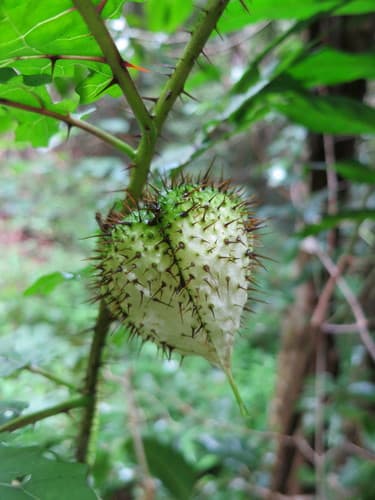
Solanum mahoriense is a thorny shrub characterized by its robust, spiny stems and leaves. It produces distinctive ovoid to globose berries, densely covered in sharp, dark prickles, which are green when unripe.