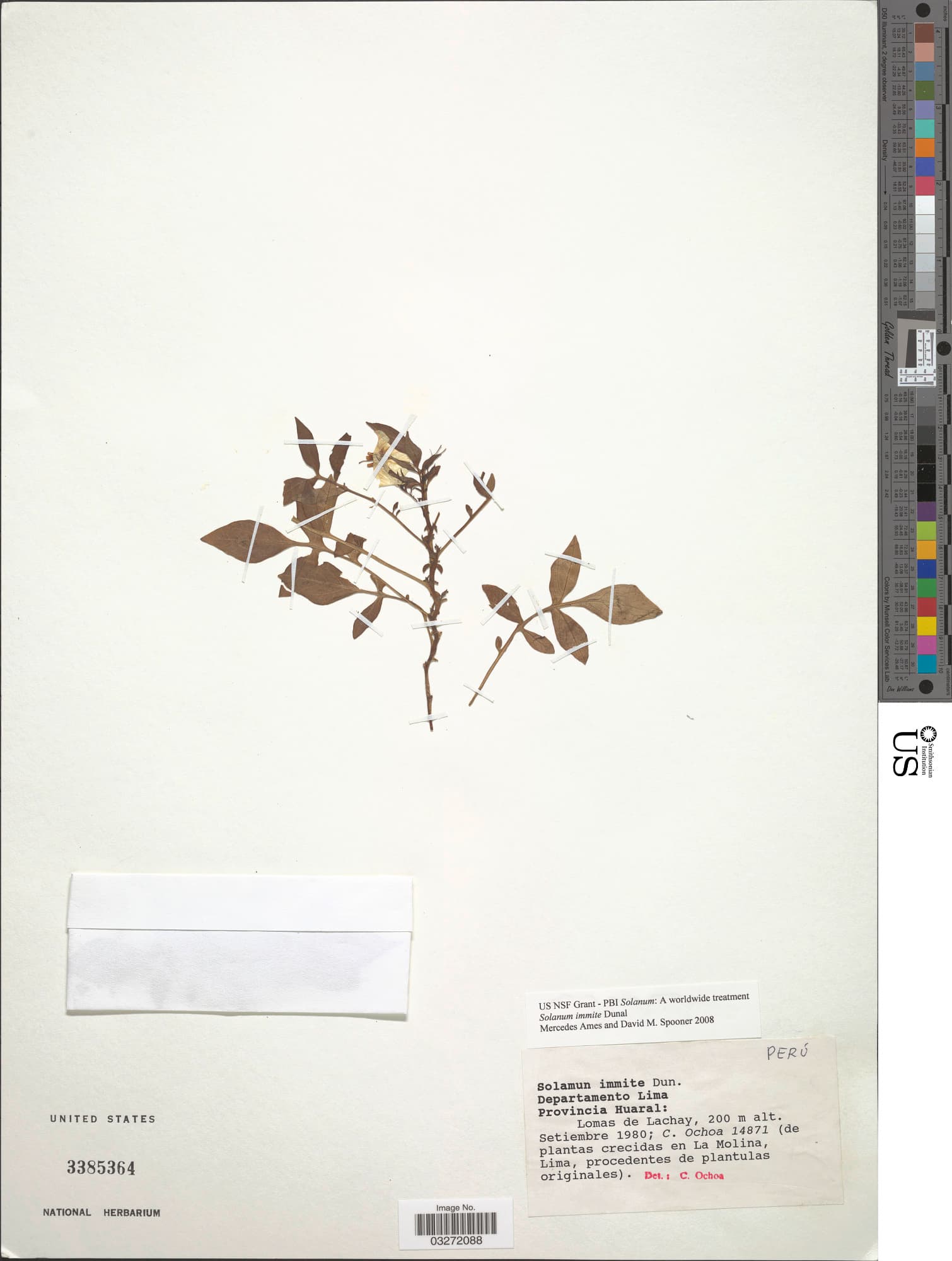
Solanum immite
Image: Conveyor Belt (cc0)
NameSolanum immite
Scientific NameSolanum immite Dunal
Common NamesWild Potato, Papa Silvestre
Plant FamilySolanaceae
Natural HabitatNative to Peru, found in diverse environments including coastal lomas (fog oases) and inter-Andean valleys, typically at moderate elevations. The specimen was collected in Lomas de Lachay.
Parts Usedroot,leaf
Traditional UsesTraditionally, the tubers of Solanum immite and other wild potato species have been consumed as a food source in Andean regions, often after processing to reduce naturally occurring toxic glycoalkaloids. It is also valued for its genetic resources in potato breeding programs.
Active Constituentssteroidal glycoalkaloids, solanine, chaconine, flavonoids
Preparation Methodsdecoction
Contraindications & WarningsDue to the presence of steroidal glycoalkaloids, raw consumption of tubers or other plant parts can be toxic, causing gastrointestinal distress and neurological symptoms. Pregnant or nursing individuals, children, and those with liver or kidney conditions should avoid consumption.
Cultivation NotesThis wild potato species prefers well-drained soils and can tolerate a range of sun exposures from full sun to partial shade. It is adapted to the specific climatic conditions of its native Peruvian habitats.
Rarityuncommon
Description
Solanum immite is a herbaceous wild potato species characterized by its simple, often ovate to lanceolate leaves and the production of underground tubers. It is a close relative of the cultivated potato, primarily valued for its genetic diversity and potential for breeding.