Pachliopta pallidus
Image: lokechin (cc-by-nc)
NamePachliopta pallidus
Scientific NamePachliopta pallidus
Common NamesPale Rose Butterfly
Plant FamilyNot Applicable (This is an insect, not a plant)
Natural HabitatAs an insect, Pachliopta pallidus is found in tropical and subtropical regions, typically in forests, woodlands, and gardens where its host plants (primarily Aristolochia species) are abundant.
Parts Used
Traditional UsesPachliopta pallidus is a butterfly and has no traditional medicinal uses as a plant. While its host plants, such as species of Aristolochia, are known to have traditional medicinal applications (though often toxic due to aristolochic acid), these uses are attributed to the plants themselves, not the butterfly.
Contraindications & WarningsNot Applicable (This is an insect). However, it is important to note that the host plants for Pachliopta butterflies, Aristolochia species, contain aristolochic acids which are highly toxic, nephrotoxic, and carcinogenic, leading to severe health risks if consumed.
Cultivation NotesNot Applicable (This is an insect). Information on 'cultivation' would pertain to breeding the butterfly, not growing a plant for medicinal purposes.
Rarityuncommon
Description
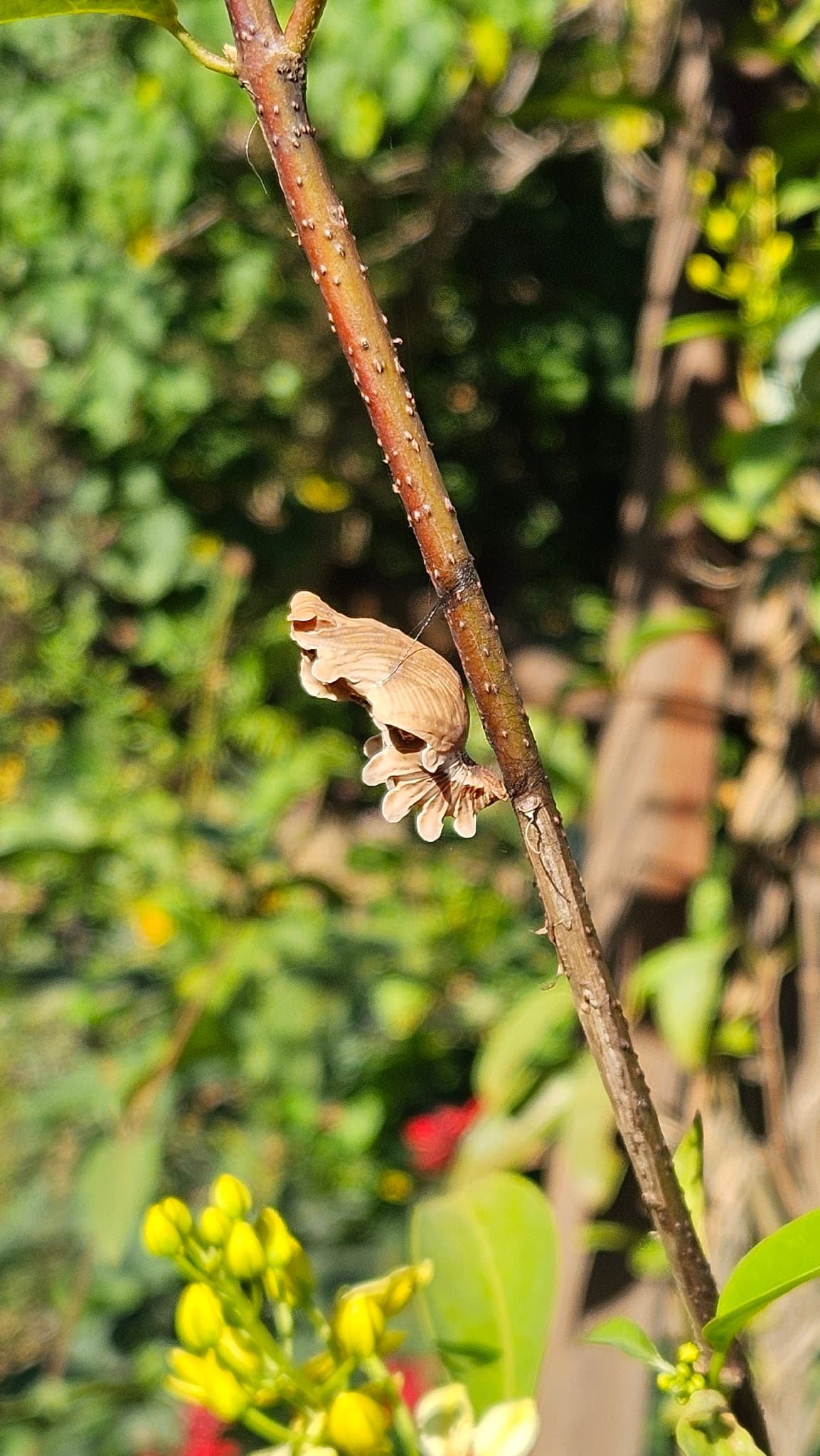
The image displays a chrysalis, which is the pupal stage of a butterfly, attached to a plant stem. The metadata identifies the subject as 'Pachliopta pallidus', a species of butterfly. As an ethnobotanist, I must clarify that this is an insect, not a medicinal plant, and therefore the requested plant-specific properties do not apply to 'Pachliopta pallidus' itself.