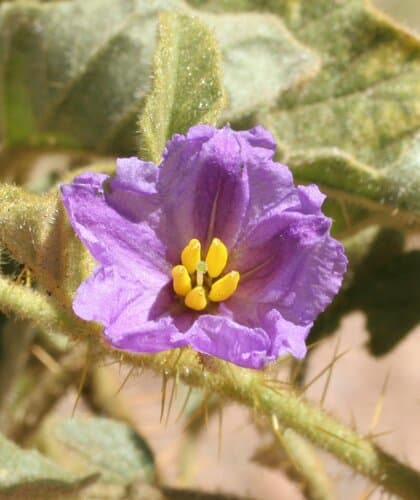
Solanum horridum
NameSolanum horridum
Scientific NameSolanum horridum
Common NamesHorrid Nightshade, Thorny Nightshade
Plant FamilySolanaceae
Natural HabitatCommonly found in disturbed habitats such as pastures, roadsides, agricultural fields, and open, dry woodlands, particularly in arid and semi-arid regions. It can be invasive in non-native areas.
Parts Usedleaf,fruit
Medicinal Actionsanti-inflammatory, analgesic
Traditional UsesDue to its high toxicity from steroidal glycoalkaloids, Solanum horridum is not widely used in mainstream herbal medicine. However, some traditional systems may have employed parts of the plant, often externally, for conditions requiring anti-inflammatory or analgesic effects, similar to other thorny Solanum species, but always with extreme caution and specific detoxification methods.
Active ConstituentsSolasodine, Solamargine, Solasonine, Steroidal glycoalkaloids
Preparation Methodspoultice, powder
Contraindications & WarningsALL parts of Solanum horridum are considered highly toxic due to the presence of steroidal glycoalkaloids. Ingestion can cause severe gastrointestinal distress, neurological symptoms, cardiac issues, and even death. Absolutely contraindicated for internal use without expert medical supervision. Avoid during pregnancy, lactation, and in children. Potential for drug interactions is high.
Cultivation NotesThis plant thrives in full sun and well-drained soils, exhibiting significant drought tolerance once established. It is easily propagated by seed and can become an aggressive weed or invasive species in suitable climates.
Raritycommon
Description
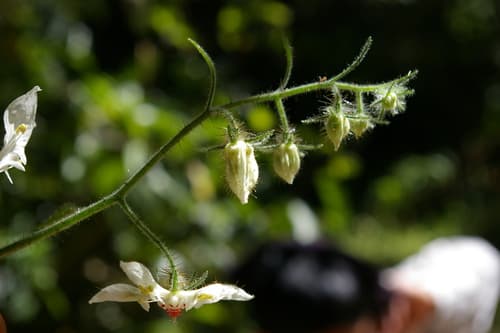
A robust, thorny perennial or subshrub characterized by its spiny stems and leaves, which are often covered in fine hairs. It produces vibrant purple, star-shaped flowers with prominent yellow anthers, followed by spherical, often yellow or orange, berries.