Solanum emmottii
NameSolanum emmottii
Scientific NameSolanum emmottii
Common NamesEmmott's Nightshade
Plant FamilySolanaceae
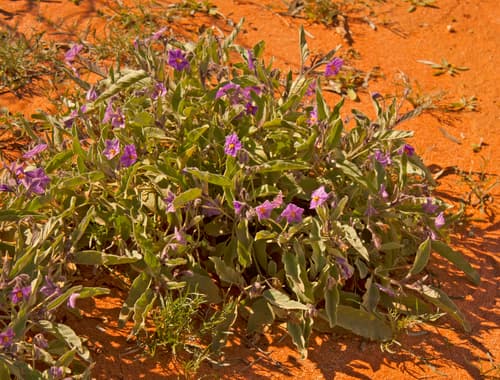
Natural HabitatThis species is native to arid and semi-arid regions of Australia, commonly found growing in red sandy soils, often in open woodlands or shrublands.
Parts Usedleaf,flower
Medicinal Actionsanti-inflammatory, antimicrobial
Traditional UsesWhile specific ethnobotanical data for Solanum emmottii is limited, many Solanum species in Australia were traditionally used by Indigenous Australians. These uses often involved topical applications of crushed leaves or poultices for skin ailments, sores, or to alleviate pain, leveraging potential anti-inflammatory and antimicrobial properties. Internal use of most Solanum species is generally avoided due to toxicity.
Active Constituentssteroidal glycoalkaloids
Preparation Methodspoultice, salve
Contraindications & WarningsAs with many Solanum species, Solanum emmottii likely contains steroidal glycoalkaloids which are toxic. Internal consumption is strongly contraindicated due to potential poisoning. Topical use should be approached with caution, and only after proper identification and understanding of traditional preparation methods to mitigate risks.
Cultivation NotesSolanum emmottii thrives in full sun and well-drained, sandy soils, typical of its native arid environment. It is drought-tolerant once established and requires minimal watering. Propagation is typically from seed.
Raritycommon
Description
Solanum emmottii is a low-growing, herbaceous perennial or annual plant, typically covered in dense, stellate hairs. It features oblong to lanceolate leaves and produces distinctive purple, star-shaped flowers with prominent yellow anthers, often seen in clusters.