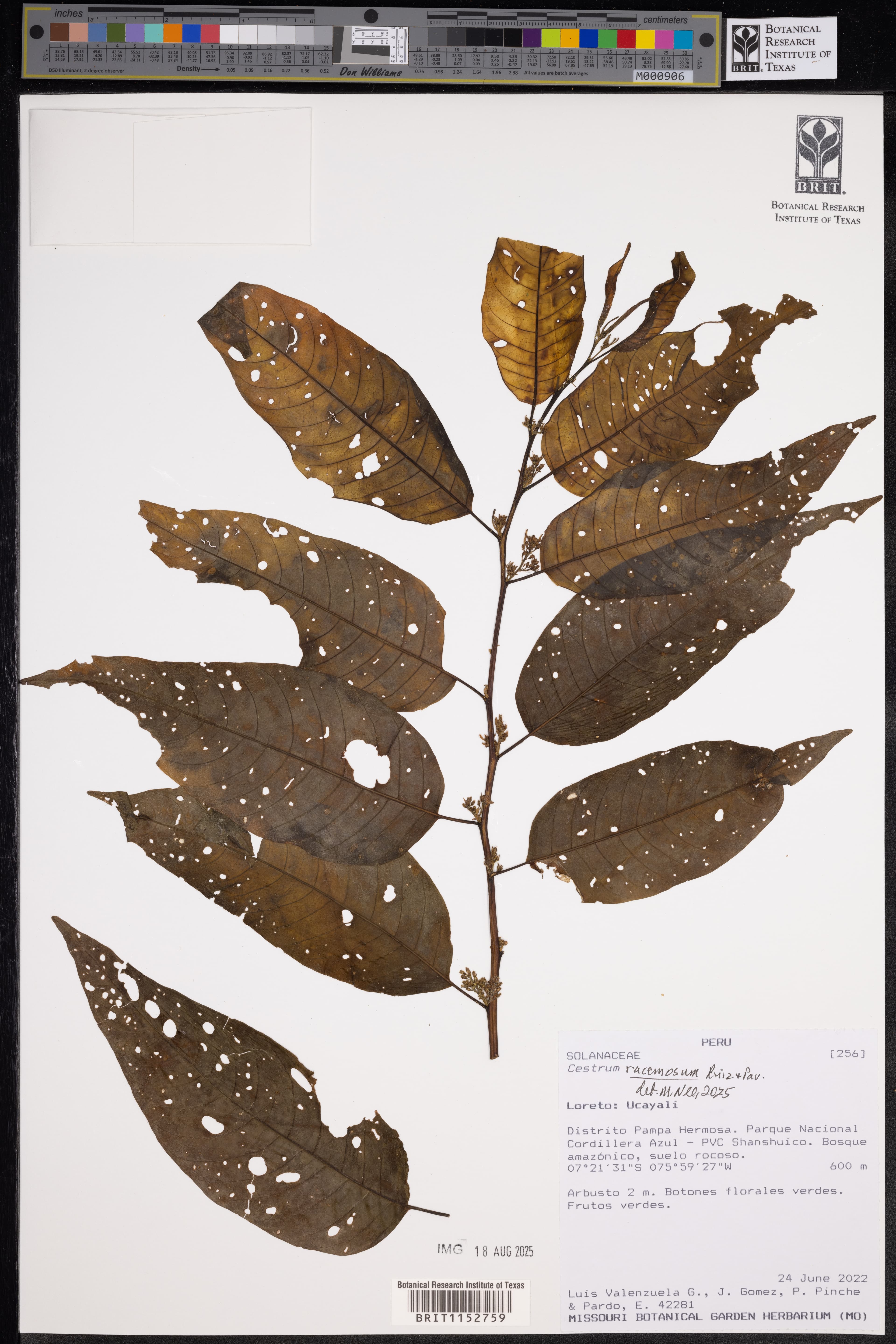
Linden cestrum
Image: Luis Valenzuela (cc0)
NameLinden cestrum
Scientific NameCestrum racemosum Ruiz & Pav.
Common NamesLinden cestrum
Plant FamilySolanaceae
Natural HabitatNative to the Amazonian forest of Peru, specifically found in rocky soil at around 600 meters altitude in areas like the Cordillera Azul National Park in the Loreto region.
Parts Usedleaf,flower,fruit
Medicinal Actionsanalgesic, anti-inflammatory
Traditional UsesWhile specific traditional medicinal uses for *Cestrum racemosum* are not widely documented, other species within the *Cestrum* genus have been traditionally used for their analgesic and anti-inflammatory properties, often applied externally. Due to the known toxicity of many *Cestrum* species, any traditional internal use would be extremely cautious and is generally not recommended.
Active ConstituentsAlkaloids
Preparation Methodsinfusion, poultice
Contraindications & WarningsMany species of *Cestrum* are known to contain toxic alkaloids and can be poisonous if ingested, potentially causing severe gastrointestinal distress, neurological symptoms, or even death. Internal use of *Cestrum racemosum* is generally not recommended and can be dangerous. External use should be approached with extreme caution, and consultation with a qualified expert is advised.
Cultivation NotesAs a native of the Amazonian forest, this shrub likely thrives in warm, humid conditions with well-draining, rocky soil. It prefers a tropical or subtropical climate.
Rarityuncommon
Description
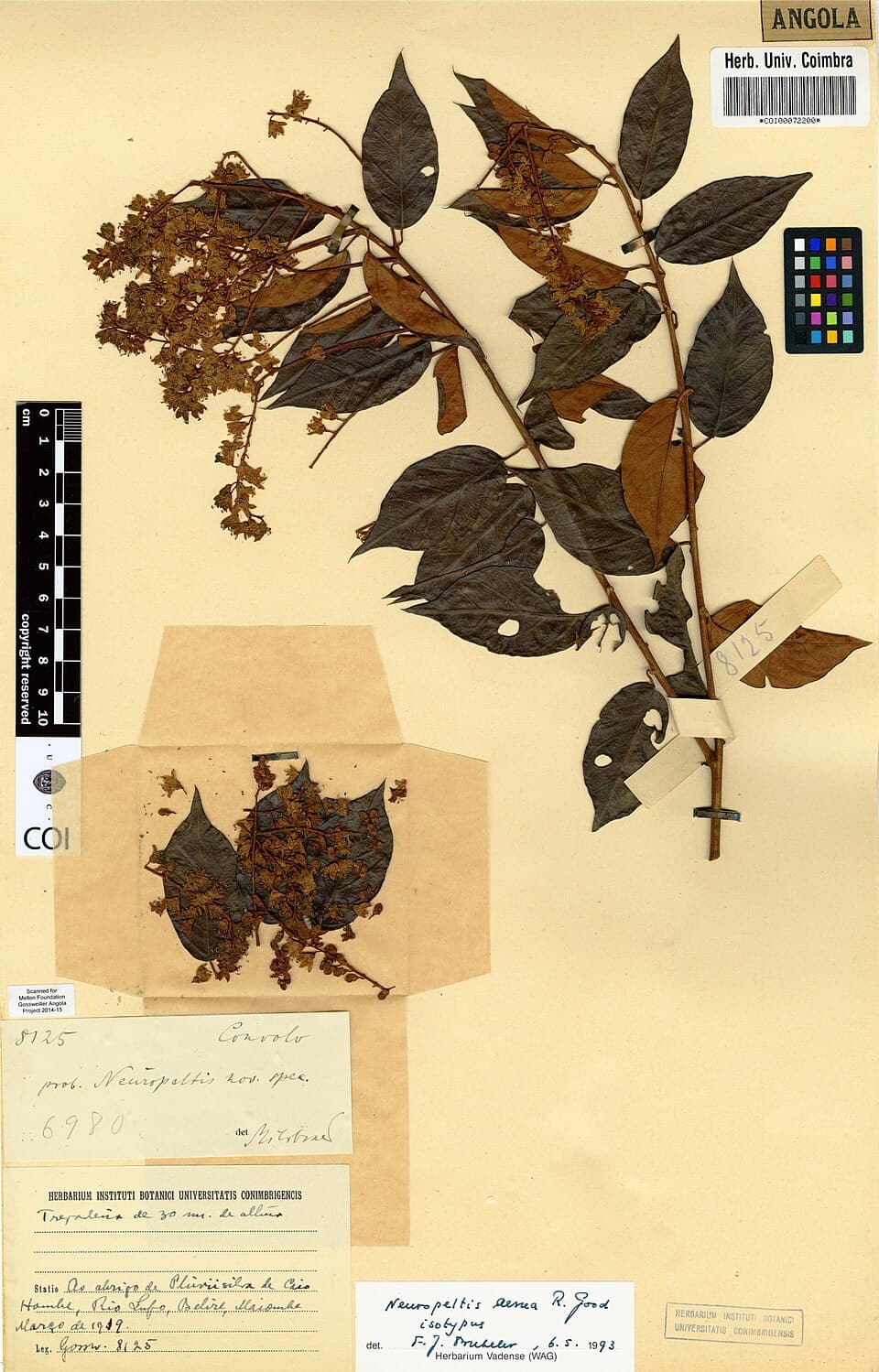
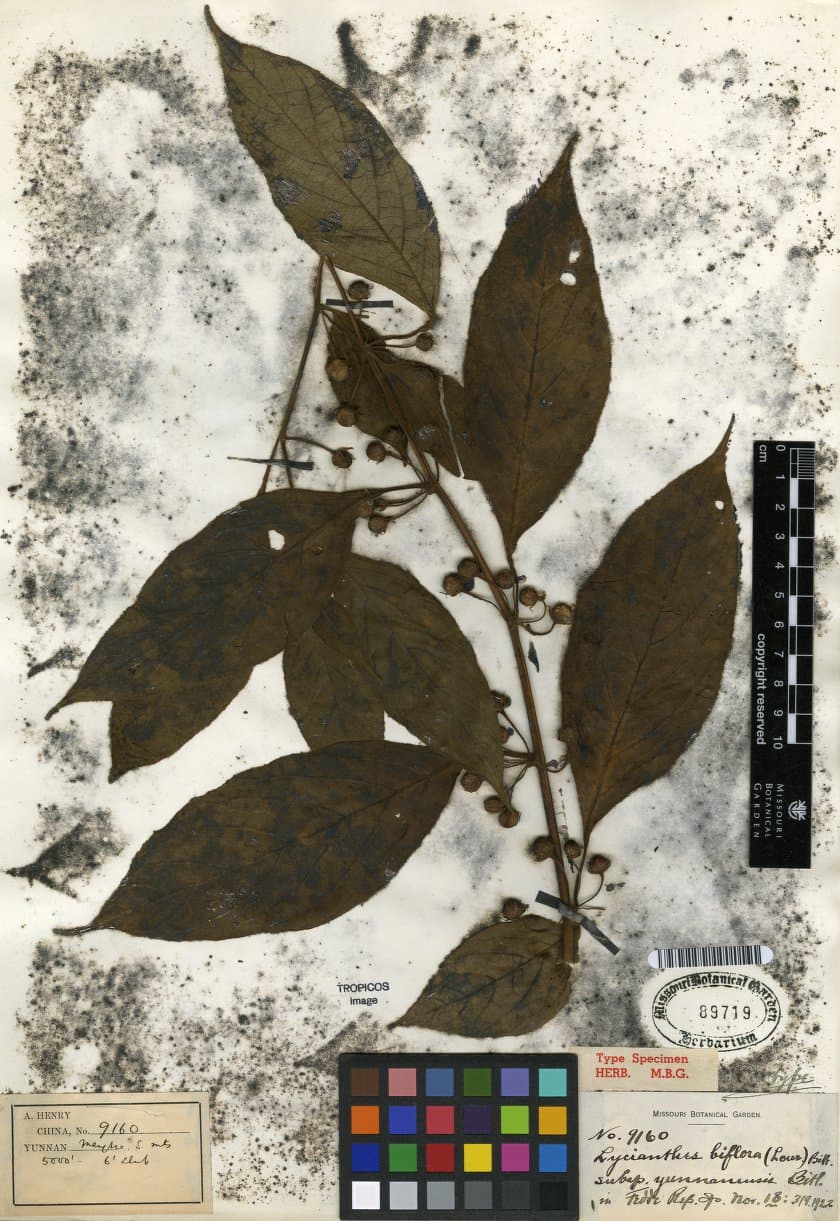
A shrub growing up to 2 meters tall, characterized by alternate, ovate to elliptic leaves. The specimen shows small clusters of green floral buds and green fruits in the leaf axils.