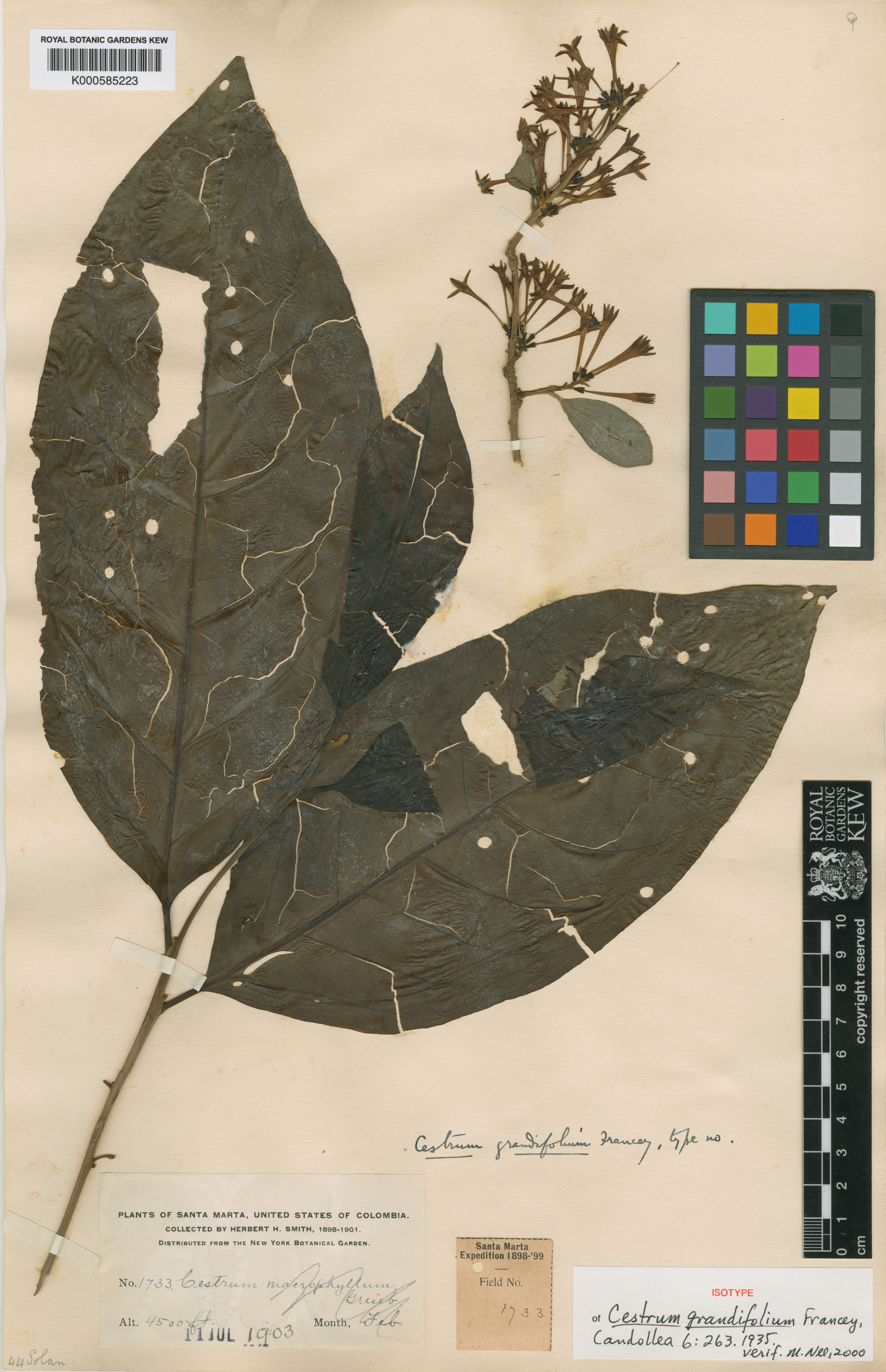
Cestrum grandifolium
Image: Smith, H.H. (cc-by)
NameCestrum grandifolium
Scientific NameCestrum grandifolium Francey
Common NamesLarge-leaved Cestrum
Plant FamilySolanaceae
Natural HabitatNative to tropical and subtropical montane regions of South America, particularly the Andes, growing in forest edges and disturbed areas at elevations between 1000-3000 meters.
Parts Usedleaf,flower,bark
Medicinal Actionsanalgesic, anti-inflammatory, antimicrobial
Traditional UsesTraditionally, various Cestrum species, including potentially C. grandifolium, have been used in South American folk medicine. External applications, often as poultices, were employed for pain relief from rheumatism and sprains, and for certain skin conditions. Internal use for fevers or headaches was rare and approached with extreme caution due to the plant's known toxicity.
Active Constituentssteroidal saponins, steroidal alkaloids, flavonoids
Preparation Methodsinfusion, decoction, poultice, powder
Contraindications & WarningsAll parts of Cestrum grandifolium are considered toxic due to the presence of steroidal saponins and alkaloids, especially the berries and leaves. Symptoms of poisoning can include gastrointestinal upset, neurological effects, and respiratory distress. It is strictly contraindicated in pregnancy, lactation, children, and individuals with liver or kidney conditions, and should not be used internally without expert medical supervision.
Cultivation NotesThis plant thrives in tropical to subtropical climates, preferring well-drained soil and a location with full sun to partial shade. It can be propagated from seeds or cuttings and requires moderate watering.
Rarityuncommon
Description
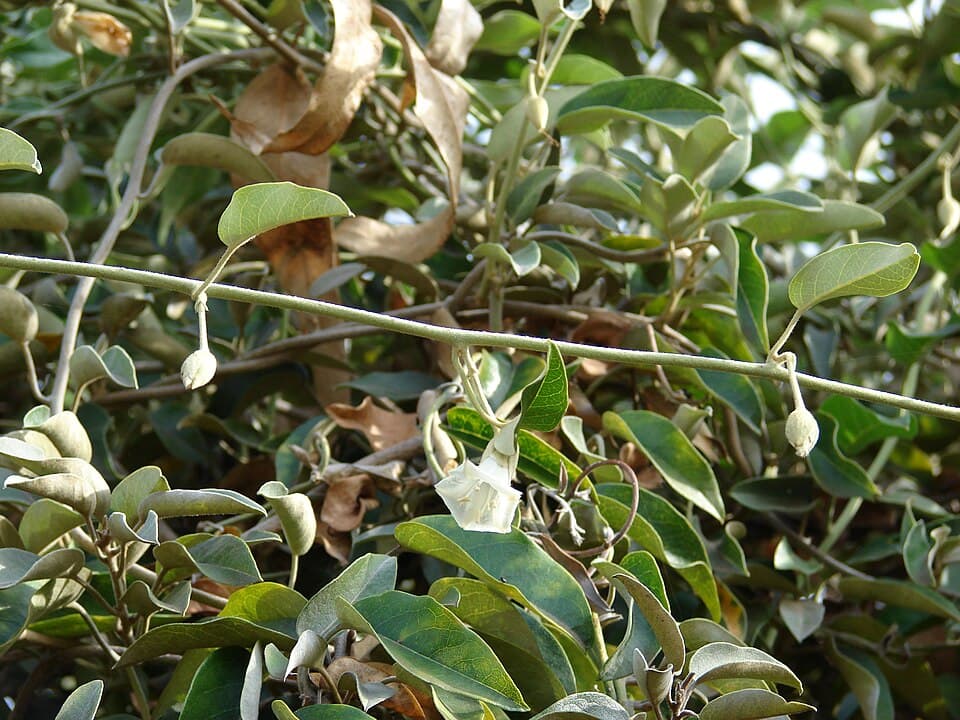
Cestrum grandifolium is a shrub or small tree, typically growing 2-5 meters tall, characterized by its large, ovate to elliptic leaves. It produces clusters of tubular, often greenish-white to yellowish, fragrant flowers, followed by berries.