Solanum burkartii
Image: Conveyor Belt (cc0)
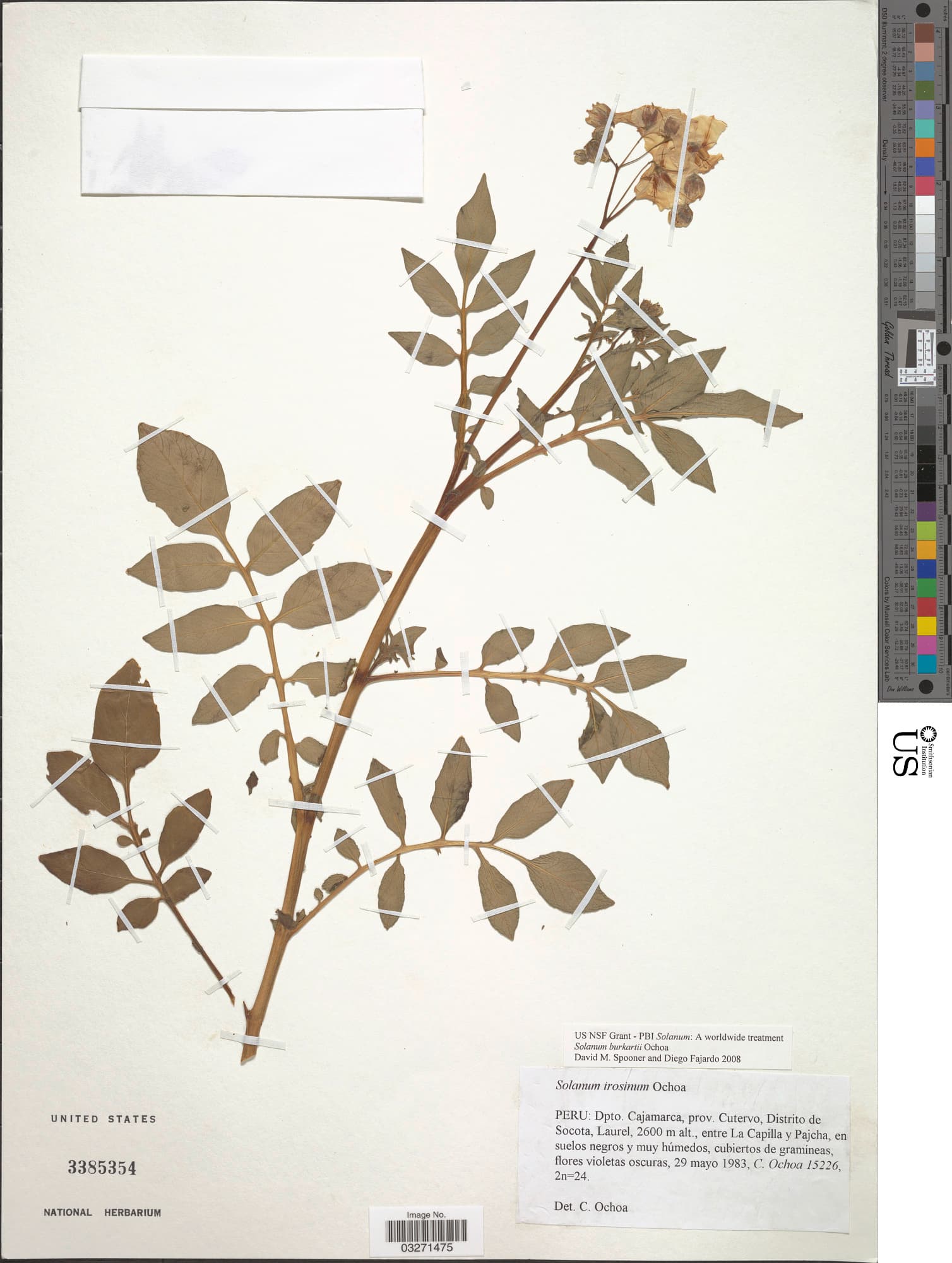
NameSolanum burkartii
Scientific NameSolanum burkartii
Common NamesWild Potato
Plant FamilySolanaceae
Natural HabitatFound in the Cajamarca region of Peru at approximately 2600 meters altitude, thriving in black, very humid soils often intermingled with grasses.
Parts Used
Traditional UsesSolanum burkartii is primarily recognized as a wild relative of cultivated potatoes, valued for its genetic diversity and disease resistance. Specific traditional medicinal uses for this particular species are not well-documented in ethnobotanical literature. Many wild Solanum species contain toxic glycoalkaloids.
Active ConstituentsGlycoalkaloids (e.g., solanine, chaconine)
Contraindications & WarningsDue to the presence of potentially toxic glycoalkaloids, ingestion of Solanum burkartii is likely unsafe and could cause poisoning symptoms such as nausea, vomiting, diarrhea, and neurological effects. It should not be consumed for medicinal purposes without extensive research and expert guidance.
Cultivation NotesThis species thrives in cool, high-altitude environments with consistently moist, rich soils. It is typically found in its native Andean habitat and is primarily of interest for botanical research and potato breeding programs.
Rarityuncommon
Description
Solanum burkartii is a wild potato species native to high-altitude regions of Peru. It is characterized by its herbaceous growth, ovate to elliptic leaves, and dark violet flowers.