Walter's dogwood
NameWalter's dogwood
Scientific NameCornus walteri
Common NamesWalter's dogwood
Plant FamilyCornaceae
Natural HabitatNative to central and eastern China, where it grows in forests, thickets, and along stream banks, often in moist, well-drained soils.
Parts Usedbark,fruit
Medicinal Actionsastringent, anti-inflammatory, antioxidant
Traditional UsesWhile specific traditional uses for *Cornus walteri* are less documented in Western herbalism compared to North American dogwood species, other *Cornus* species have been traditionally used for their astringent properties to treat fevers, malaria, diarrhea, and dysentery. The bark has also been applied externally for wounds and ulcers.
Active Constituentstannins, iridoids, flavonoids
Preparation Methodsdecoction, tincture
Contraindications & WarningsDue to high tannin content, excessive consumption may cause gastrointestinal upset. Caution advised during pregnancy and lactation due to lack of specific safety data.
Cultivation NotesPrefers full sun to partial shade and moist, well-drained, acidic to neutral soil. It is a hardy species, tolerant of a range of conditions once established, and can be grown as an ornamental tree or shrub.
Raritycommon
Description
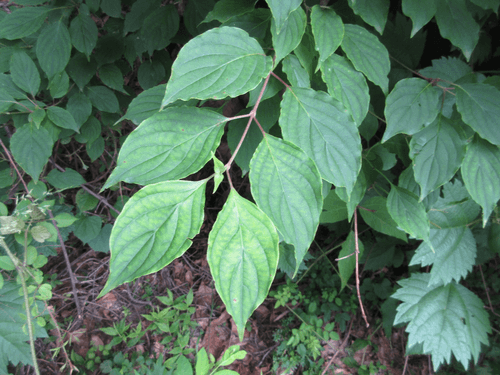
Walter's dogwood is a deciduous tree or large shrub, typically growing 15-30 feet tall, characterized by opposite, ovate to elliptic leaves with prominent arcuate venation. It produces clusters of small, creamy white flowers in late spring to early summer, followed by small, dark blue to black drupes in autumn.