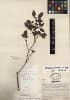
Trumpet Morning Glory
NameTrumpet Morning Glory
Scientific NameIpomoea carnea
Common NamesTrumpet Morning Glory, Bush Morning Glory, Pink Morning Glory
Plant FamilyConvolvulaceae
Natural HabitatNative to tropical and subtropical regions of the Americas, commonly found in moist disturbed areas, along riverbanks, ditches, and roadsides.
Parts Usedleaf,whole_plant
Medicinal Actionsanti-inflammatory, antimicrobial
Traditional UsesTraditionally, some cultures have used the leaves or sap externally for certain skin conditions or wounds. However, due to its significant toxicity, internal use is generally discouraged and considered dangerous.
Active ConstituentsSwainsonine, Calystegines, Cardiac glycosides
Preparation Methodspoultice, infusion, decoction
Contraindications & WarningsHighly toxic; ingestion can cause severe gastrointestinal distress, neurological damage (e.g., 'cracker heels' in livestock), and cardiac issues. Not safe for internal consumption. Avoid during pregnancy, lactation, and in individuals with liver or kidney conditions. Interacts with many medications due to its toxic compounds.
Cultivation NotesPrefers full sun to partial shade and well-drained soil. It is drought-tolerant once established and grows rapidly in warm, humid climates. Can be propagated by seeds or stem cuttings.
Raritycommon
Description
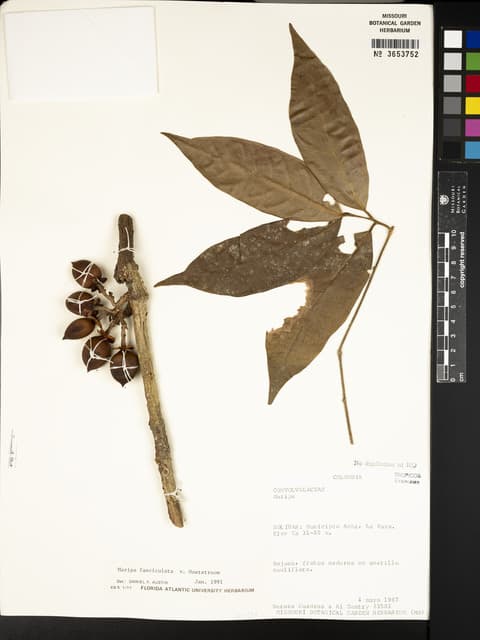
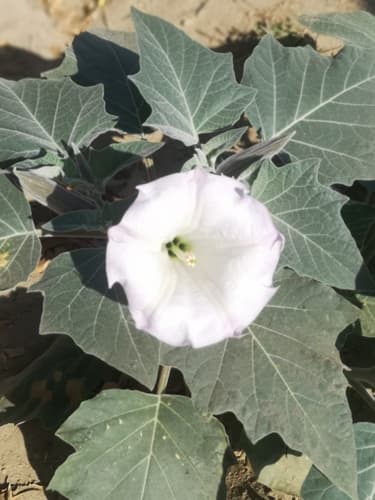
A robust, erect to sprawling shrub characterized by its simple, ovate to lanceolate leaves and large, showy, trumpet-shaped white flowers. It typically grows as a perennial, forming dense thickets.