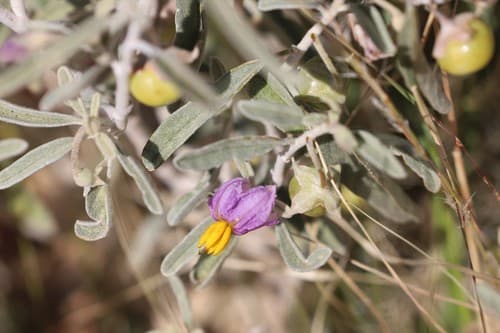
Solanum ammophilum
NameSolanum ammophilum
Scientific NameSolanum ammophilum
Common NamesSand Nightshade, Desert Tomato
Plant FamilySolanaceae
Natural HabitatEndemic to Australia, typically found in sandy soils, dunes, and arid or semi-arid regions, reflecting its 'sand-loving' epithet.
Parts Usedfruit
Medicinal Actionsanti-inflammatory, analgesic
Traditional UsesWhile specific traditional medicinal uses for Solanum ammophilum are not widely documented, fruits of many related Australian Solanum species are traditionally consumed by Indigenous Australians, often after processing to reduce toxicity. Some Solanum species have been used topically for skin ailments or internally for pain, but always with significant caution due to the presence of toxic glycoalkaloids.
Active Constituentssteroidal glycoalkaloids, solanine
Preparation Methodsdecoction, poultice
Contraindications & WarningsAll parts, especially unripe fruits, are considered toxic due to steroidal glycoalkaloids like solanine. Ingestion can cause severe gastrointestinal distress, neurological symptoms, and can be fatal in large doses. Avoid use by pregnant/nursing women, children, and individuals with liver or kidney conditions.
Cultivation NotesRequires well-draining, sandy soil and full sun exposure. It is highly drought-tolerant and adapted to arid and semi-arid climates. Propagation is typically by seed.
Rarityuncommon
Description
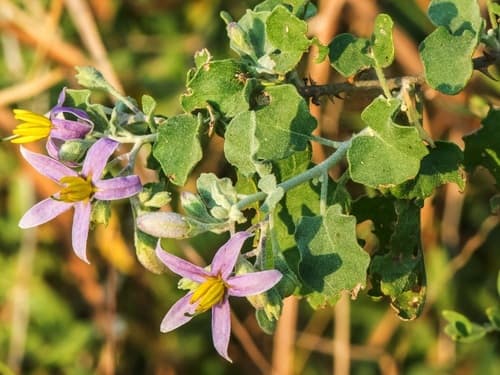
A perennial shrub characterized by its silvery-grey, often hairy leaves. It produces distinctive purple flowers with prominent yellow anthers, followed by small, round, yellowish-green fruits.