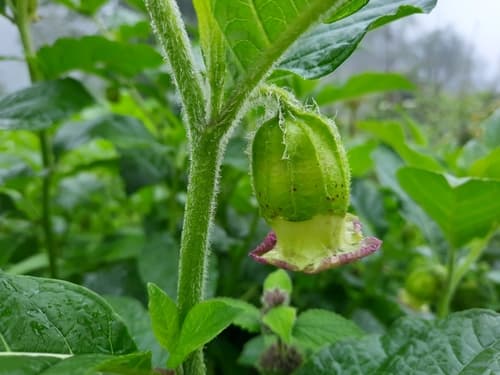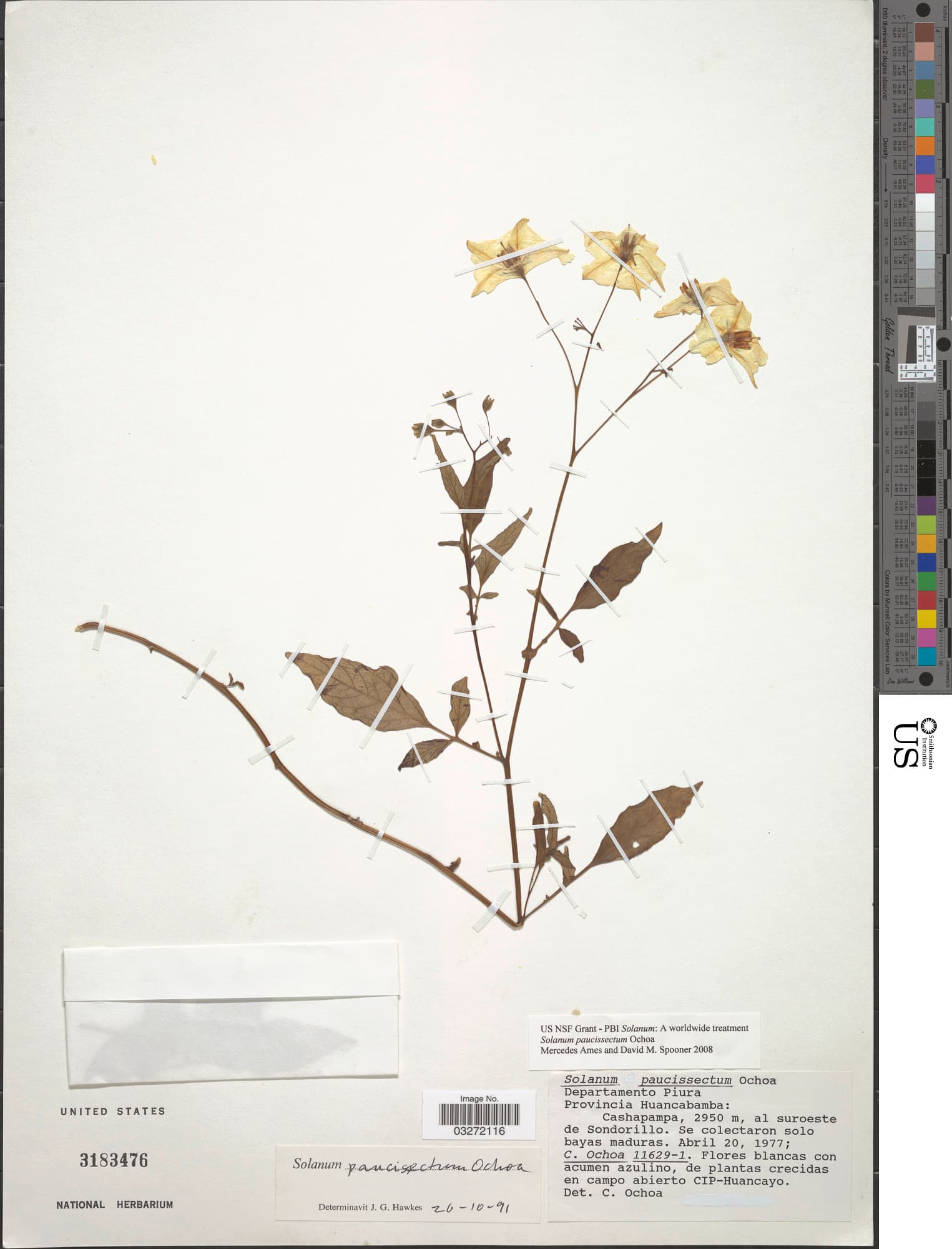
Solanum acroglossum
Image: Conveyor Belt (cc0)
NameSolanum acroglossum
Scientific NameSolanum acroglossum
Common NamesWild Potato, Andean Wild Potato
Plant FamilySolanaceae
Natural HabitatNative to the high-altitude Andean regions of Peru and Bolivia, it thrives in diverse environments including grasslands, rocky slopes, and disturbed areas at elevations typically above 2500 meters.
Parts Used
Traditional UsesThere are no widely documented traditional medicinal uses for Solanum acroglossum. Its primary significance is as a genetic resource for cultivated potatoes, and like many wild Solanum species, its parts are generally considered toxic due to high glycoalkaloid content.
Active Constituentssteroidal glycoalkaloids (e.g., solanine, chaconine)
Contraindications & WarningsAll parts of Solanum acroglossum, especially tubers and foliage, contain high levels of toxic steroidal glycoalkaloids. Ingestion can cause severe gastrointestinal distress, neurological symptoms, and can be fatal. It is not recommended for consumption or medicinal use.
Cultivation NotesPrimarily cultivated in research settings for genetic conservation and breeding. It requires cool temperatures, well-drained soil, and conditions mimicking its high-altitude native habitat. Propagation is typically from tubers or seeds.
Rarityuncommon
Description
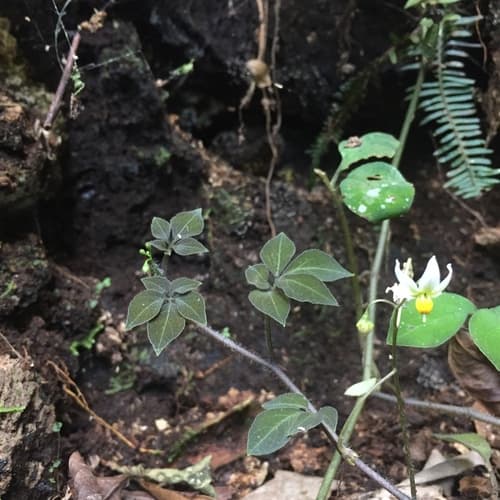
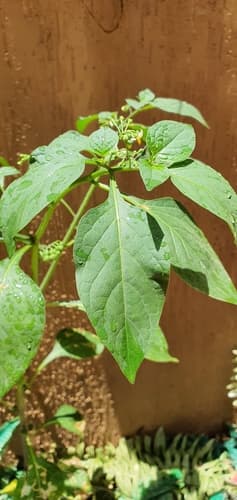
Solanum acroglossum is a tuber-bearing wild potato species, typically characterized by its herbaceous growth habit and small, often toxic, tubers. It is a close relative of the cultivated potato, primarily valued for its genetic diversity in potato breeding programs.