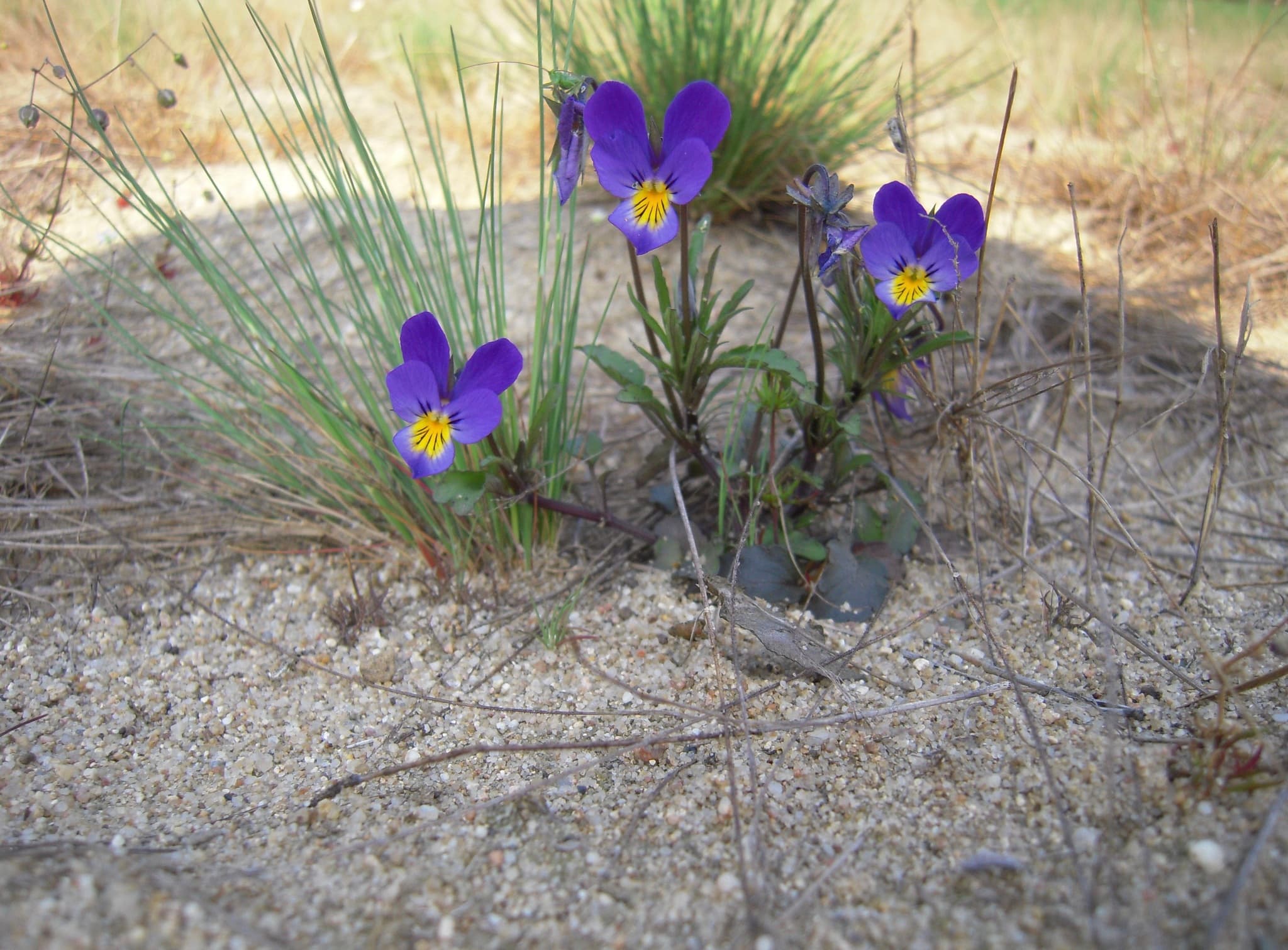
Heartsease
Image: Michael Bierbaumer (cc-by-nc)
NameHeartsease
Scientific NameViola tricolor
Common NamesHeartsease, Wild Pansy, Johnny Jump Up
Plant FamilyViolaceae
Natural HabitatNative to Europe and Asia, it commonly grows in meadows, fields, disturbed ground, sandy soils, and along roadsides. It prefers sunny to partially shaded locations.
Parts Usedwhole_plant,leaf,flower
Medicinal Actionsanti-inflammatory, expectorant, diuretic, demulcent, astringent, antimicrobial
Traditional UsesTraditionally used for skin conditions such as eczema, acne, and impetigo due to its anti-inflammatory and cleansing properties. It was also employed as an expectorant for respiratory ailments like bronchitis and asthma, and as a diuretic for urinary issues. The name "heartsease" reflects its historical use for emotional comfort and heart-related complaints.
Active Constituentssaponins, flavonoids, salicylates, mucilage, tannins, violutoside
Preparation Methodsinfusion, decoction, tincture, poultice, powder
Contraindications & WarningsGenerally considered safe, but large doses may cause nausea or vomiting. Due to salicylate content, caution is advised for individuals sensitive to aspirin or on anticoagulant medication. Avoid during pregnancy and breastfeeding without professional advice.
Cultivation NotesHeartsease is easy to grow from seed, preferring full sun to partial shade and well-drained soil. It readily self-seeds and can naturalize in suitable conditions, often blooming from spring through fall.
Raritycommon
Description
Heartsease is a small, often sprawling annual or short-lived perennial herb, typically growing 10-30 cm tall. It features distinctive tri-colored flowers, usually purple, yellow, and white, with five petals and a spurred lower petal. The leaves are alternate, ovate to oblong, with crenate margins.