Soapbush Nightshade
NameSoapbush Nightshade
Scientific NameSolanum saponaceum
Common NamesSoapbush Nightshade, Jaboncillo
Plant FamilySolanaceae
Natural HabitatNative to Central and South America, it thrives in tropical and subtropical climates, often found in disturbed areas, forest edges, and secondary growth from low to mid-elevations.
Parts Usedleaf,fruit,root
Medicinal Actionsantimicrobial, anti-inflammatory, expectorant
Traditional UsesTraditionally, the fruits are used as a soap substitute due to their high saponin content. In folk medicine, it has been applied topically for skin conditions and wounds, and internally as an expectorant for respiratory issues, and for fevers and pain.
Active ConstituentsSaponins, Steroidal glycoalkaloids
Preparation Methodsinfusion, decoction, poultice
Contraindications & WarningsAll parts, especially unripe fruits, contain toxic steroidal glycoalkaloids; internal use is not recommended without expert guidance. Avoid during pregnancy and breastfeeding. May cause gastrointestinal upset.
Cultivation NotesPrefers tropical to subtropical climates with full sun to partial shade and well-drained soil. Can be propagated from seed and is relatively hardy once established.
Raritycommon
Description
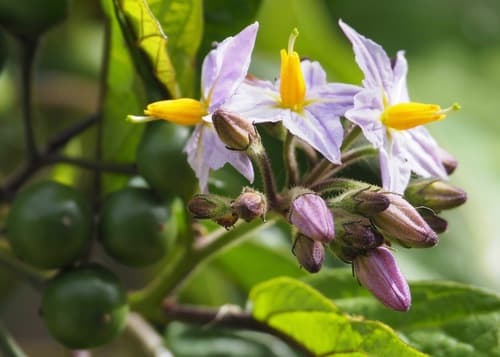
A perennial shrub or small tree, Solanum saponaceum features star-shaped, pale purple to white flowers with prominent yellow anthers. It produces small, round, green fruits that ripen to yellow or orange, and has ovate to lanceolate leaves.