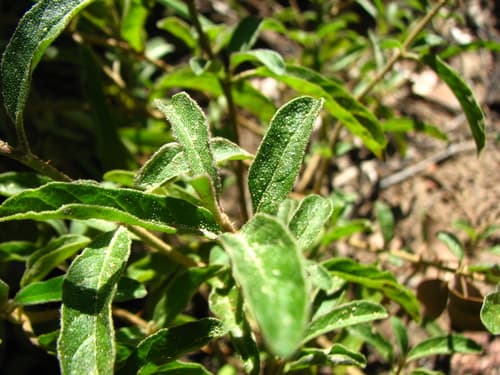
Schweinfurth's Tea-tree
NameSchweinfurth's Tea-tree
Scientific NameLycium schweinfurthii
Common NamesSchweinfurth's Tea-tree, Desert Thorn, African Boxthorn
Plant FamilySolanaceae
Natural HabitatArid and semi-arid regions of North Africa, the Middle East, and parts of the Arabian Peninsula, often found in wadis, rocky slopes, sandy plains, and disturbed areas.
Parts Usedleaf,fruit,root
Medicinal Actionsantioxidant, anti-inflammatory, adaptogen
Traditional UsesTraditionally, various parts of the plant, particularly the fruits and leaves, have been used in folk medicine across its native range. It is employed as a general tonic, for treating fevers, digestive complaints, and as an anti-inflammatory agent. Some traditions also suggest its use for vision health and as an aphrodisiac.
Active ConstituentsPolysaccharides, Carotenoids, Flavonoids, Betaine
Preparation Methodsinfusion, decoction, powder
Contraindications & WarningsGenerally considered safe when consumed in moderation. However, caution is advised for individuals on anticoagulant medications due to potential interactions. Pregnant and breastfeeding women should consult a healthcare professional before use.
Cultivation NotesThis drought-tolerant shrub thrives in full sun and well-drained, sandy or rocky soils. It is resilient to harsh conditions and can be propagated from seeds or cuttings.
Rarityuncommon
Description
A thorny, deciduous shrub native to arid regions, characterized by small, elongated, somewhat succulent green leaves and solitary, pale cream to yellowish-white, star-shaped flowers with five petals. It produces small, red, berry-like fruits.