Angelica
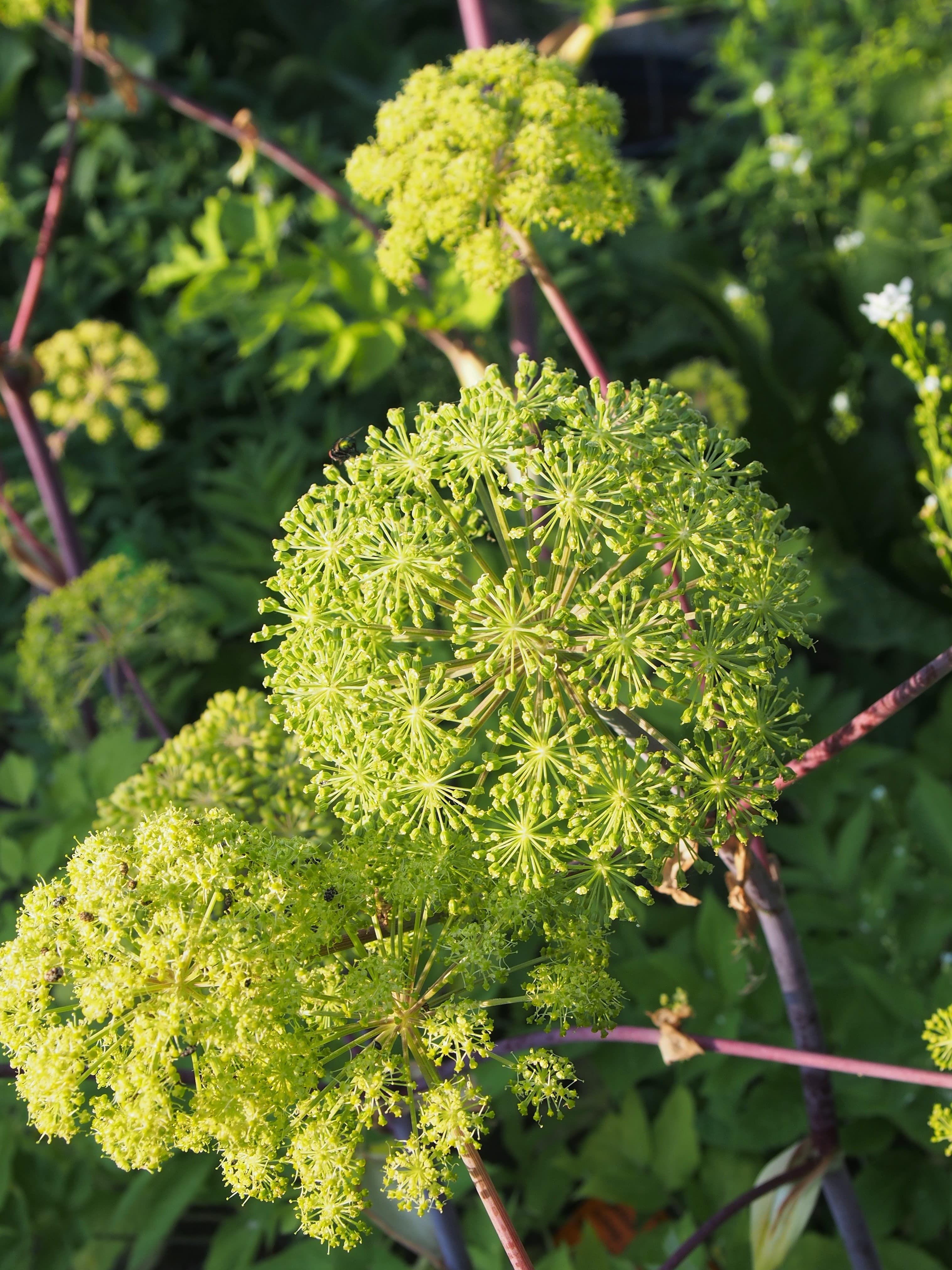
Image: Agnieszka Kwiecień, Nova (CC BY-SA 4.0)
NameAngelica
Scientific NameAngelica archangelica
Common NamesAngelica, Garden Angelica, Wild Celery, Norwegian Angelica
Plant FamilyApiaceae
Natural HabitatNative to northern Europe, Siberia, and Iceland, Angelica archangelica thrives in moist, cool environments. It is commonly found in damp meadows, along riverbanks, and in coastal areas.
Parts Usedroot,seed,leaf,flower
Medicinal Actionscarminative, expectorant, diuretic, anti-inflammatory, antimicrobial
Traditional UsesTraditionally, Angelica has been used as a digestive aid to relieve flatulence, indigestion, and colic. It is also employed for respiratory conditions such as coughs, bronchitis, and colds, acting as an expectorant. Historically, it was valued as a diaphoretic to promote sweating in fevers and was believed to offer protection against various ailments and evil.
Active ConstituentsFuranocoumarins, Volatile oils (e.g., alpha-pinene, limonene, phellandrene), Coumarins, Flavonoids
Preparation Methodsinfusion, decoction, tincture, powder, essential oil
Contraindications & WarningsNot recommended for pregnant women due to potential uterine stimulant effects. May increase photosensitivity, especially in fair-skinned individuals, due to furanocoumarins; avoid excessive sun exposure. Use with caution in individuals with diabetes as it may affect blood sugar levels. Avoid in individuals on anticoagulant medication.
Cultivation NotesAngelica prefers moist, fertile, well-drained soil and can tolerate partial shade to full sun. It is a biennial plant, typically flowering in its second year, after which it dies. Propagation is primarily by seed, which should be sown fresh as viability decreases rapidly.
Raritycommon
Description
Angelica archangelica is a tall, aromatic biennial herb characterized by its large, compound leaves and prominent greenish-white to yellowish-green flowers arranged in large, compound umbels. The plant can reach heights of up to 2.5 meters, featuring hollow, grooved stems often tinged with purple.