Cestrum flavinervium
Image: Ingrid P. Lin (cc0)
NameCestrum flavinervium
Scientific NameCestrum flavinervium Francey
Plant FamilySolanaceae
Natural HabitatNative to mountainous regions, specifically found in the Sierra Madre of Mexico at altitudes around 1700 meters, preferring granitic soils.
Parts Usedleaf,flower
Medicinal Actionsanalgesic, anti-inflammatory
Traditional UsesWhile specific traditional uses for Cestrum flavinervium are not widely documented, other species within the Cestrum genus are traditionally used for their analgesic and anti-inflammatory properties, often applied externally or in very small, carefully prepared doses for conditions like fever and pain, due to their inherent toxicity.
Active Constituentssteroidal saponins, glycoalkaloids, flavonoids
Preparation Methodsinfusion, decoction, poultice
Contraindications & WarningsCestrum species are generally considered toxic due to the presence of glycoalkaloids and saponins. Ingestion can cause severe gastrointestinal distress, neurological symptoms, and can be fatal. Not recommended for internal use without expert supervision; caution is advised even for external applications.
Cultivation NotesCestrum species typically prefer well-drained soil and can thrive in full sun to partial shade. They are generally sensitive to frost and require a warm climate.
Rarityuncommon
Description
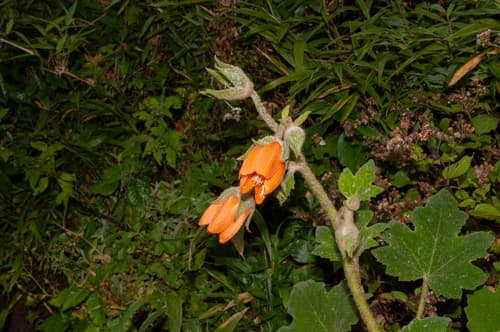
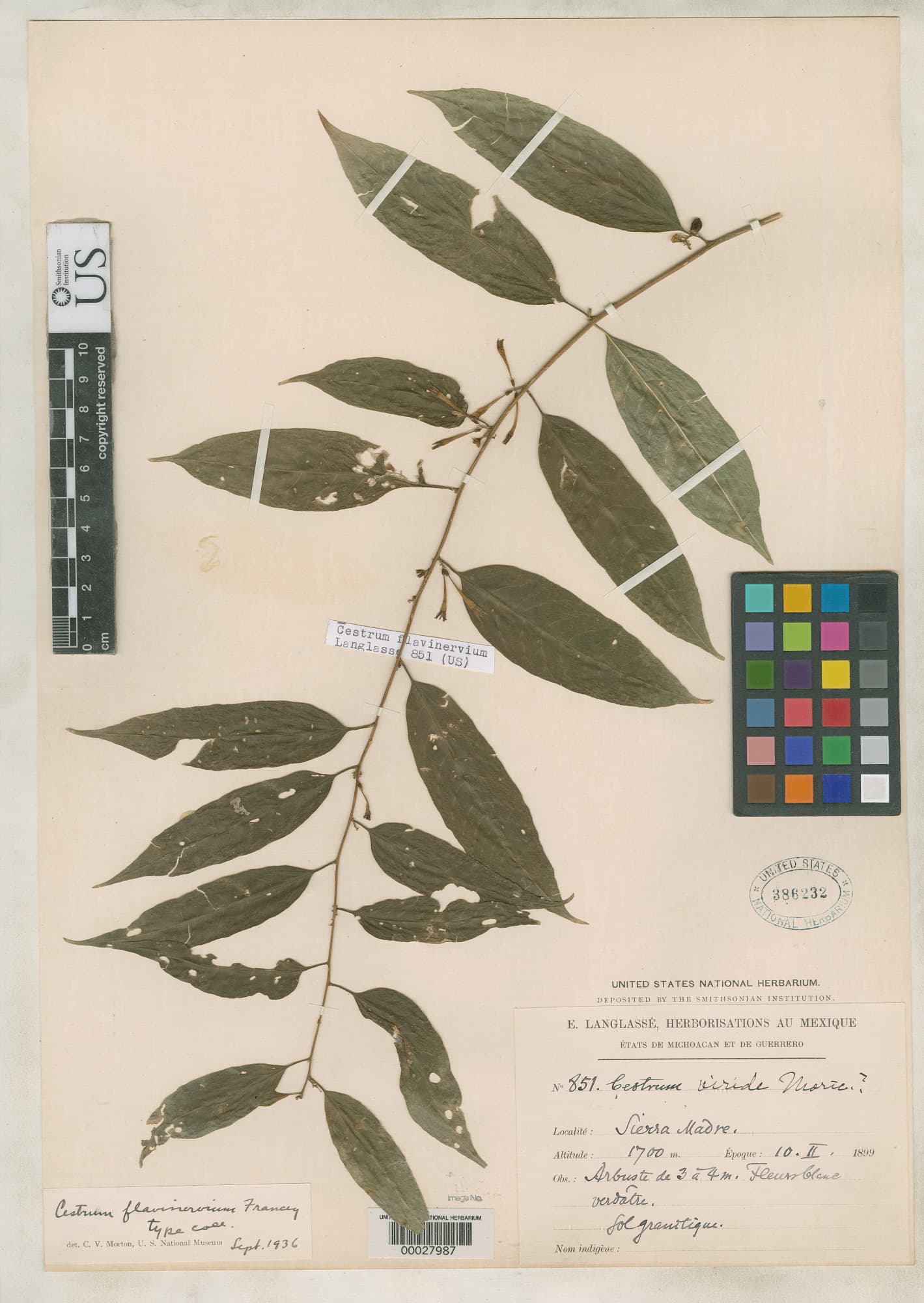
Cestrum flavinervium is a shrub, typically growing 3 to 4 meters tall, characterized by its simple, alternate, ovate-lanceolate leaves with prominent venation. It produces greenish-white, tubular flowers.