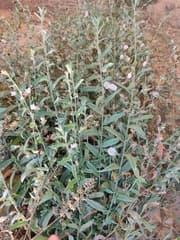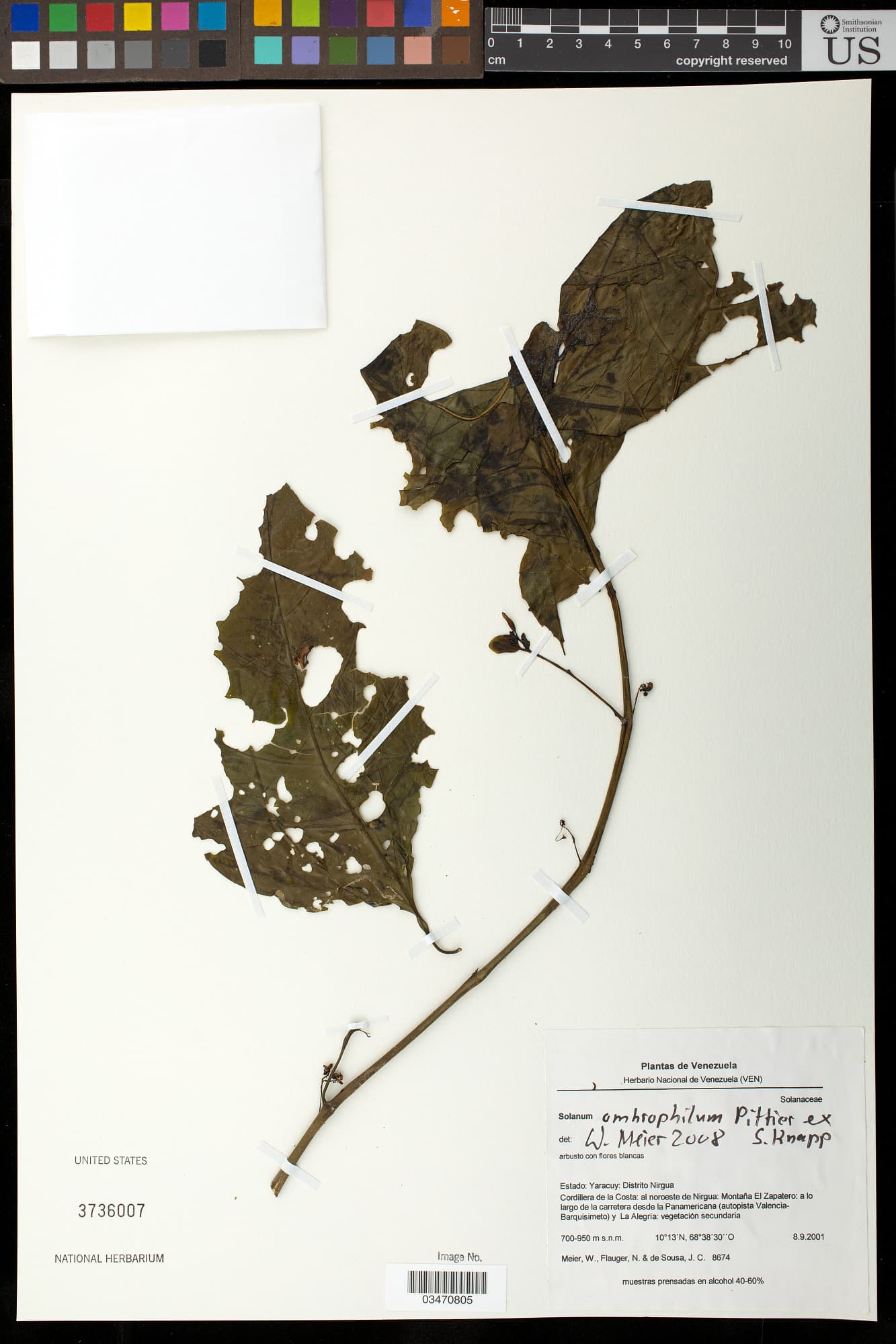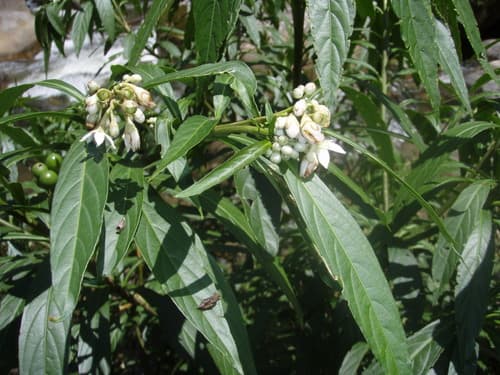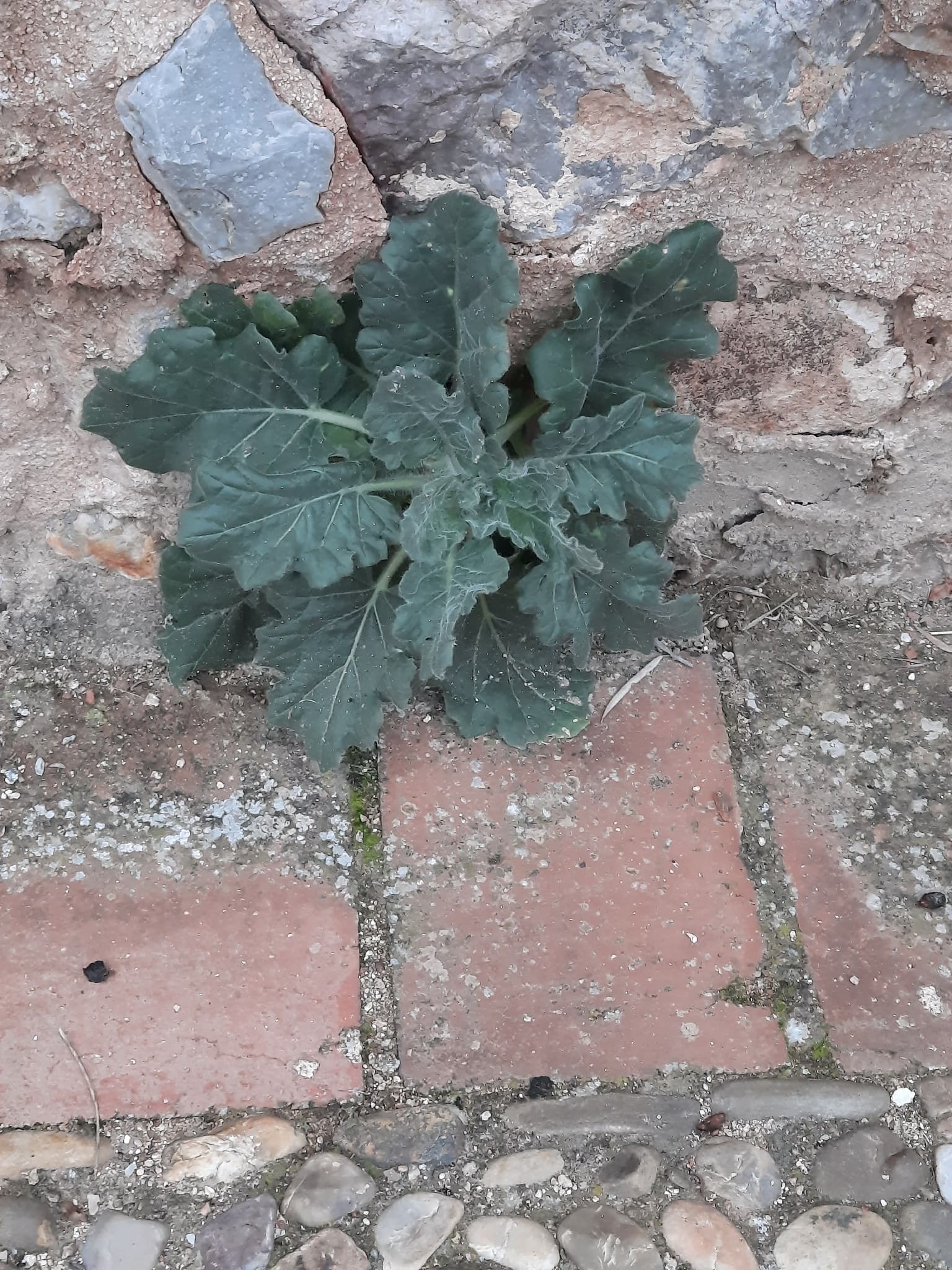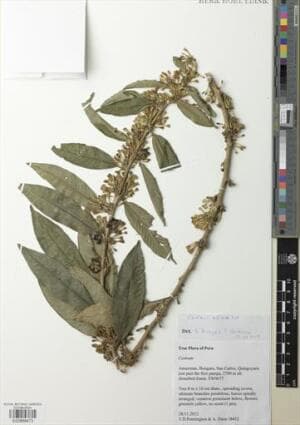
rigid cestrum
Image: Pennington, Richard Toby & Daza, Aniceto (cc0)
Namerigid cestrum
Scientific NameCestrum rigidum
Common Namesrigid cestrum
Plant FamilySolanaceae
Natural HabitatNative to high-altitude regions of the Andes, specifically documented at around 2200 meters in Amazonas, Peru. It thrives in tropical or subtropical montane environments, often found in cloud forests or similar humid, elevated habitats.
Parts Usedwhole_plant
Traditional UsesTraditional medicinal uses for *Cestrum rigidum* are not widely documented in safe, reputable sources. The genus *Cestrum* is generally known for containing toxic compounds, and any traditional uses would likely involve extreme caution and specific preparation methods to mitigate toxicity, often for external applications or in very small, controlled doses.
Active ConstituentsSteroidal glycoalkaloids
Contraindications & WarningsAll parts of the plant are considered toxic due to the presence of steroidal glycoalkaloids. Ingestion can cause severe gastrointestinal upset, neurological symptoms, and can be fatal, especially to livestock. Not recommended for internal use.
Cultivation Notes*Cestrum* species generally prefer full sun to partial shade and well-drained soil. They are often grown as ornamental plants in tropical and subtropical climates, requiring protection from frost in cooler regions. Propagation is typically by seed or cuttings.
Rarityuncommon
Description
A woody shrub or small tree, typically 8-10 cm in diameter with a spreading crown and pendulous ultimate branches. It features spirally arranged, simple leaves and clusters of small, strongly yellow, unscented flowers. The specimen shows mature leaves and developing inflorescences.