Solanum monadelphum
NameSolanum monadelphum
Scientific NameSolanum monadelphum
Plant FamilySolanaceae
Natural HabitatNative to tropical and subtropical regions of South America, it is often found in disturbed areas, forest edges, and along watercourses.
Parts Usedleaf,fruit
Medicinal Actionsanti-inflammatory, antimicrobial, analgesic
Traditional UsesTraditionally, various Solanum species, including those with similar morphology, have been used externally for skin ailments, wounds, and internally (with extreme caution due to toxicity) for fevers and pain relief. Specific traditional uses for Solanum monadelphum are not widely documented in accessible literature, but it likely shares some general applications with its genus relatives.
Active ConstituentsSteroidal glycoalkaloids (e.g., solanine, solamargine), Flavonoids, Saponins
Preparation Methodspoultice, decoction, infusion
Contraindications & WarningsAll parts of Solanum monadelphum, especially unripe fruits, are likely toxic due to glycoalkaloids. Avoid use by pregnant or nursing women, children, and individuals with known allergies to Solanaceae plants. May interact with medications.
Cultivation NotesThis species prefers warm, humid climates with well-drained soil and can tolerate full sun to partial shade. It can be propagated from seeds.
Rarityuncommon
Description
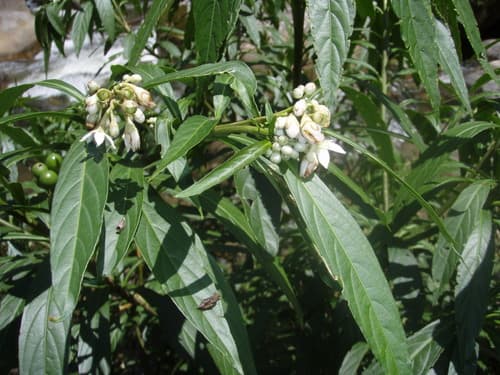
Solanum monadelphum is an herbaceous shrub or subshrub characterized by elongated, lanceolate green leaves. It produces clusters of small white, star-shaped flowers that develop into small, spherical green berries, which typically ripen to a darker color.