Racemose Cestrum
NameRacemose Cestrum
Scientific NameCestrum racemosum
Common NamesRacemose Cestrum
Plant FamilySolanaceae
Natural HabitatNative to tropical and subtropical regions of Central and South America, often found in open forests, forest edges, disturbed areas, and along roadsides.
Parts Usedleaf,bark
Medicinal Actionsanalgesic, anti-inflammatory
Traditional UsesSome *Cestrum* species have been traditionally used in folk medicine for fever, pain relief, and external applications for skin conditions, though *Cestrum racemosum* specifically has less documented medicinal use. All parts are highly toxic and internal use is extremely dangerous.
Active Constituentssteroidal saponins, alkaloids
Preparation Methodsinfusion, decoction, poultice
Contraindications & WarningsALL parts of *Cestrum racemosum* are highly toxic if ingested, containing steroidal saponins and alkaloids. Ingestion can cause severe gastrointestinal upset, neurological symptoms, and cardiac issues, and can be fatal to humans and livestock. Not for internal use; handle with extreme caution.
Cultivation NotesPrefers full sun to partial shade and well-drained soil. Can be grown as an ornamental shrub in warm, frost-free climates. Tolerant of various soil types.
Raritycommon
Description
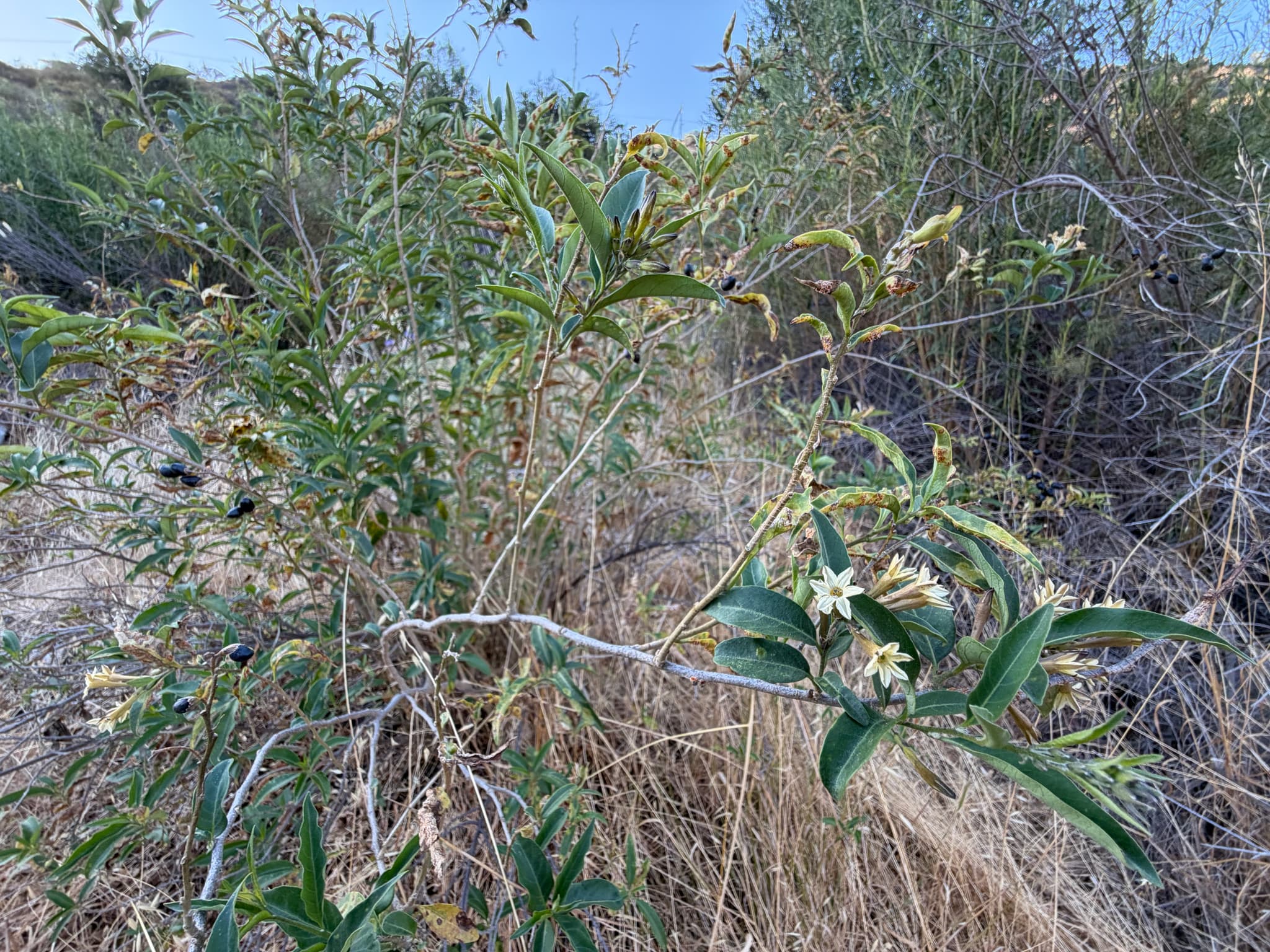
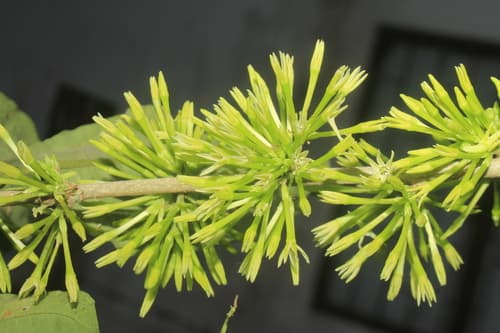
A shrub or small tree, typically growing 2-5 meters tall, characterized by simple, alternate leaves and terminal or axillary racemose inflorescences. The flowers are small, tubular, greenish-yellow to white, often fragrant, and develop into small berries.