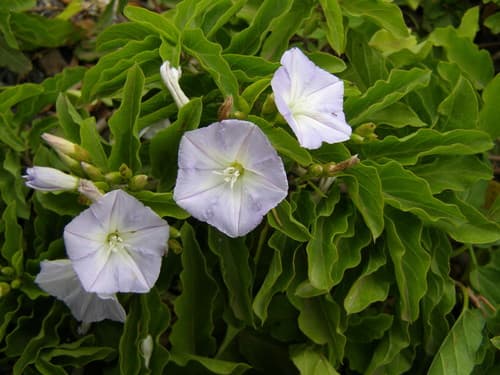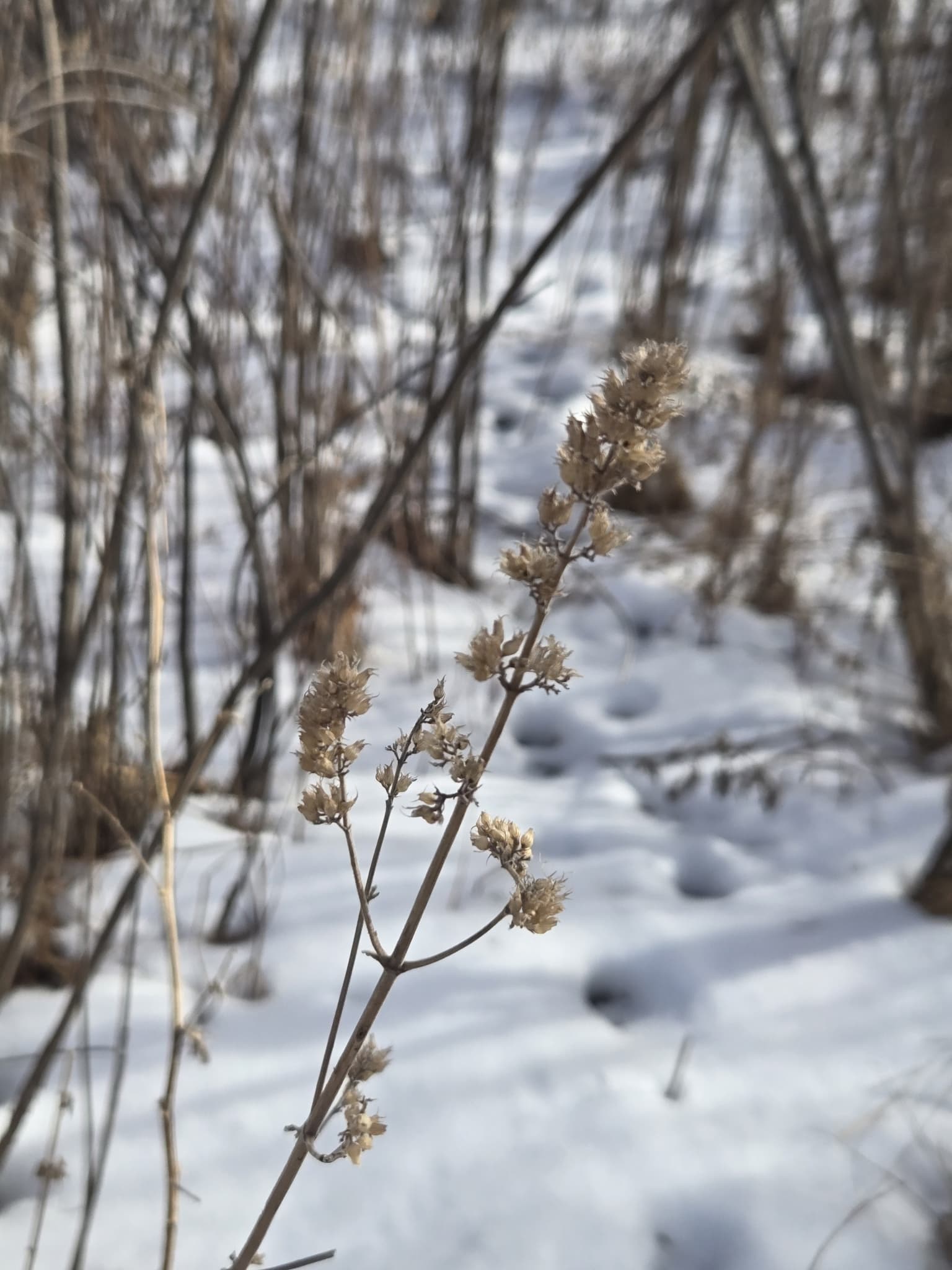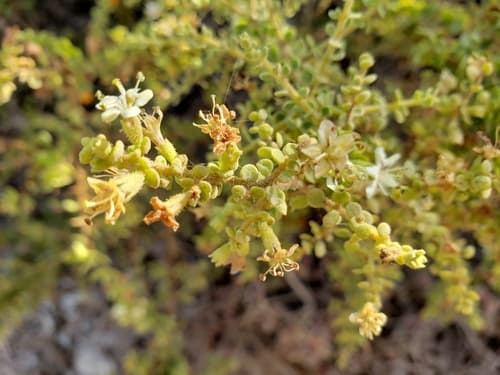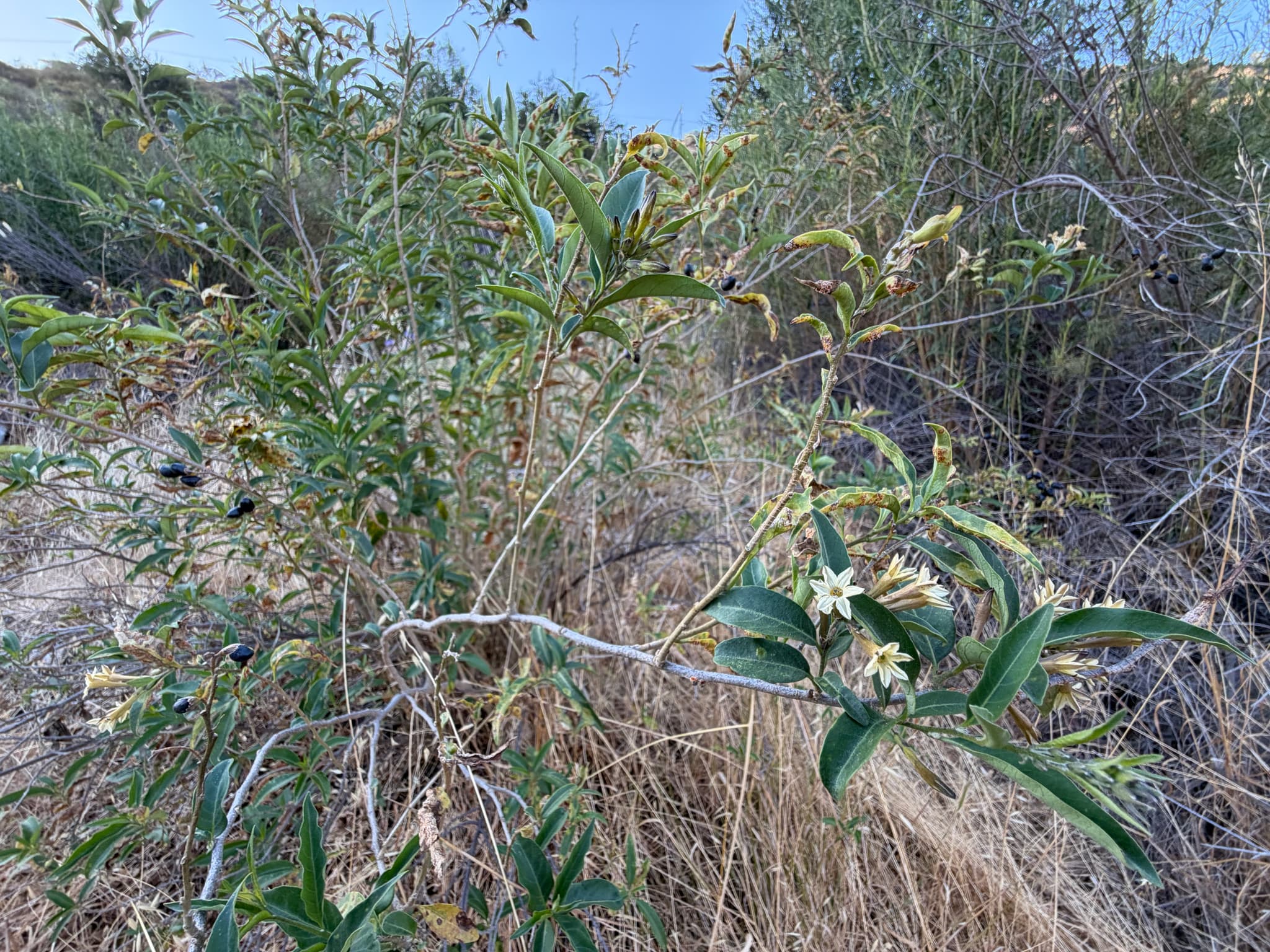
Peru cestrum
Image: Cody Hinchliff (cc-by-nc)
NamePeru cestrum
Scientific NameCestrum parqui
Common NamesWillow-leaved jessamine, Green cestrum, Chilean cestrum, Parqui, Palqui
Plant FamilySolanaceae
Natural HabitatNative to Chile, Peru, and Argentina, it thrives in disturbed areas, roadsides, riverbanks, and open woodlands, often found in Mediterranean climates. It has naturalized and can be invasive in many parts of the world.
Parts Usedleaf,bark,root
Medicinal Actionsanalgesic, anti-inflammatory, sedative
Traditional UsesIn traditional South American medicine, Cestrum parqui has been used as a febrifuge to reduce fever, as well as a purgative and emetic. Externally, poultices made from the leaves were sometimes applied to reduce swellings or treat skin conditions, though its extreme toxicity makes internal use highly dangerous and generally not recommended.
Active Constituentsparquin, cestrine, solasonine, saponins
Preparation Methodsinfusion, decoction, poultice
Contraindications & WarningsAll parts of Cestrum parqui are highly toxic to humans and livestock if ingested, especially the berries. Symptoms of poisoning include nausea, vomiting, diarrhea, abdominal pain, drowsiness, paralysis, and respiratory failure. Internal use is strongly contraindicated and potentially fatal. Contact with skin may cause irritation.
Cultivation NotesThis hardy shrub prefers well-drained soil and is drought-tolerant once established, capable of withstanding light frosts. It can become invasive in suitable climates and is easily propagated by seed or cuttings.
Raritycommon
Description
Cestrum parqui is a fast-growing, semi-deciduous shrub typically growing 1-3 meters tall, characterized by slender branches and lanceolate to elliptic leaves. It produces clusters of tubular, greenish-yellow flowers that are highly fragrant, especially at night, followed by small, glossy, black berries.