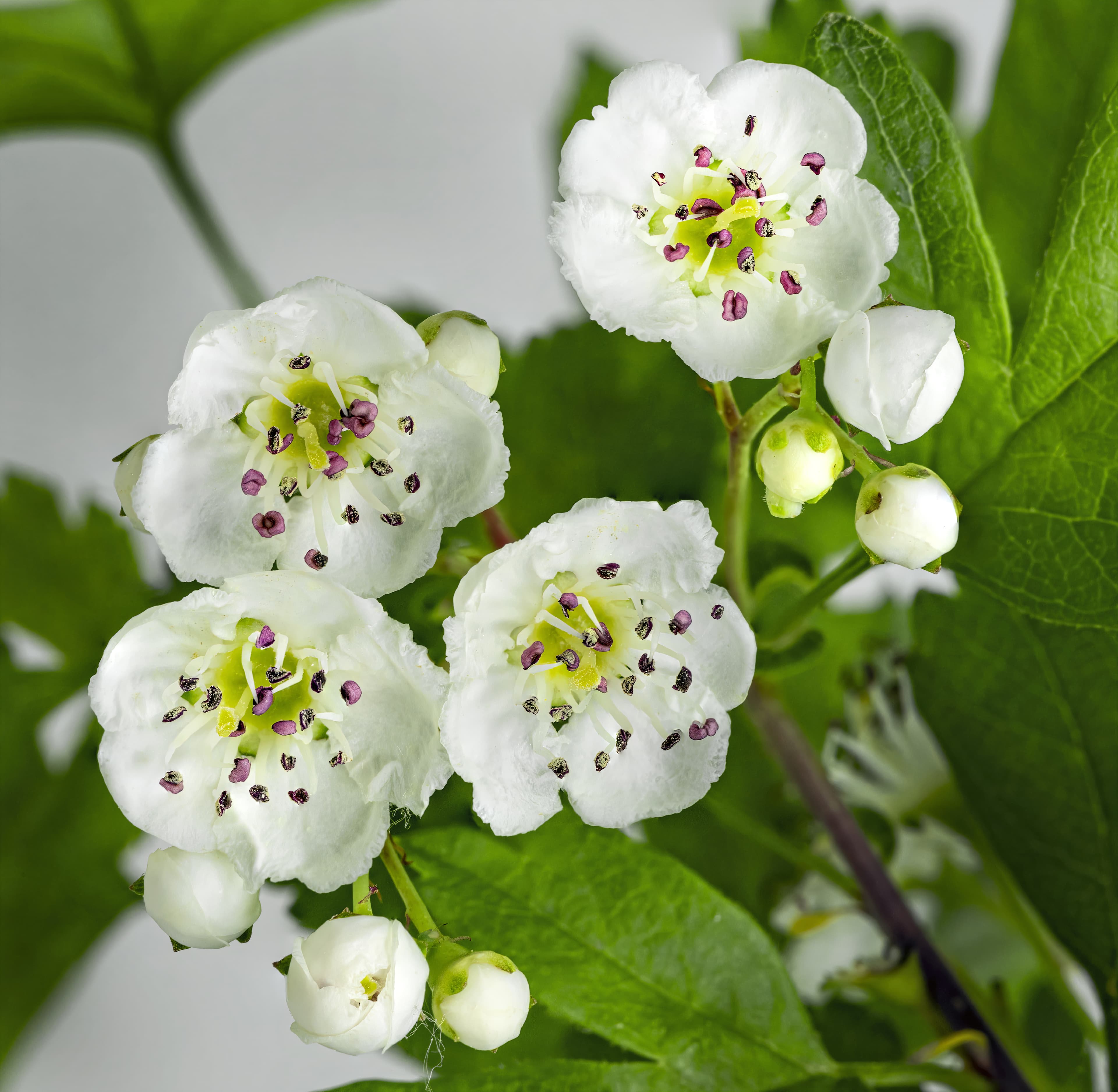
Hawthorn
Image: Didier Descouens (CC BY-SA 4.0)
NameHawthorn
Scientific NameCrataegus monogyna
Common NamesHawthorn, Common Hawthorn, May-tree, Quickthorn
Plant FamilyRosaceae
Natural HabitatNative to Europe, North Africa, and Western Asia, Hawthorn thrives in hedgerows, woodlands, scrubland, and along forest edges. It is often found in disturbed areas and can tolerate a wide range of soil conditions.
Parts Usedflower,leaf,fruit
Medicinal Actionsantioxidant, anti-inflammatory, nervine, astringent
Traditional UsesTraditionally, hawthorn has been revered for its cardiovascular benefits, used to support heart function, regulate blood pressure, and improve circulation. It was also employed as a mild nervine for anxiety and insomnia, and its berries were used for digestive issues and as a general tonic.
Active ConstituentsFlavonoids, Proanthocyanidins, Triterpenes, Phenolic acids
Preparation Methodsinfusion, decoction, tincture, powder
Contraindications & WarningsMay interact with cardiac medications (e.g., digoxin, beta-blockers, calcium channel blockers) and blood pressure medications. Consult a healthcare professional before use, especially if on heart medication. Not recommended for use during pregnancy or lactation without medical advice.
Cultivation NotesHawthorn is a hardy and adaptable plant, preferring full sun to partial shade and well-drained soil. It is drought-tolerant once established and can be grown as a hedge, specimen tree, or in a mixed border. Pruning is best done in late winter or early spring.
Raritycommon
Description
Crataegus monogyna is a deciduous shrub or small tree, typically bearing thorny branches. Its small, white to pinkish flowers, seen here in clusters, have five petals and numerous stamens with reddish anthers, blooming in spring. The leaves are deeply lobed, and it produces small red berries (haws) in autumn.