Philadelphus dasycalyx
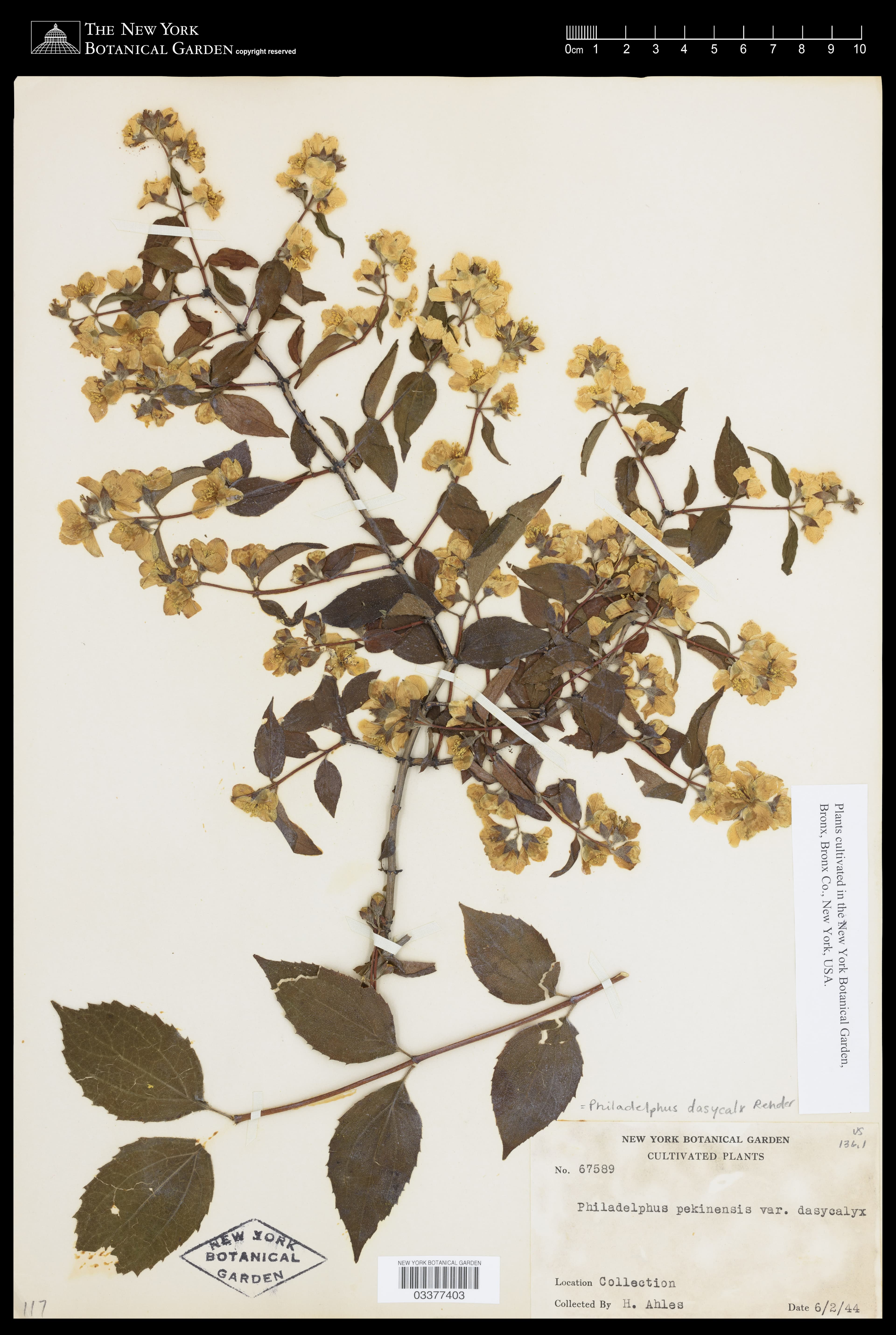
Image: The New York Botanical Garden (cc-by)
NamePhiladelphus dasycalyx
Scientific NamePhiladelphus dasycalyx
Common NamesMock-orange
Plant FamilyHydrangeaceae
Natural HabitatThis species is native to China, where it typically grows in thickets, on slopes, and in valleys. It is also widely cultivated as an ornamental shrub in temperate regions, as indicated by the herbarium specimen collected from cultivated plants at the New York Botanical Garden.
Parts Usedwhole_plant
Traditional UsesPhiladelphus dasycalyx is primarily valued as an ornamental plant for its attractive and fragrant flowers. There are no widely documented traditional medicinal uses specifically attributed to this species or the genus Philadelphus in general.
Contraindications & WarningsAs Philadelphus dasycalyx is not traditionally used for medicinal purposes, there are no specific contraindications or drug interactions widely documented. It is generally considered safe for ornamental cultivation.
Cultivation NotesPhiladelphus dasycalyx thrives in full sun to partial shade and prefers well-drained soil, though it is tolerant of a range of soil types. Once established, it exhibits good drought tolerance. Pruning is best done after flowering to maintain shape and promote vigorous growth.
Raritycommon
Description
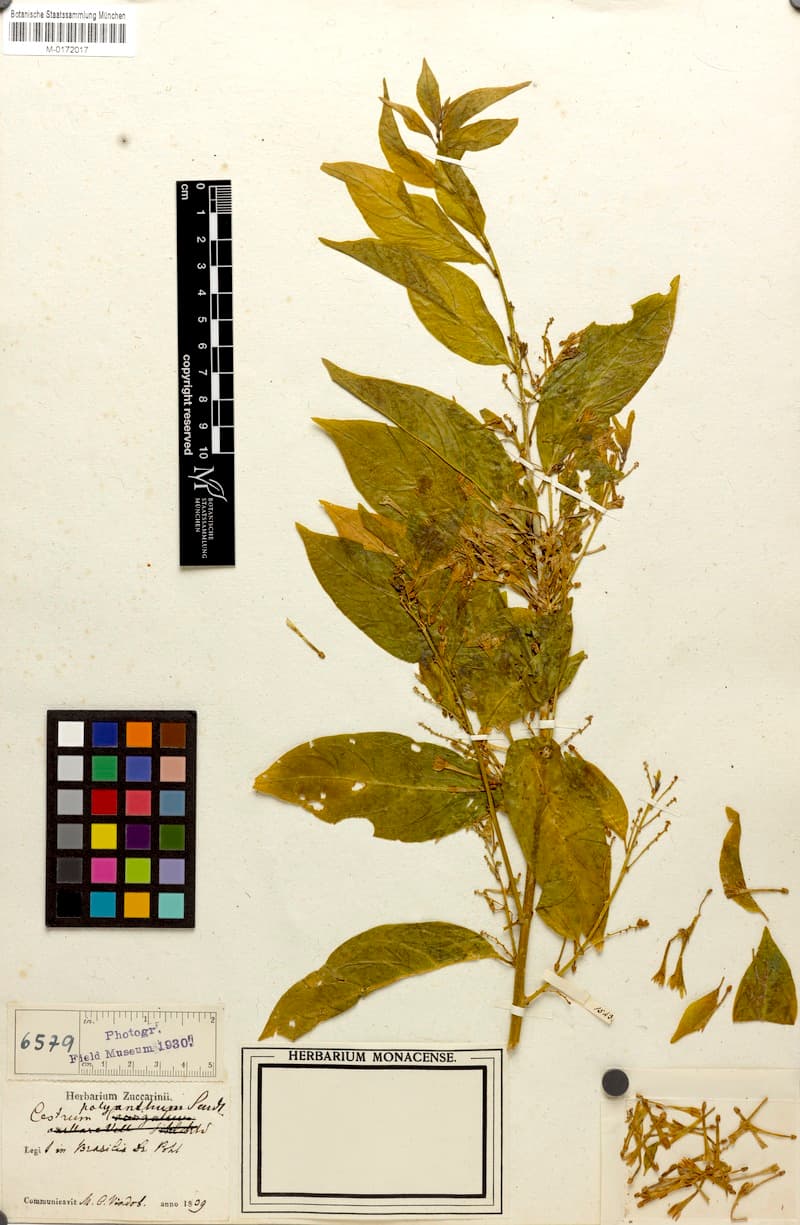
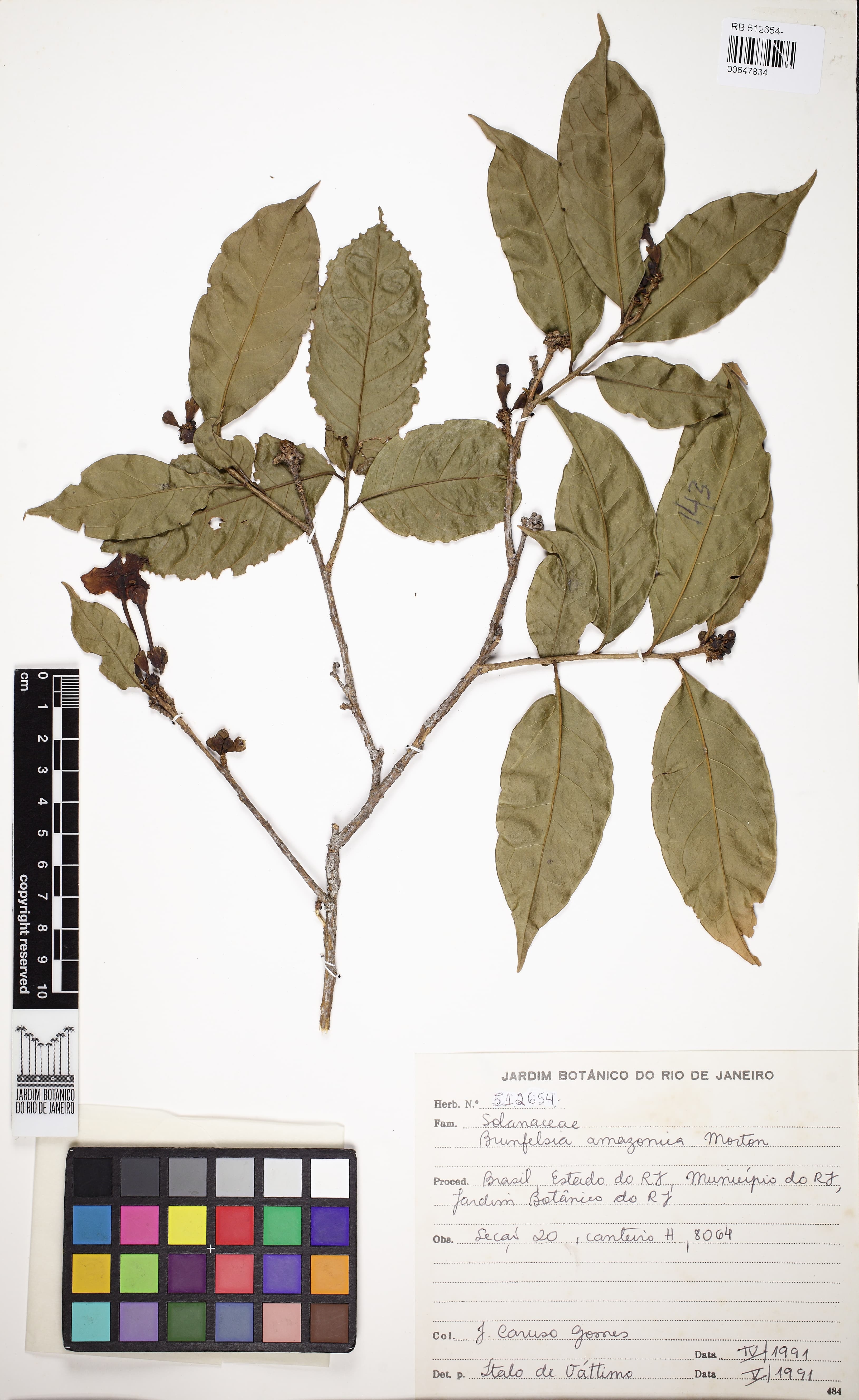
Philadelphus dasycalyx is a deciduous shrub characterized by its ovate to elliptic leaves, which often have serrated margins. It produces numerous small, yellowish-white, fragrant flowers arranged in clusters along its branches, each featuring multiple prominent stamens. The specimen shows the typical branching pattern and dried floral structures.