Oregon Grape
NameOregon Grape
Scientific NameMahonia aquifolium
Common NamesOregon Grape, Holly-leaved Barberry, Mountain Grape, Mahonia
Plant FamilyBerberidaceae
Natural HabitatNative to western North America, found in open forests, woodlands, and clearings from British Columbia to northern California and east to Idaho and Montana. It prefers moist, well-drained soils and partial shade.
Parts Usedroot,bark
Medicinal Actionsantimicrobial, anti-inflammatory, astringent
Traditional UsesTraditionally used by Native American tribes for various ailments, including digestive issues, liver support, and skin conditions like psoriasis and eczema. It was also employed for fevers and infections due to its bitter properties and as a general tonic.
Active ConstituentsBerberine, palmatine, jatrorrhizine, oxyacanthine
Preparation Methodsdecoction, tincture, powder
Contraindications & WarningsNot recommended for pregnant or breastfeeding women. Can interact with certain medications, particularly those metabolized by the liver (e.g., cyclosporine, blood thinners) due to berberine's effects on cytochrome P450 enzymes. High doses may cause gastrointestinal upset.
Cultivation NotesGrows best in partial to full shade with moist, well-drained soil, though it is drought-tolerant once established. It can tolerate a range of soil types and is propagated by seed, cuttings, or division.
Raritycommon
Description
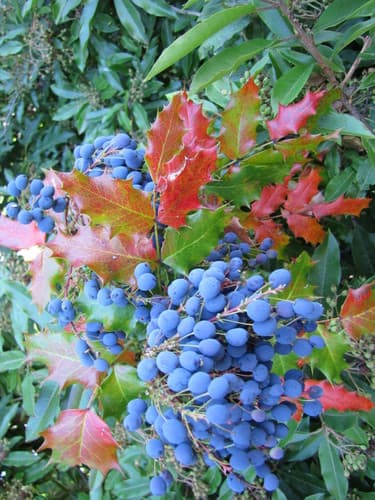
Oregon grape is an evergreen shrub featuring spiny, holly-like leaves that can turn reddish-bronze in cooler weather. It produces clusters of small, bright yellow flowers in spring, followed by edible, tart, blue-black berries covered in a waxy bloom.