Nolana gracillima
NameNolana gracillima
Scientific NameNolana gracillima
Plant FamilySolanaceae
Natural HabitatEndemic to the coastal deserts of Peru and northern Chile, thriving in sandy or rocky soils, particularly in areas influenced by coastal fog (lomas formations).
Parts Used
Traditional UsesNo known traditional medicinal uses are documented for this species. The genus Nolana is generally not associated with medicinal applications, and some species are known to be toxic.
Active ConstituentsSpecific active medicinal constituents are not well-documented for Nolana gracillima. However, other species within the genus Nolana are known to contain tropane alkaloids, which can be toxic.
Contraindications & WarningsNo specific medicinal contraindications are documented due to the lack of known medicinal use. However, species in the genus Nolana are known to contain tropane alkaloids, which are toxic and can cause adverse effects if ingested.
Cultivation NotesThis plant prefers well-drained, sandy soil and full sun exposure. It is drought-tolerant once established but sensitive to frost, requiring protection in colder climates.
Rarityuncommon
Description
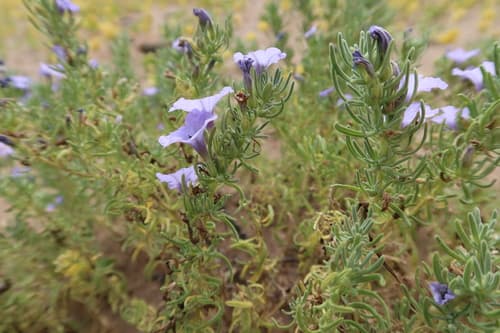
Nolana gracillima is a low-growing, often sprawling subshrub or annual herb characterized by numerous slender, somewhat succulent, linear to spatulate leaves. It produces solitary, bell-shaped flowers that are typically pale lavender to blue-violet, often with a lighter throat.