Dong Quai
NameDong Quai
Scientific NameAngelica sinensis
Common NamesDong Quai, Chinese Angelica, Female Ginseng
Plant FamilyApiaceae
Natural HabitatNative to the mountainous regions of China, growing in cool, damp, high-altitude areas, often in forests or along stream banks.
Parts Usedroot
Medicinal Actionsadaptogen, analgesic, anti-inflammatory, antioxidant, nervine
Traditional UsesTraditionally used in Chinese medicine to support women's reproductive health, including regulating menstrual cycles, alleviating menopausal symptoms, and reducing menstrual pain. It is also used to improve blood circulation, treat anemia, and as a general tonic for vitality.
Active ConstituentsFerulic acid, ligustilide, phthalides, polysaccharides, coumarins, flavonoids
Preparation Methodsdecoction, tincture, powder, infusion
Contraindications & WarningsShould not be used during pregnancy due to potential uterine stimulant effects. May increase sensitivity to sunlight (phototoxicity) due to coumarins. May interact with anticoagulant medications due to coumarin content. Avoid in cases of heavy menstrual bleeding or hemorrhagic disorders.
Cultivation NotesPrefers cool, moist, well-drained soil and partial shade. It is a biennial or short-lived perennial, typically harvested in its second year. Requires consistent moisture and protection from strong winds.
Raritycommon
Description
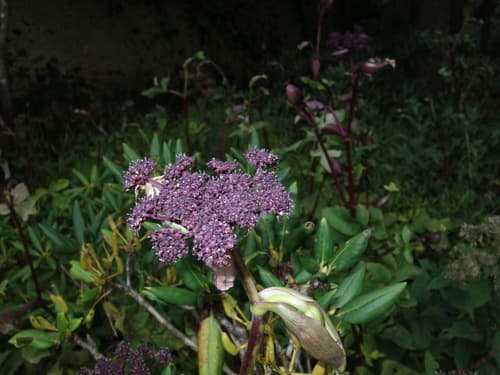
Angelica sinensis is a perennial herbaceous plant native to China, typically growing 1-2 meters tall. It features large, compound leaves and produces compound umbels of small, purplish-white flowers, as seen in the image. The plant is primarily cultivated for its aromatic, fleshy root.