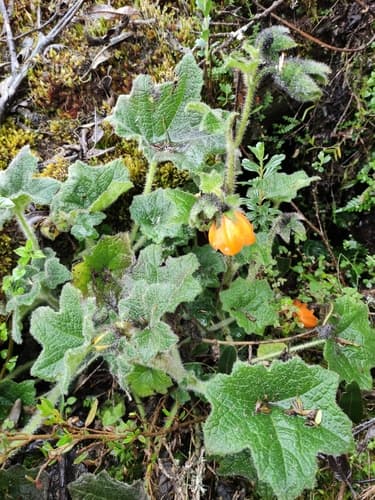
Nasa ferox
NameNasa ferox
Scientific NameNasa ferox
Common NamesOrtiga Brava, Pega Pega
Plant FamilyLoasaceae
Natural HabitatNative to the high-altitude Andes mountains of South America, particularly Peru and Bolivia, growing in montane forests, cloud forests, and disturbed areas.
Parts Usedleaf,whole_plant
Medicinal Actionsanalgesic, anti-inflammatory
Traditional UsesTraditionally used by indigenous Andean communities primarily for its analgesic and anti-inflammatory properties. The leaves are applied topically as a poultice to treat rheumatic pain, arthritis, muscle aches, and sprains, sometimes intentionally utilizing the stinging hairs for counter-irritation.
Active ConstituentsFlavonoids, Phenolic acids, Alkaloids, Histamine, Acetylcholine, Serotonin
Preparation Methodspoultice, infusion
Contraindications & WarningsDirect contact with the stinging hairs causes severe skin irritation, redness, and pain; avoid unless intentionally used for specific therapeutic purposes under expert guidance. Not recommended for internal use without clear traditional knowledge and caution. Pregnant or breastfeeding women and individuals with sensitive skin should avoid contact.
Cultivation NotesPrefers cool, moist, high-altitude environments with well-drained soil and partial shade. It can be challenging to cultivate outside its native range due to specific climatic requirements. Handle with extreme caution due to potent stinging hairs.
Rarityuncommon
Description
Nasa ferox is a herbaceous plant characterized by large, deeply lobed leaves and stems covered in prominent, stinging hairs. It produces distinctive orange to yellow, bell-shaped flowers, often solitary or in small clusters, emerging from the leaf axils.