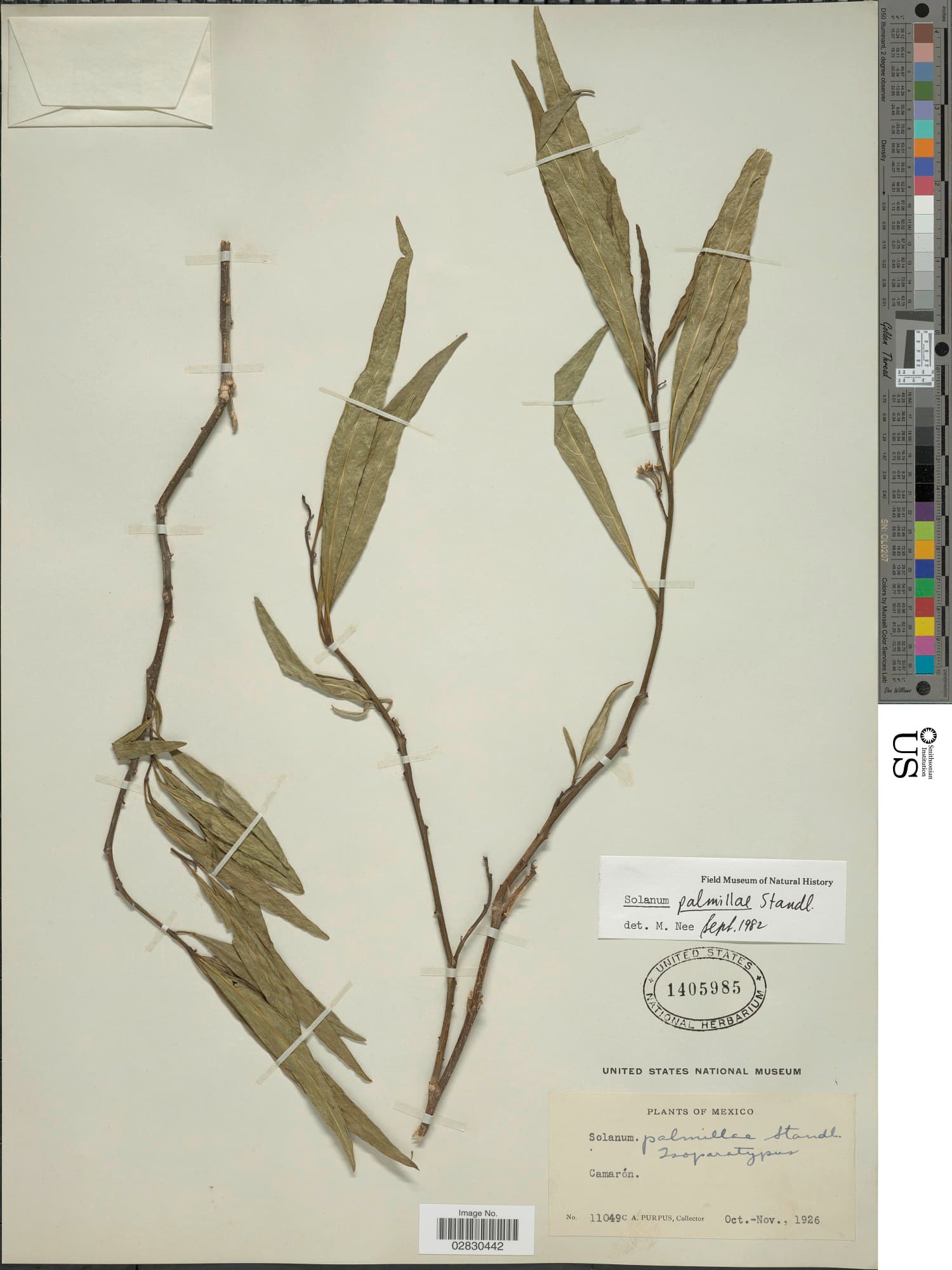
Solanum palmillae
Image: Conveyor Belt (cc0)
NameSolanum palmillae
Scientific NameSolanum palmillae Standl.
Common NamesNone widely known
Plant FamilySolanaceae
Natural HabitatNative to Mexico, Solanum palmillae is typically found in dry forests, deciduous forests, and disturbed areas within tropical and subtropical regions. The specimen was collected in Camarón, Mexico.
Parts Used
Traditional UsesNo specific traditional medicinal uses are widely documented for Solanum palmillae. The genus Solanum is vast and includes species with diverse chemical profiles, some of which are used medicinally, while others are highly toxic. Without specific ethnobotanical or pharmacological research for this particular species, no traditional uses can be confidently assigned.
Contraindications & WarningsDue to its classification within the Solanum genus, which contains numerous species known for producing steroidal glycoalkaloids (e.g., solanine) that can be toxic, Solanum palmillae should be considered potentially poisonous. Ingestion or topical application is not recommended without thorough scientific investigation into its safety and efficacy.
Cultivation NotesSpecific cultivation notes for Solanum palmillae are not widely documented, as it is primarily a wild species. It likely thrives in well-drained soils and warm, possibly dry, climates, mirroring its native Mexican habitat.
Rarityuncommon
Description
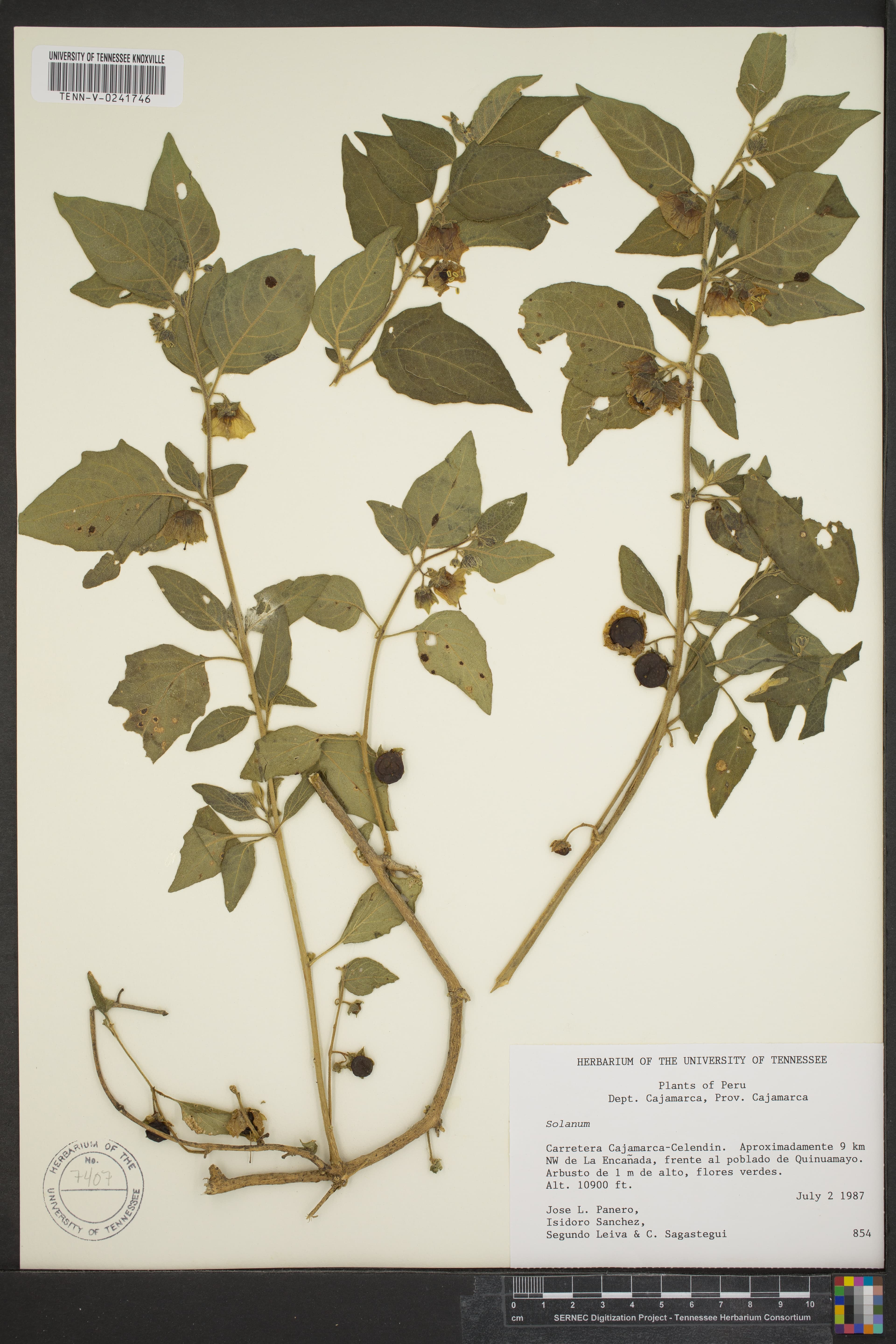
Solanum palmillae is a woody plant characterized by slender stems and alternate, simple, lanceolate leaves with entire margins. The herbarium specimen shows dried foliage and small, inconspicuous flower buds or remnants in the leaf axils. The leaves appear somewhat leathery in texture.