Narrowleaf Morning-glory
NameNarrowleaf Morning-glory
Scientific NameIpomoea cordatotriloba
Common NamesNarrowleaf Morning-glory, Pink Morning Glory, Tievine
Plant FamilyConvolvulaceae
Natural HabitatCommonly found in disturbed areas, fields, roadsides, open woodlands, and coastal regions, primarily native to the southeastern United States and parts of Central and South America.
Parts Usedseed,root
Medicinal Actionsanti-inflammatory, antioxidant
Traditional UsesTraditionally, the seeds of many Ipomoea species, including those closely related to Narrowleaf Morning-glory, have been used as strong purgatives and emetics. Some indigenous cultures also utilized certain morning glory species for their psychoactive properties, though this is less documented for Ipomoea cordatotriloba specifically.
Active ConstituentsErgoline alkaloids, Resins (purgative glycosides)
Preparation Methodsdecoction, powder
Contraindications & WarningsPregnancy, breastfeeding, gastrointestinal inflammation, severe dehydration, and kidney conditions. The seeds can be toxic in large doses due to strong purgative effects and potential psychoactive compounds. Not recommended for self-medication.
Cultivation NotesThis vigorous vine grows readily from seed in full sun to partial shade and prefers well-drained soil. It can be invasive in some regions and requires a trellis or other support for climbing.
Raritycommon
Description
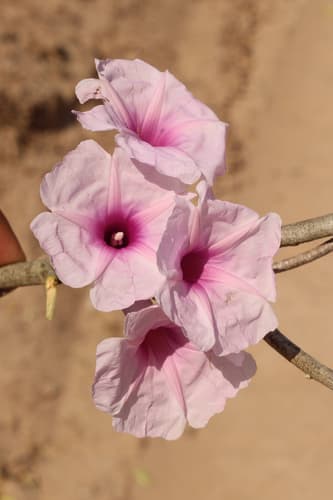
A herbaceous annual or perennial vine that climbs or trails, featuring variable leaves ranging from heart-shaped to lobed or somewhat narrow. It produces showy, funnel-shaped flowers, typically pink to lavender, which open in the morning.