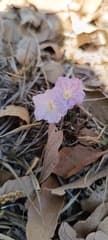
Namibian Honeythorn
NameNamibian Honeythorn
Scientific NameLycium cinereum
Common NamesNamibian Honeythorn, Honeythorn, Kalahari Honeythorn
Plant FamilySolanaceae
Natural HabitatNative to arid and semi-arid regions of Southern Africa, including Namibia, Botswana, and South Africa. It thrives in sandy or rocky soils, often found in riverbeds, disturbed areas, or open woodlands.
Parts Usedfruit,leaf,root
Medicinal Actionsantioxidant, anti-inflammatory, adaptogen
Traditional UsesTraditionally, the sweet, red berries are consumed fresh or dried for their nutritional value and as a thirst quencher in arid environments. Various parts of *Lycium* species are used in traditional medicine for general well-being, to support immune function, and for eye health, often as a general tonic or for minor ailments like fevers and colds.
Active ConstituentsPolysaccharides, Carotenoids, Flavonoids, Vitamins
Preparation Methodsinfusion, decoction, powder
Contraindications & WarningsGenerally considered safe when the ripe berries are consumed. As with many Solanaceae plants, some individuals may experience sensitivities. Specific contraindications for *Lycium cinereum* are not widely documented, but caution is advised during pregnancy or lactation, and for individuals with pre-existing medical conditions or those taking medications.
Cultivation NotesThis drought-tolerant shrub prefers full sun and well-drained soil. It can be propagated from seed or cuttings and requires minimal water once established, making it suitable for xeriscaping in appropriate climates.
Raritycommon
Description
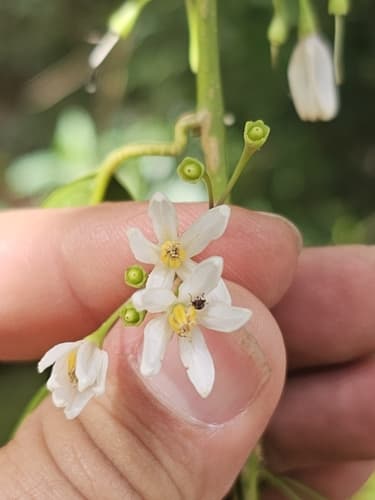
A thorny, deciduous shrub or small tree, typically growing up to 3 meters tall, characterized by its small, oval to obovate, somewhat fleshy green leaves. It produces small, tubular flowers with a distinctive purplish-white striped pattern, followed by small, red, edible berries.