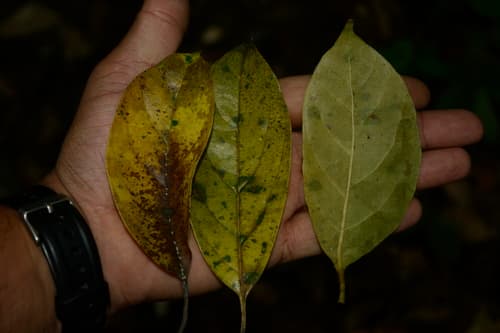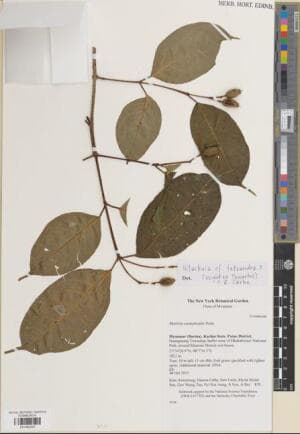
Mastixia tetrandra
Image: Armstrong, Kathleen Ellen, Little, Damon P., Lwin, Saw, San, Myint Myint, Tun, Zaw Naing, Aung, Pyi Soe, Syn, A & Bai, A (cc0)
NameMastixia tetrandra
Scientific NameMastixia tetrandra (Wight ex Thwaites) C.B.Clarke
Common NamesMastixia
Plant FamilyNyssaceae
Natural HabitatFound in evergreen forests, particularly in hilly regions of South and Southeast Asia, including India, Sri Lanka, Myanmar, and Thailand.
Parts Usedbark,leaf,fruit
Traditional UsesWhile specific traditional medicinal uses for Mastixia tetrandra are not widely documented in accessible ethnobotanical literature, other species within the Mastixia genus have been used in local folk medicine for general tonic purposes or for treating minor ailments.
Active ConstituentsTriterpenoids, Flavonoids, Phenolic compounds
Contraindications & WarningsNo widely documented contraindications or drug interactions are known due to limited research and traditional use data for this specific species.
Cultivation NotesThrives in tropical and subtropical climates with moist, well-drained soil. It is typically found in forest habitats and is not commonly cultivated for commercial or ornamental purposes.
Rarityuncommon
Description
Mastixia tetrandra is an evergreen tree native to tropical and subtropical Asia, characterized by simple, alternate, leathery leaves. It produces small, inconspicuous flowers that develop into drupaceous fruits.