Lycianthes sanctaeclarae
NameLycianthes sanctaeclarae
Scientific NameLycianthes sanctaeclarae
Plant FamilySolanaceae
Natural HabitatNative to tropical and subtropical regions of Central and South America, it typically grows in forest understories, clearings, and disturbed areas, preferring humid environments.
Parts Usedleaf,flower,fruit
Traditional UsesSpecific traditional medicinal uses for Lycianthes sanctaeclarae are not widely documented. However, some species within the Lycianthes genus and the broader Solanaceae family have been traditionally used for various ailments, including fevers, skin conditions, and as food sources.
Active Constituentsalkaloids, flavonoids, saponins
Contraindications & WarningsAs with many plants in the Solanaceae family, caution is advised due to the potential presence of various alkaloids, some of which can be toxic if ingested in large quantities or improperly prepared. Consultation with an expert is recommended before any internal use.
Cultivation NotesPrefers tropical to subtropical climates with high humidity. Requires well-drained soil and can tolerate partial shade to full sun, often thriving in forest edge or disturbed environments.
Rarityuncommon
Description
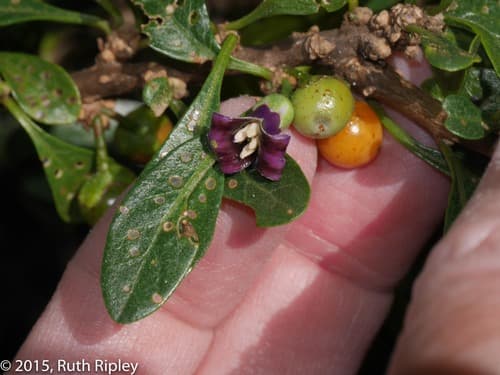
This plant features distinctive star-shaped, deep purple flowers with prominent white margins on each petal, often borne in pairs or small clusters. Its leaves are simple, ovate, and typically have a somewhat hairy texture, while the plant produces small, spherical fruits that mature from green to yellow.