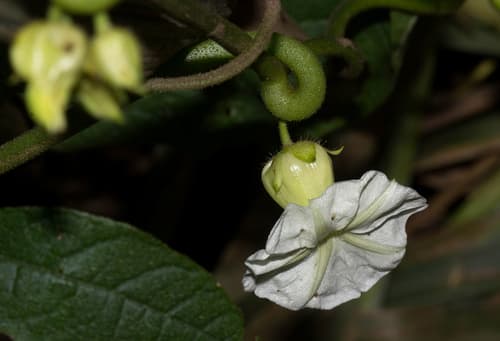
Lepistemon owariensis
NameLepistemon owariensis
Scientific NameLepistemon owariensis
Common NamesOwari morning glory, African morning glory vine, Ewe-gboro
Plant FamilyConvolvulaceae
Natural HabitatNative to tropical Africa, this vine thrives in a variety of habitats including forest margins, savannas, disturbed areas, and cultivated lands, often scrambling over other vegetation.
Parts Usedleaf,root,whole_plant
Medicinal Actionsanti-inflammatory, antimicrobial, antioxidant, analgesic
Traditional UsesTraditionally, the leaves of Lepistemon owariensis are used in African folk medicine to treat wounds, skin infections, fever, and various inflammatory conditions. Root extracts are sometimes employed for gastrointestinal complaints or as a general tonic.
Active Constituentsflavonoids, tannins, saponins, alkaloids, phenolic compounds
Preparation Methodsinfusion, decoction, poultice
Contraindications & WarningsLimited specific safety data is available. As with many plants in the Convolvulaceae family, caution is advised. Pregnant or breastfeeding women should avoid use due to insufficient safety information.
Cultivation NotesA vigorous climber that prefers warm, tropical climates and well-drained soil. It can be propagated by seeds or stem cuttings and requires adequate support for its climbing habit.
Raritycommon
Description
Lepistemon owariensis is a perennial climbing vine characterized by its simple, ovate to cordate leaves and distinctive white to cream, funnel-shaped flowers. The plant often features hairy stems and produces globose fruits, typical of the morning glory family.