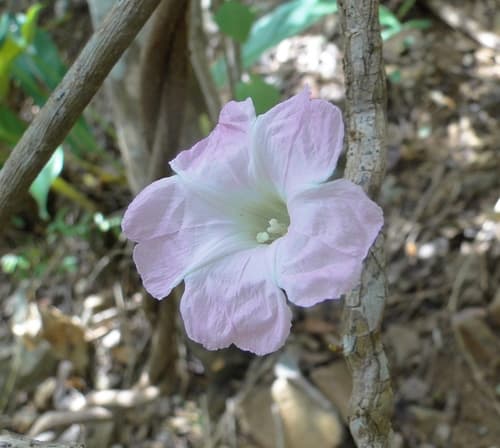
Jumbie potato
NameJumbie potato
Scientific NameIpomoea tiliacea
Common NamesJumbie potato, Pink morning glory, Seaside morning glory, Potato vine
Plant FamilyConvolvulaceae
Natural HabitatThis vigorous vine is commonly found in coastal areas, disturbed sites, roadsides, and open woodlands throughout tropical and subtropical regions worldwide. It thrives in sandy soils and can tolerate salt spray.
Parts Usedleaf,root,whole_plant
Medicinal Actionsanti-inflammatory, antimicrobial, antioxidant, diuretic
Traditional UsesTraditionally, the leaves and tuberous roots of Jumbie potato have been used as a strong purgative or laxative in folk medicine. It has also been applied externally as a poultice for skin conditions and internally for fevers, inflammation, and as a diuretic.
Active ConstituentsResin glycosides, Flavonoids, Phenolic compounds
Preparation Methodsinfusion, decoction, poultice
Contraindications & WarningsDue to its potent purgative properties, excessive use can lead to severe gastrointestinal upset, dehydration, and electrolyte imbalance. It is contraindicated for pregnant or breastfeeding women, and individuals with intestinal obstruction or severe digestive disorders.
Cultivation NotesJumbie potato is a fast-growing vine that prefers full sun to partial shade and well-drained soil. It is drought-tolerant once established and can be propagated easily by seeds or stem cuttings, though it can become invasive in suitable warm climates.
Raritycommon
Description
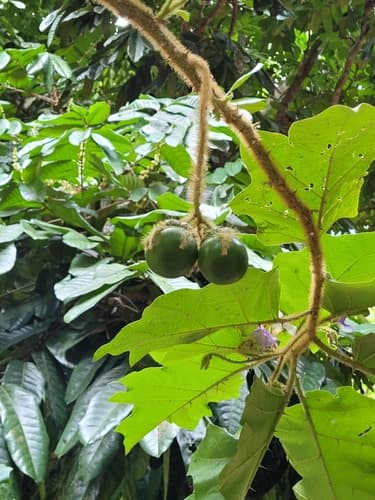
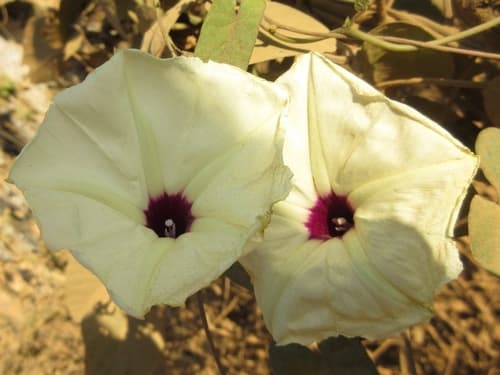
Ipomoea tiliacea is a perennial, herbaceous vine characterized by its slender stems and heart-shaped to lobed leaves. It produces showy, funnel-shaped flowers that are typically pale pink to lavender, fading to white in the throat, blooming singly or in small clusters.