Joe Pye Weed
NameJoe Pye Weed
Scientific NameEutrochium purpureum
Common NamesJoe Pye Weed, Sweet Joe Pye Weed, Purple Joe Pye Weed, Gravel Root, Kidney-root
Plant FamilyAsteraceae
Natural HabitatMoist woodlands, meadows, swamps, and along stream banks throughout eastern and central North America. It thrives in full sun to partial shade.
Parts Usedroot,leaf,flower
Medicinal Actionsdiuretic, anti-inflammatory, astringent
Traditional UsesHistorically, Joe Pye Weed was highly valued by Native Americans and early settlers for its diuretic properties, particularly in treating kidney and urinary tract issues, including gravel and stones. It was also traditionally used for fevers, rheumatism, and as a general tonic to promote sweating and detoxification.
Active ConstituentsSesquiterpene lactones, flavonoids, volatile oils, euparin, eupurpurin
Preparation Methodsdecoction, infusion, tincture, powder
Contraindications & WarningsWhile *Eutrochium purpureum* is generally considered safer than some other *Eupatorium* species, caution is advised due to the potential presence of pyrrolizidine alkaloids (PAs) which can be hepatotoxic. Not recommended for pregnant or nursing women, or individuals with pre-existing liver conditions. Consult a healthcare professional before use.
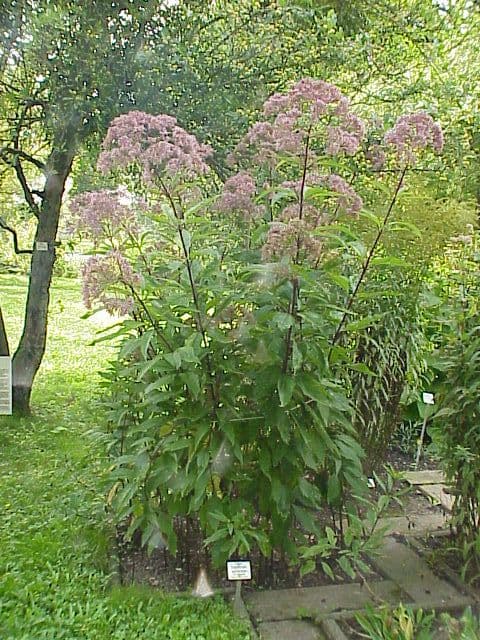
Cultivation NotesJoe Pye Weed is a low-maintenance plant that prefers moist to wet soil and full sun to partial shade. It is a large plant, often reaching 5-7 feet in height, so it requires ample space. It is attractive to butterflies and other pollinators and can be propagated by seed or division.
Raritycommon
Description
A tall, robust perennial herb native to eastern and central North America, characterized by sturdy, often purple-tinged stems, large whorled leaves, and showy terminal clusters of tiny, purplish-pink flowers. It can grow up to 7 feet tall, blooming in late summer to early fall, attracting numerous pollinators.