Solomon's Seal
NameSolomon's Seal
Scientific NamePolygonatum multiflorum
Common NamesSolomon's Seal, European Solomon's Seal, Many-flowered Solomon's Seal
Plant FamilyAsparagaceae
Natural HabitatNative to temperate regions of Europe and Asia, it thrives in deciduous woodlands, shady banks, hedgerows, and forest edges, preferring moist, humus-rich, well-drained soil.
Parts Usedroot
Medicinal Actionsdemulcent, anti-inflammatory, astringent
Traditional UsesTraditionally, the rhizome of Solomon's Seal has been used for its demulcent and anti-inflammatory properties, particularly for musculoskeletal issues such as joint pain, sprains, bruises, tendonitis, and arthritis. It was also applied externally as a poultice for wounds and internally to soothe irritated tissues in the digestive and respiratory tracts.
Active ConstituentsSaponins, Mucilage, Flavonoids
Preparation Methodsdecoction, tincture, poultice, powder
Contraindications & WarningsNot recommended during pregnancy or breastfeeding due to saponin content. Large doses may cause nausea, vomiting, or diarrhea. Individuals with heart conditions or those taking cardiac medications should consult a healthcare professional before use due to the potential presence of cardiac glycosides in some species.
Cultivation NotesPrefers partial to full shade and moist, humus-rich, well-drained soil. It is a low-maintenance plant that can be propagated by rhizome division in spring or fall. Once established, it is relatively drought tolerant.
Raritycommon
Description
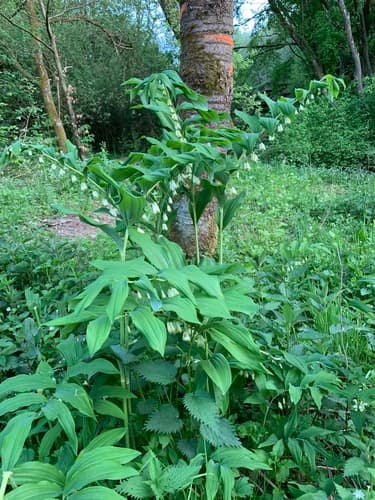
Solomon's Seal is a perennial woodland plant characterized by its arching stems, alternate, ovate leaves, and small, bell-shaped, white to greenish-white flowers that hang in clusters from the leaf axils. It grows from a thick, horizontal rhizome, which bears distinctive scars resembling ancient Hebrew seals.