Cuscuta chapalana
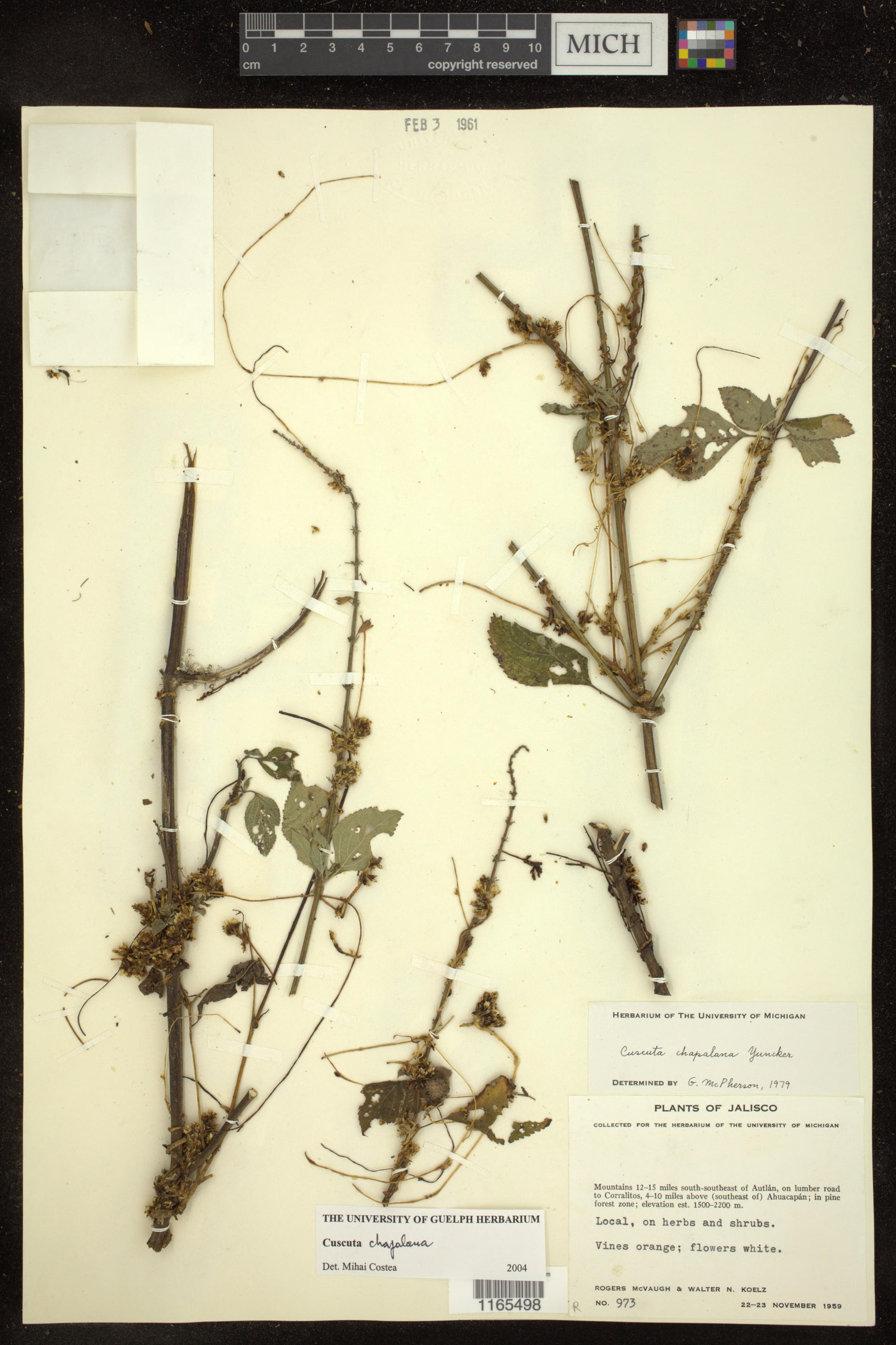
Image: Rogers McVaugh & Walter N. Koelz (cc-by-nc)
NameCuscuta chapalana
Scientific NameCuscuta chapalana Yuncker
Common NamesDodder, Love Vine, Strangleweed
Plant FamilyConvolvulaceae
Natural HabitatFound parasitizing various herbs and shrubs in mountainous pine forest zones, specifically noted at elevations between 1500-2200 meters in the Jalisco region of Mexico.
Parts Usedwhole_plant,seed
Medicinal Actionsadaptogen, antioxidant, diuretic, astringent
Traditional UsesTraditionally, Cuscuta species, particularly their seeds, are used in herbal medicine to tonify the kidneys and liver, improve vision, and address conditions such as impotence, premature ejaculation, and frequent urination. The whole plant may also be used as a general tonic.
Active ConstituentsFlavonoids, Lignans, Polysaccharides, Saponins
Preparation Methodsinfusion, decoction, powder
Contraindications & WarningsDue to its parasitic nature and potential for accumulating host compounds, caution is advised. Specific contraindications for Cuscuta species may include pregnancy, cases of yin deficiency with heat, or individuals with a history of allergic reactions to related plants.
Cultivation NotesAs an obligate parasitic plant, Cuscuta chapalana is not typically cultivated for medicinal purposes. It requires a suitable host plant to grow and thrive, making conventional cultivation challenging.
Rarityuncommon
Description
Cuscuta chapalana is a parasitic annual vine characterized by its slender, leafless, orange-yellow stems that twine tightly around host plants. It produces small, white, clustered flowers along its stems, drawing nutrients directly from its host.