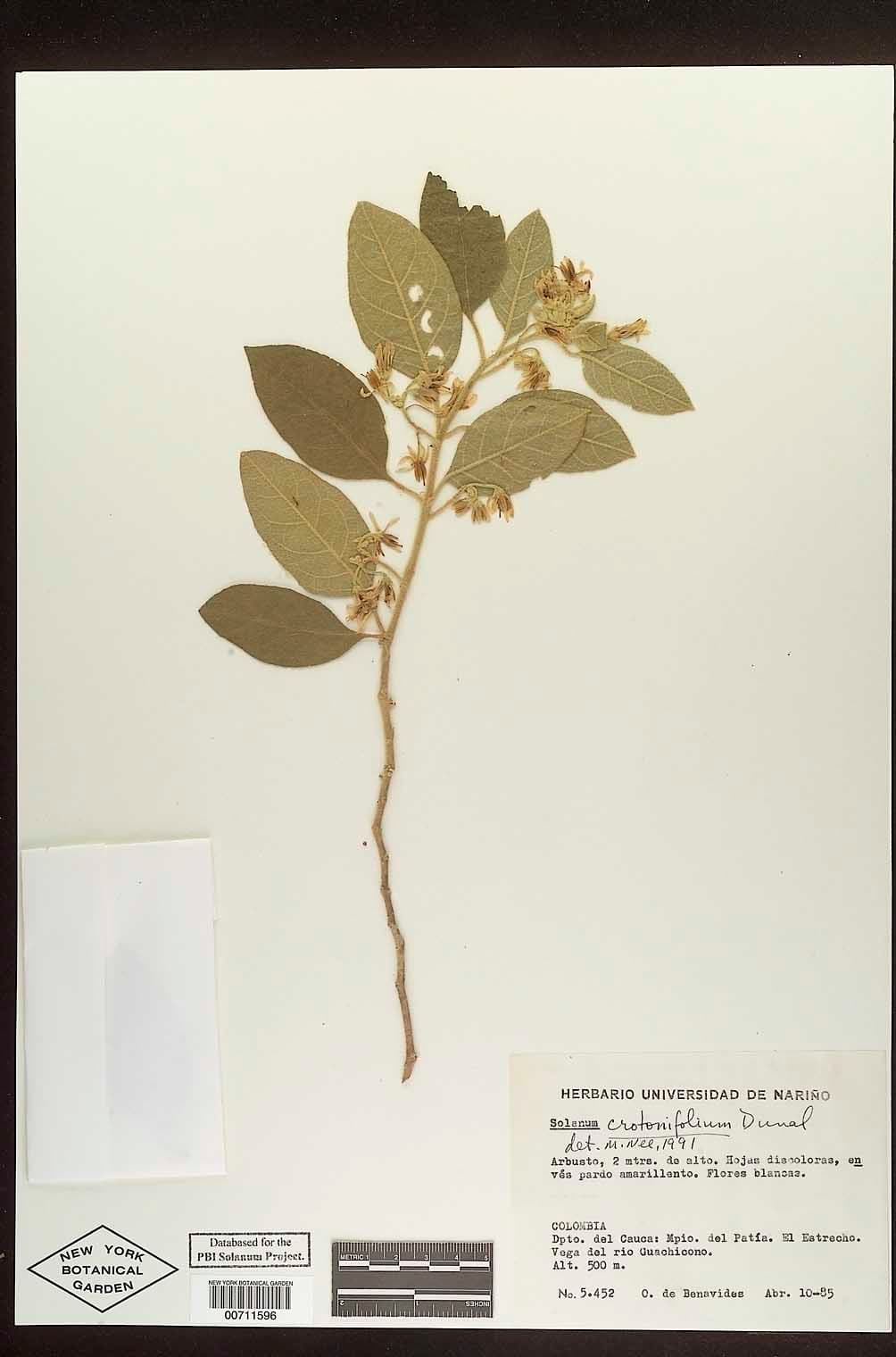
Solanum crotonifolium
Image: The New York Botanical Garden (cc-by)
NameSolanum crotonifolium
Scientific NameSolanum crotonifolium Humb. & Bonpl. ex Dunal
Common NamesCroton-leaved Nightshade
Plant FamilySolanaceae
Natural HabitatNative to Colombia, specifically found in riverine plains and valleys, such as the Vega del río Guachicono in the Cauca department, at altitudes around 500 meters.
Parts Usedleaf
Medicinal Actionsanti-inflammatory, antimicrobial
Traditional UsesSpecific traditional medicinal uses for Solanum crotonifolium are not widely documented. However, other species within the Solanum genus are traditionally used for various ailments, often externally for skin conditions or internally with extreme caution due to potential toxicity.
Active Constituentssteroidal glycoalkaloids, flavonoids
Preparation Methodspoultice
Contraindications & WarningsDue to the presence of steroidal glycoalkaloids common in the Solanum genus, this plant is likely toxic if ingested. Contraindications include pregnancy, lactation, young children, and individuals with known allergies to the Solanaceae family. Internal use is strongly discouraged without expert guidance.
Cultivation NotesPrefers warm climates, full sun to partial shade, and well-drained soil. Its natural habitat suggests it can tolerate riparian conditions.
Rarityuncommon
Description
A shrub typically growing up to 2 meters tall, characterized by alternate, ovate to elliptic leaves that are discolorous, appearing brownish-yellow on the underside when dried. The plant produces small, white flowers arranged in axillary clusters.