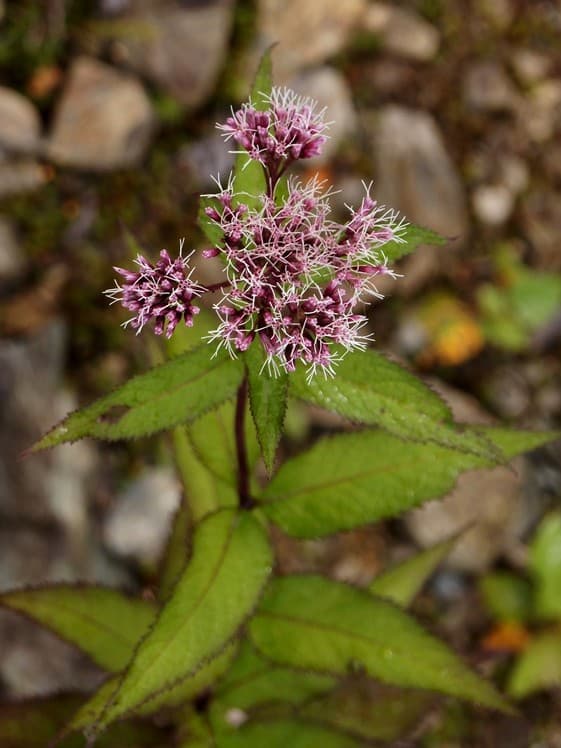
Joe Pye Weed
Image: Tatters ❀ from Brisbane, Australia (CC BY-SA 2.0)
NameJoe Pye Weed
Scientific NameEutrochium purpureum
Common NamesJoe Pye Weed, Sweet Joe Pye Weed, Purple Joe Pye Weed, Kidney-root, Gravel Root
Plant FamilyAsteraceae
Natural HabitatNative to eastern and central North America, it thrives in moist to wet soils in full sun to partial shade. Commonly found in meadows, swamps, stream banks, and open woodlands.
Parts Usedroot
Medicinal Actionsdiuretic, anti-inflammatory, astringent, antimicrobial
Traditional UsesTraditionally used by Native Americans and early European settlers for urinary tract issues, kidney stones, and other kidney and bladder complaints, earning it the name 'Gravel Root'. It was also employed for fevers, rheumatic conditions, and externally for skin conditions and wounds.
Active ConstituentsEuparin, flavonoids, sesquiterpene lactones, volatile oils, resin
Preparation Methodsdecoction, tincture, poultice
Contraindications & WarningsGenerally considered safe in appropriate doses, but large doses may cause nausea or vomiting. Caution is advised for pregnant or breastfeeding women, and individuals with liver disease, although Eutrochium purpureum is generally considered free of the toxic pyrrolizidine alkaloids found in some other Eupatorium species.
Cultivation NotesPrefers moist to wet, well-drained soil and full sun to partial shade. It is a robust, low-maintenance plant that can grow quite tall (4-7 feet), making it suitable for back borders, rain gardens, or naturalized areas. Propagates easily by seed or division.
Raritycommon
Description
Eutrochium purpureum is a tall, herbaceous perennial characterized by its sturdy, often purple-tinged stems and whorled leaves. It produces large, domed clusters of fuzzy, purplish-pink flowers in late summer to early autumn, attracting pollinators.