Solanum gonocladum
NameSolanum gonocladum
Scientific NameSolanum gonocladum
Plant FamilySolanaceae
Natural HabitatNative to tropical and subtropical Africa, it is commonly found in woodlands, savannas, forest margins, and disturbed areas.
Parts Usedleaf,root,fruit
Medicinal Actionsanti-inflammatory, antimicrobial, analgesic
Traditional UsesTraditionally, various parts of Solanum gonocladum have been used in African folk medicine for treating skin infections, wounds, and localized pain. It has also been used internally for fevers and other ailments, though extreme caution is exercised due to its toxic nature.
Active Constituentssteroidal glycoalkaloids, solasodine, solamargine, solasonine
Preparation Methodspoultice, decoction, powder
Contraindications & WarningsDue to the presence of toxic steroidal glycoalkaloids, Solanum gonocladum is highly toxic and not recommended for internal use without expert supervision. It is contraindicated in pregnancy, lactation, and for individuals with liver or kidney conditions. Potential interactions with medications affecting the nervous system or liver are possible.
Cultivation NotesThis plant prefers warm climates, well-drained soil, and can tolerate full sun to partial shade. It is typically propagated by seed and can be found growing in disturbed habitats.
Raritycommon
Description
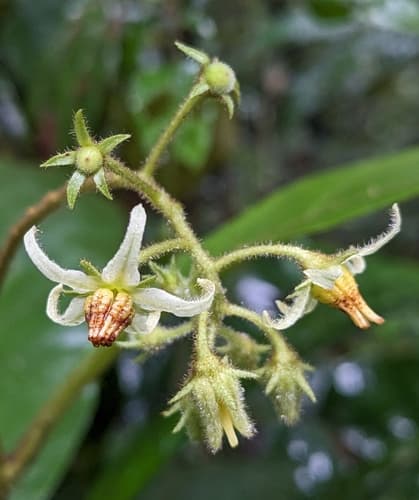
Solanum gonocladum is a shrub or small tree, typically growing 1-4 meters tall, characterized by simple leaves and clusters of pale purple to white flowers with prominent yellow anthers. It produces small berries, which are often red or orange when ripe.