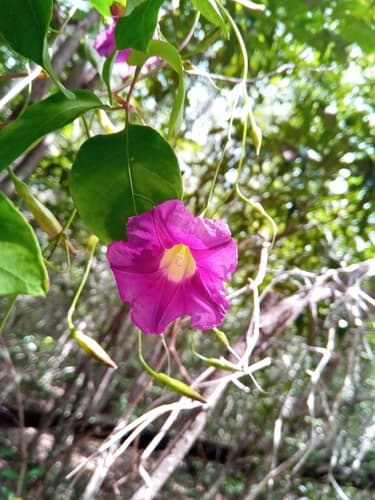
Ipomoea venosa
NameIpomoea venosa
Scientific NameIpomoea venosa
Common NamesMorning Glory (general), Brazilian Morning Glory
Plant FamilyConvolvulaceae
Natural HabitatNative to tropical and subtropical regions of South America, often found in disturbed areas, forest margins, and along roadsides, where it climbs over other vegetation.
Parts Usedleaf,root,seed
Medicinal Actionsanti-inflammatory, antioxidant
Traditional UsesWhile specific traditional uses for Ipomoea venosa are not well-documented, other species within the Ipomoea genus have been traditionally used for their purgative properties (roots, seeds) and for treating skin conditions or inflammation (leaves). Due to limited specific ethnobotanical records for I. venosa, its traditional medicinal application is largely unconfirmed.
Active Constituentsalkaloids, resin glycosides, flavonoids
Preparation Methodsinfusion, decoction, powder
Contraindications & WarningsDue to the presence of various alkaloids and resin glycosides in the Ipomoea genus, ingestion of large quantities, especially seeds, can cause gastrointestinal upset, nausea, vomiting, and potentially more severe effects. Pregnant or nursing women and individuals with pre-existing gastrointestinal conditions should avoid use. Specific safety data for Ipomoea venosa is limited.
Cultivation NotesPrefers full sun to partial shade and well-drained soil. It is a fast-growing vine that requires support for climbing. It is sensitive to frost and thrives in warm, humid climates.
Rarityuncommon
Description
A vigorous climbing vine characterized by its heart-shaped to ovate green leaves and showy, funnel-shaped flowers, which are typically a vibrant magenta or purple with a lighter, often yellowish, throat. It produces elongated, pointed flower buds that hang from the stems.