Ipomoea procumbens
NameIpomoea procumbens
Scientific NameIpomoea procumbens
Common NamesProcumbent Morning Glory, Trailing Morning Glory
Plant FamilyConvolvulaceae
Natural HabitatCommonly found in tropical and subtropical regions, thriving in disturbed areas, roadsides, open fields, and woodlands. It prefers full sun and well-drained soils.
Parts Usedwhole_plant,root
Medicinal Actionsanti-inflammatory, antioxidant
Traditional UsesTraditionally, some Ipomoea species, including those with similar chemistry, have been used as a strong laxative or purgative. It may also have been employed in folk medicine for general detoxification or to address inflammatory conditions.
Active Constituentsresin glycosides, flavonoids, phenolic acids
Preparation Methodsdecoction, powder
Contraindications & WarningsDue to its potential purgative effects, it should be used with caution, especially by pregnant or nursing women, young children, or individuals with gastrointestinal disorders. High doses can cause severe abdominal discomfort and dehydration.
Cultivation NotesThis plant is relatively easy to grow in warm climates, preferring full sun and well-drained soil. It can be propagated by seed or cuttings and is often considered a vigorous grower, sometimes even weedy.
Raritycommon
Description
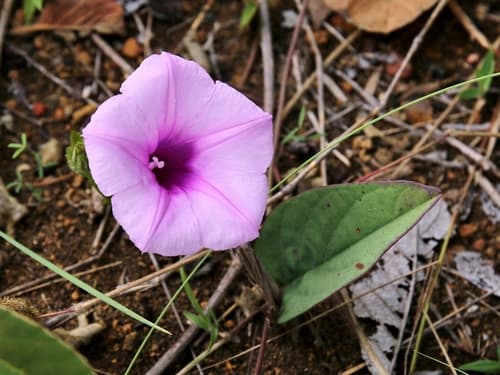
A herbaceous perennial vine that typically grows prostrate or trailing along the ground. It features heart-shaped to ovate leaves and distinctive funnel-shaped flowers, usually pink to purplish with a darker throat.