Hydrangea kawagoeana
NameHydrangea kawagoeana
Scientific NameHydrangea kawagoeana
Common NamesKawagoe Hydrangea, Lacecap Hydrangea
Plant FamilyHydrangeaceae
Natural HabitatTypically found in woodlands, forest edges, and moist, well-drained soils. Like many Hydrangea species, it prefers partial shade to full sun depending on climate, and often thrives in slightly acidic conditions.
Parts Usedroot,leaf
Medicinal Actionsdiuretic, anti-inflammatory, antimicrobial
Traditional UsesWhile specific traditional uses for Hydrangea kawagoeana are not widely documented, other species within the Hydrangea genus, particularly Hydrangea arborescens, have been traditionally used for their diuretic and lithotriptic properties. These uses include supporting urinary tract health, aiding in the expulsion of kidney and bladder stones, and addressing prostate issues. The leaves have also been used for their anti-inflammatory effects.
Active Constituentshydrangin, saponins, flavonoids, coumarins
Preparation Methodsdecoction, tincture, powder
Contraindications & WarningsCaution is advised for individuals with kidney disease or those who are pregnant or breastfeeding. Large doses may cause gastrointestinal upset. Consult a healthcare professional before use, especially if taking diuretics or other medications.
Cultivation NotesPrefers moist, well-drained, acidic to neutral soil and partial shade, though it can tolerate more sun in cooler climates. Requires consistent watering, especially during dry periods. Pruning is typically done after flowering to maintain shape and encourage new growth.
Rarityuncommon
Description
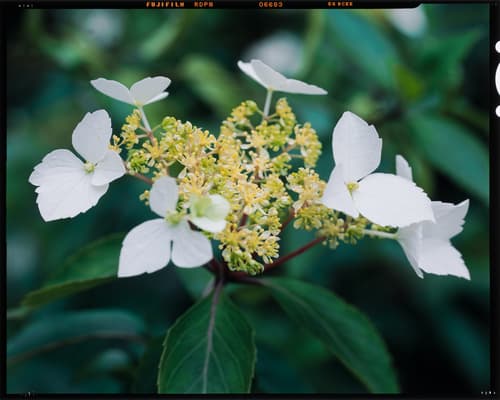
This plant features delicate lacecap-style inflorescences, characterized by a central cluster of small, fertile yellowish-green flowers surrounded by larger, showy white sterile florets. Its leaves are dark green, ovate, and typically serrated along the margins, growing on woody stems.