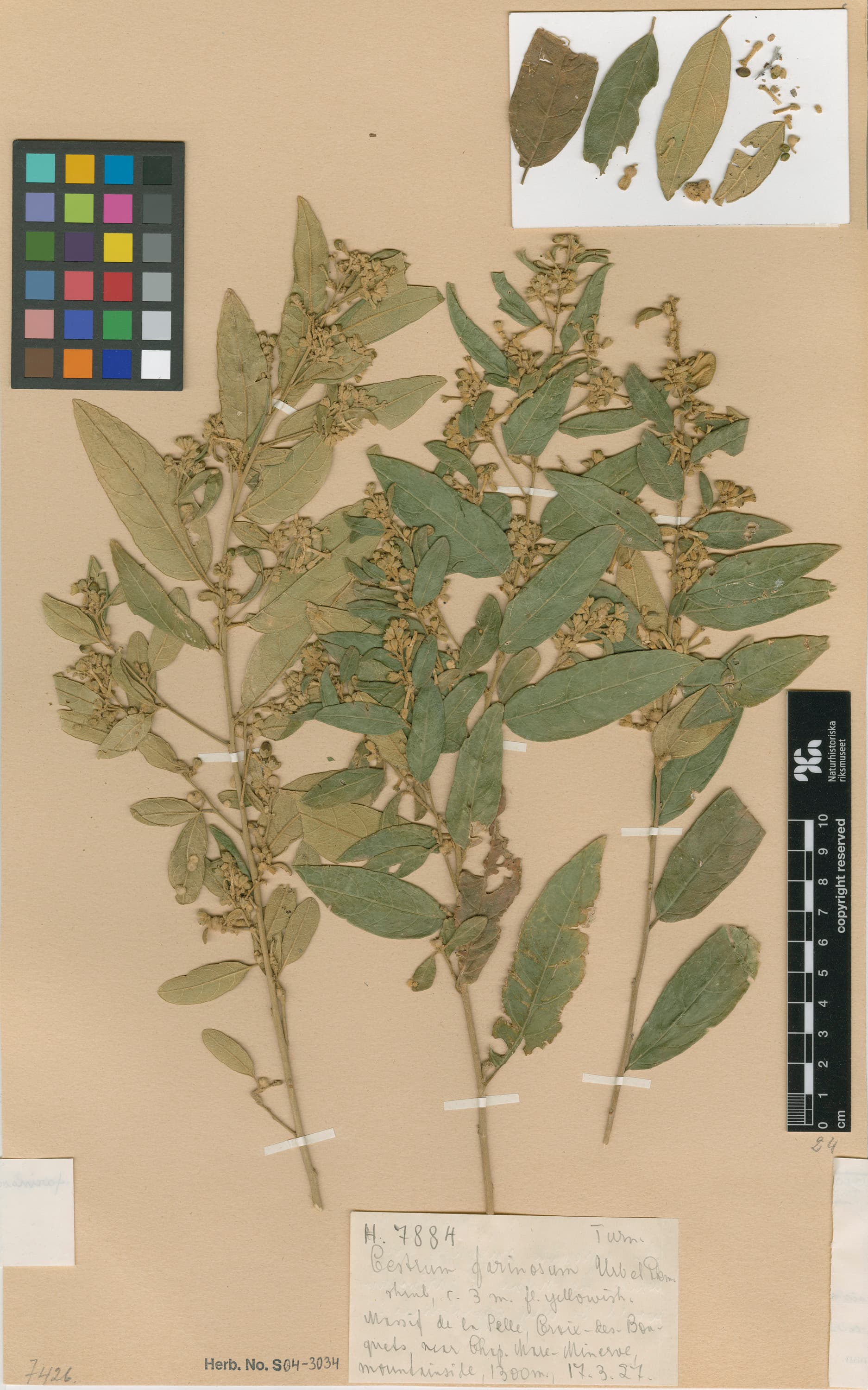
Cestrum farinosum
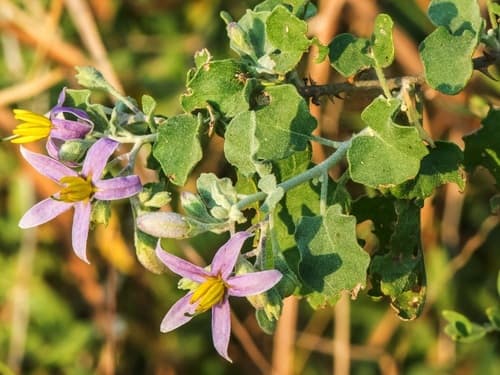
Image: Karin dos Santos (S) (cc-by)
NameCestrum farinosum
Scientific NameCestrum farinosum
Plant FamilySolanaceae
Natural HabitatFound on mountainsides at elevations around 1300 meters, specifically noted from areas like Manif de la Pelle, Croix-des-Bouquets, Haiti.
Parts Usedleaf,flower
Medicinal Actionsanalgesic, anti-inflammatory, diuretic
Traditional UsesWhile specific traditional uses for Cestrum farinosum are not widely documented, other species within the Cestrum genus have been traditionally used in some cultures for their analgesic, anti-inflammatory, and febrifuge properties, often with extreme caution due to their toxic nature.
Active ConstituentsSteroidal saponins, Alkaloids (e.g., solasodine), Flavonoids
Preparation Methodsinfusion, decoction, poultice
Contraindications & WarningsAll parts of Cestrum species are generally considered toxic due to the presence of steroidal saponins and alkaloids. Ingestion can cause severe gastrointestinal distress, neurological symptoms, and cardiac issues. Not recommended for internal use without expert supervision due to high toxicity risk.
Cultivation NotesPrefers well-drained soil and a subtropical to tropical mountainous climate. Likely thrives in full sun to partial shade at higher elevations.
Rarityuncommon
Description
Cestrum farinosum is a woody shrub, typically growing to about 3 meters in height. It features alternate, simple, ovate to lanceolate leaves and bears small, yellowish flowers arranged in axillary or terminal clusters.