Horse Chestnut
NameHorse Chestnut
Scientific NameAesculus hippocastanum
Common NamesHorse Chestnut, Conker Tree, European Horsechestnut
Plant FamilySapindaceae
Natural HabitatNative to a small area in the Balkan Peninsula, particularly in mountainous regions of Greece, Albania, and North Macedonia. It is widely cultivated as an ornamental tree in parks, avenues, and gardens across temperate regions worldwide.
Parts Usedseed,bark,leaf,flower
Medicinal Actionsanti-inflammatory, astringent
Traditional UsesTraditionally, Horse Chestnut has been used to treat chronic venous insufficiency, varicose veins, hemorrhoids, and other circulatory problems. Extracts from the seeds are particularly valued for their ability to strengthen capillary walls and reduce fluid leakage, alleviating symptoms like leg swelling, pain, and itching.
Active ConstituentsAescin, Flavonoids, Coumarins
Preparation Methodstincture, powder, salve
Contraindications & WarningsRaw Horse Chestnut seeds are toxic and should not be ingested. Medicinal preparations are contraindicated in pregnancy, breastfeeding, kidney or liver disease, and in individuals taking anticoagulant medications (blood thinners) due to potential interactions. May cause gastrointestinal upset or skin irritation in some individuals.
Cultivation NotesHorse Chestnut is a robust, long-lived tree that thrives in moist, well-drained soil and prefers full sun to partial shade. It is tolerant of a range of soil types but performs best in deep, fertile loams. It requires ample space due to its large size and spreading canopy.
Raritycommon
Description
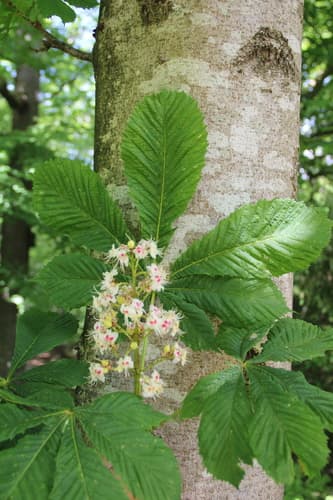
The Horse Chestnut is a large deciduous tree characterized by its distinctive palmate leaves, typically with 5-7 leaflets radiating from a central point. It produces showy, upright panicles of white flowers, often with a yellow or red blotch at the base of each petal, which mature into spiny capsules containing glossy brown seeds (conkers).