Holy Basil (Tulsi)
Image: teaddy (cc-by-nc)
NameHoly Basil (Tulsi)
Scientific NameOcimum tenuiflorum
Common NamesHoly Basil, Tulsi, Sacred Basil
Plant FamilyLamiaceae
Natural HabitatNative to tropical and subtropical regions of Southeast Asia, particularly India. It thrives in warm climates and is commonly cultivated in gardens, homes, and near temples.
Parts Usedleaf,flower,seed,whole_plant
Medicinal Actionsadaptogen, anti-inflammatory, antimicrobial, antioxidant, expectorant, nervine
Traditional UsesTraditionally revered in Ayurvedic medicine for its adaptogenic properties, helping the body cope with stress. It is used to support immune function, alleviate respiratory ailments like coughs and colds, improve digestion, and promote overall well-being. It also holds significant spiritual importance.
Active ConstituentsEugenol, Ursolic acid, Rosmarinic acid, Ocimumosides, Caryophyllene
Preparation Methodsinfusion, decoction, tincture, powder, essential oil
Contraindications & WarningsMay interact with blood-thinning medications, anti-diabetic drugs, and fertility medications. Pregnant or breastfeeding women should consult a healthcare professional before use.
Cultivation NotesPrefers full sun exposure and well-drained, fertile soil. It thrives in warm, humid conditions and is sensitive to cold and frost. Can be easily grown from seeds or cuttings.
Raritycommon
Description
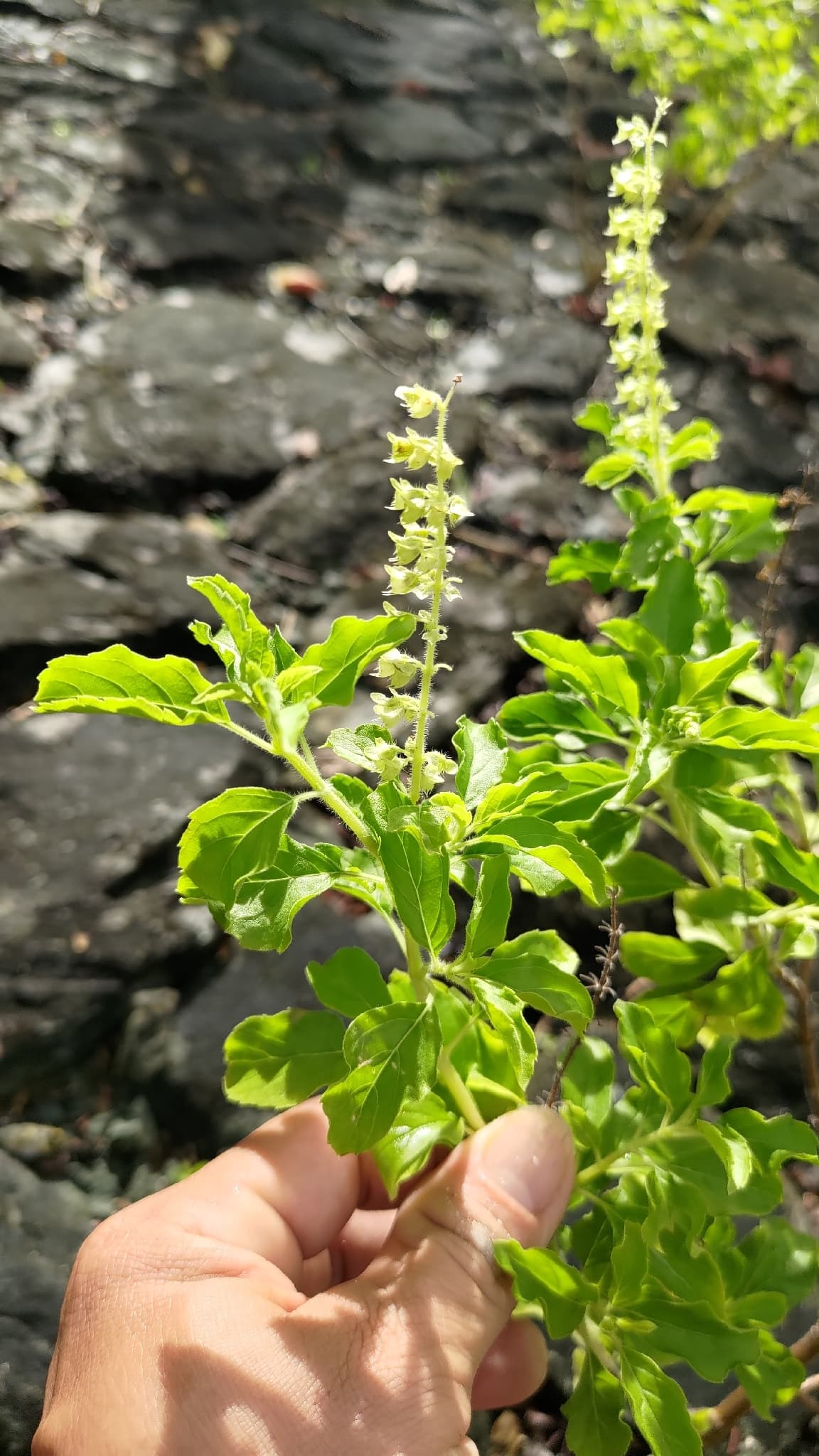
Holy Basil is an aromatic perennial herb characterized by its green or purplish leaves, square stems, and small, fragrant flowers arranged in terminal spikes. The leaves are typically ovate, slightly toothed, and often covered in fine hairs, emitting a distinct clove-like aroma.