Chervil
NameChervil
Scientific NameAnthriscus cerefolium
Common NamesChervil, Garden Chervil, French Parsley
Plant FamilyApiaceae
Natural HabitatNative to the Caucasus region, Chervil is widely cultivated globally and can be found naturalized in temperate climates. It thrives in moist, well-drained soil and prefers partial shade, often growing in gardens, woodland edges, and disturbed areas.
Parts Usedleaf,flower,seed
Medicinal Actionsdiuretic, carminative, antioxidant, anti-inflammatory
Traditional UsesTraditionally, chervil has been used as a mild diuretic to help with water retention and as a carminative to aid digestion and alleviate flatulence. It has also been applied externally as a poultice for minor skin irritations, bruises, and insect bites, and is sometimes noted for its mild stimulating effect on metabolism.
Active ConstituentsFlavonoids, Coumarins, Essential oils (estragole, anethole), Vitamins (A, C, K)
Preparation Methodsinfusion, poultice, powder
Contraindications & WarningsChervil is generally considered safe when consumed in culinary amounts. Large medicinal doses are not extensively studied. Due to the presence of coumarins, theoretical caution is advised for individuals on anticoagulant medication, although the amounts in typical consumption are low. Estragole in the essential oil can be a concern in very high, concentrated doses, but not from normal culinary use.
Cultivation NotesChervil is an annual herb that prefers cool, moist conditions and partial shade, as it tends to bolt quickly in hot weather. Sow seeds directly in early spring or late summer in rich, well-drained soil. Regular harvesting of outer leaves encourages continuous growth.
Raritycommon
Description
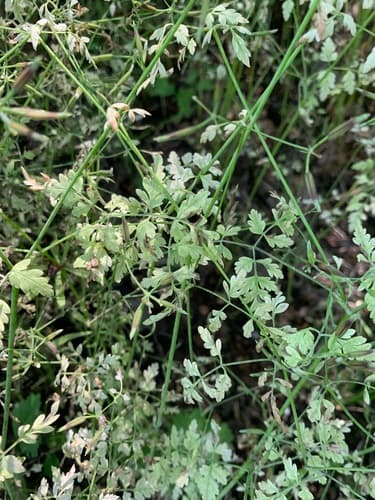
Chervil is a delicate annual herb characterized by its finely divided, fern-like, light green leaves and slender, hollow stems. It produces small, white flowers arranged in compound umbels, followed by elongated seeds. The plant typically grows 1-2 feet tall and has a mild, anise-like flavor.